 roundup
 The 10 Best Cutaway Acoustic Guitars Under $1000 in 2026
We rank 10 cutaway acoustic guitars under $1000 on tone, build, and electronics. From Blueridge to Martin, reach the high frets without overspending.
130+ hands-on reviews, comparisons, and guides to help you find an acoustic you'll never want to put down.

We may earn a small commission through links on this page, at no extra cost to you. As an Amazon Associate, we earn from qualifying purchases. Ratings reflect our own editorial evaluation.
Acoustic guitars fall into six main body shapes: dreadnought, grand auditorium, concert, jumbo, parlor, and orchestra model. Each shape produces a distinct tone and suits different playing styles, from powerful dreadnought projection for strumming to balanced parlor voicing for fingerpicking.
The right choice depends on your preferred genre, hand size, and whether you play solo or with a band.
Buying an acoustic guitar means sorting through dozens of body shapes, tonewoods, string types, and construction methods. The real challenge isn't finding a quality instrument.
It's finding one that fits the way you actually play.
A flatpicker needs a different instrument than a fingerstylist, and a beginner has different priorities than someone upgrading after years of playing. This guide covers every major acoustic guitar type and helps you narrow the field.
Short on time? After comparing dozens of models for our rankings, these three beat everything else at their price points.
| # | Product | Our Rating | ||
|---|---|---|---|---|
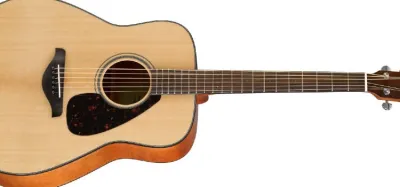
| 1 |  | Yamaha FG800 Solid Top Acoustic Guitar | ★★★★★ | Check Price |
| 2 |  | Taylor 214ce Grand Auditorium | ★★★★★ | Check Price |
| 3 | 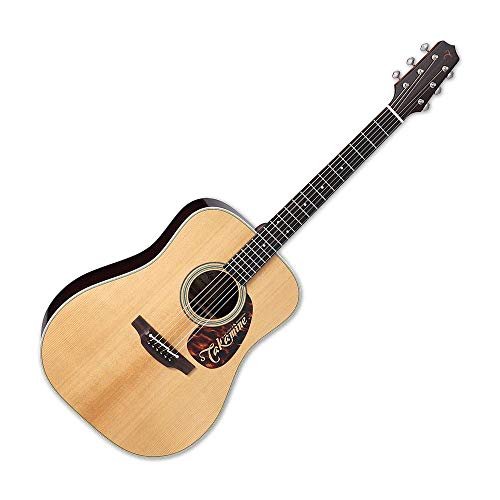 | Takamine EF360S-TT Thermal Top | ★★★★☆ | Check Price |
Want the full breakdown of all ten? See our complete ranking of the best acoustic guitars.
Body shape determines more about an acoustic guitar's character than any other single feature. The dimensions of the upper bout, lower bout, and waist control volume, bass response, tonal balance, and physical comfort.
Understanding acoustic guitar body shapes is the fastest way to eliminate options that won't suit you.
The dreadnought is the most popular acoustic guitar body shape worldwide. Its wide lower bout and broad waist generate strong bass and high volume, making it the go-to for strumming, flatpicking, and rhythm playing.
C.F. Martin introduced the shape in the early 1900s, and it became the blueprint for the modern flat-top acoustic.
Country, bluegrass, folk, and rock musicians all favor dreadnoughts for their driving low end.
The main drawback is size, which can feel bulky for smaller players during long sessions.
Grand auditorium guitars balance dreadnought power with concert-size comfort. The tapered waist produces an even frequency response that handles strumming and fingerpicking without favoring one technique over the other.
Taylor helped define this shape in the 1990s, and most manufacturers now offer their own version. If you switch between strumming and fingerpicking regularly, the grand auditorium is the most practical single-guitar choice available.
Concert guitars feature a smaller body than dreadnoughts with a tighter waist and reduced overall volume. What you get in return is a more focused, articulate tone with excellent note separation that rewards careful fingerpicking.
Grand concert models sit between the standard concert and grand auditorium in size, offering slightly more projection while keeping that clear, balanced voice. Both excel for recording because controlled bass keeps tracks clean in a mix.
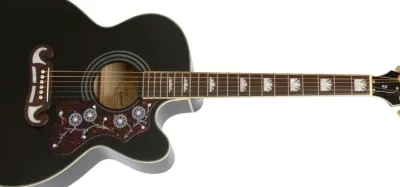
Jumbos are the largest standard acoustic body shape, producing the most bass and the highest unplugged volume. Gibson's J-200 established the template in the late 1930s, and jumbo acoustics remain popular with singer-songwriters who need their guitar to hold its own against a full band.
That oversized body delivers a booming, full-range tone that fills a room without amplification. On the flip side, the sheer width can be tiring for smaller players, and all that bass sometimes overwhelms fingerpicked passages.
Parlor guitars are compact instruments with a warm, intimate voice that dates back to the late 1800s. Modern parlor models have resurged among players who value comfort and vintage character.
They record beautifully and suit smaller hands naturally. You won't get the volume for a full band, but that focused tone is exactly what solo players and studio musicians prefer.
The orchestra model combines a body width close to a dreadnought with a shorter scale length and tighter waist. That combination produces a balanced, responsive tone with slightly less bass than a dreadnought but noticeably more midrange articulation.
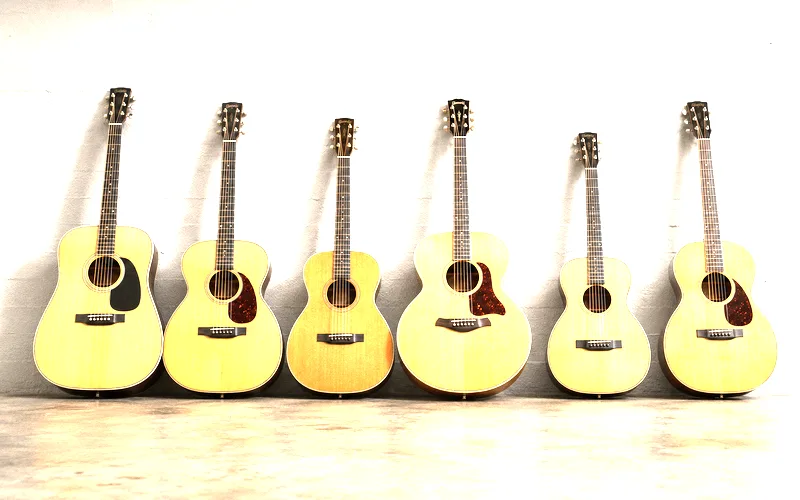
OM guitars are favorites among fingerstyle players who still want enough projection for light strumming. Martin's OM-28 helped establish the category, and many boutique builders now use it as their primary platform.
Steel string acoustics are built for modern genres like rock, country, and folk, while nylon string guitars are made for classical, flamenco, and Latin music.
They look similar at a glance, but pick one up and you'll hear two completely different instruments.
Steel string guitars deliver a bright, cutting tone with strong attack and sustain across genres including pop, rock, country, folk, and bluegrass. The higher string tension demands more finger pressure, which can make the first few weeks challenging for beginners.
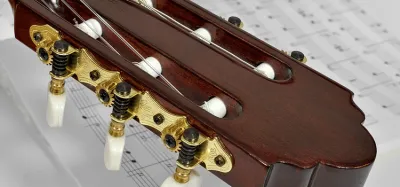
Nylon string guitars produce a warm, round tone with softer attack and serve as the standard for classical music, flamenco, bossa nova, and Latin styles. Lower tension makes them gentler on fingertips, and the wider nut spacing accommodates classical finger placement.
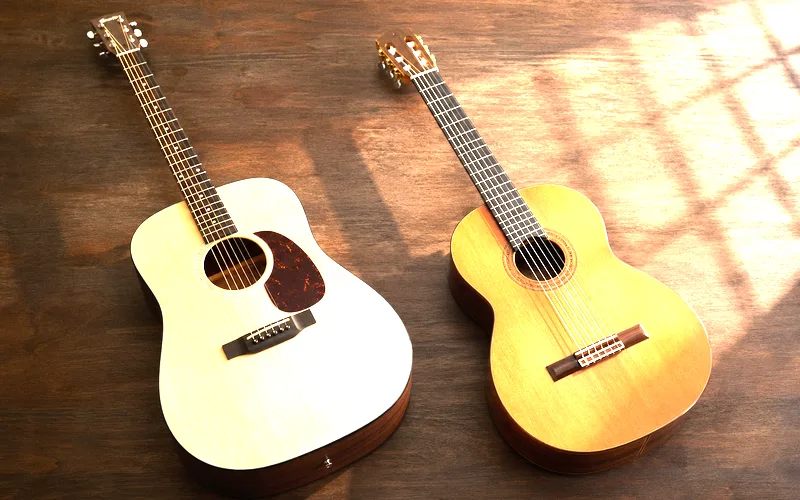
Choosing between them really comes down to the music you want to play. Most beginners start with steel string unless they're studying classical repertoire specifically.
An acoustic-electric guitar is a standard acoustic body with a built-in pickup system and usually an onboard preamp. Unplugged, it sounds identical to a regular acoustic.
You'll notice the difference when you plug into an amplifier or PA system for live performance or direct recording. Most acoustic-electrics use undersaddle piezo pickups that detect string vibration through the bridge.
Some higher-end models feature microphone-based systems or hybrid designs that blend multiple pickup types for a more natural amplified tone. Fishman and LR Baggs are two of the most trusted names in acoustic guitar electronics.
If you perform live or record direct, an acoustic-electric removes the need for an external mic. If you only play at home, a standard acoustic gives you the same sound since you're not paying for electronics you won't use.
The wood used in an acoustic guitar's top, back, and sides shapes its tonal fingerprint as much as body shape. Each tonewood emphasizes different frequencies, and knowing the basics helps you predict how a guitar will sound before you pick it up.
For a deeper comparison of the two most popular top woods, see our breakdown of cedar vs spruce acoustic guitar tops.
Sitka spruce is the most widely used top wood in steel string acoustics, producing a versatile, bright tone with strong dynamic range across any style. Engelmann spruce is lighter and more responsive at softer volumes, benefiting fingerpickers especially.
Cedar tops deliver warmer, darker tone with faster overtone response, suiting fingerpicking but losing clarity under heavy strumming. Mahogany tops are less common but produce a focused, woody midrange that sits well in recordings.
Rosewood adds richness, complexity, and pronounced bass response. A spruce top with rosewood back and sides is the most traditional pairing in acoustic guitar building.
Indian rosewood is the industry standard, while Brazilian rosewood commands premium prices for its denser grain and richer harmonics.
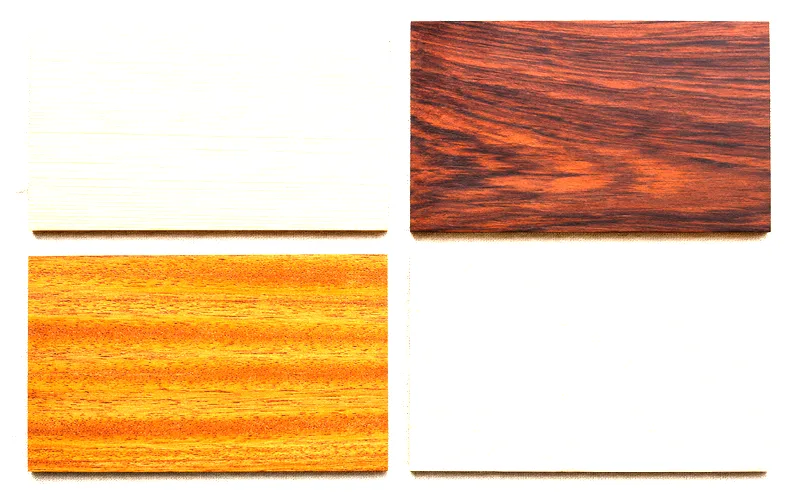
Mahogany backs and sides produce a drier, direct tone with strong midrange presence, while maple is bright and articulate with less natural warmth. Koa starts bright on a new guitar and develops increasing warmth as the wood matures over years of playing.
Your technique should drive your body shape decision more than brand loyalty or looks. Here's how common playing styles map to recommended acoustic guitar types.
| Playing Style | Recommended Shapes | Why It Works |
|---|---|---|
| Strumming / Rhythm | Dreadnought, Jumbo | Powerful bass and high volume for driving chord progressions |
| Fingerpicking | Concert, Grand Concert, OM | Balanced tone with clear note separation across all strings |
| Flatpicking | Dreadnought, Grand Auditorium | Strong projection with fast single-note response |
| Singer-Songwriter | Grand Auditorium | Versatile voice that sits under vocals without competing |
| Blues / Slide | Dreadnought, Parlor | Rich bass for open tunings or focused tone for delta blues |
| Recording / Studio | Concert, Parlor, OM | Controlled bass and detailed treble that sits clean in a mix |
A handful of manufacturers have built reputations you can actually trust across price ranges. Knowing what each acoustic guitar brand does best helps you shop smarter.
Martin has built acoustic guitars since 1833, and their D-28 dreadnought is arguably the most influential acoustic guitar design in history. Martin's scalloped X-bracing and traditional construction methods set the standard the rest of the industry references.
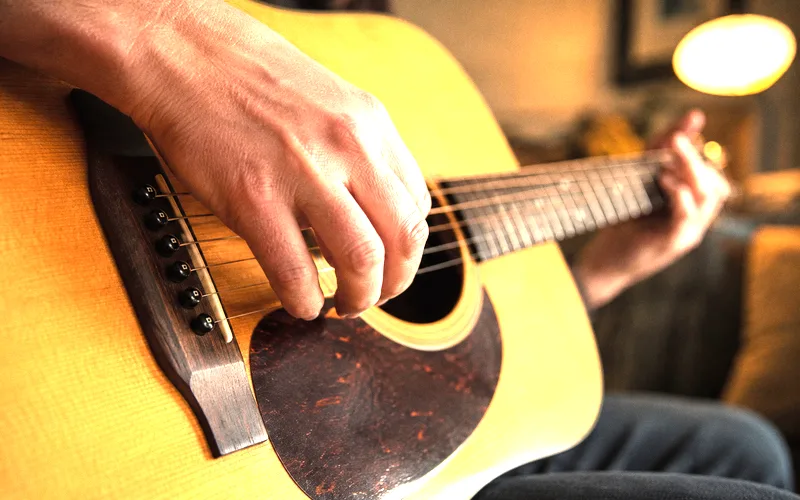
Taylor shook things up with the bolt-on neck joint, V-Class bracing, and the Expression System pickup. Their guitars tend to play great right out of the box, with reliable action and intonation across the entire lineup.
Yamaha dominates the beginner and mid-range segment with guitars that outperform their price tags. The FG800 series has introduced more new players to acoustic guitar than possibly any other model line, with solid spruce tops and comfortable playability at budget prices.
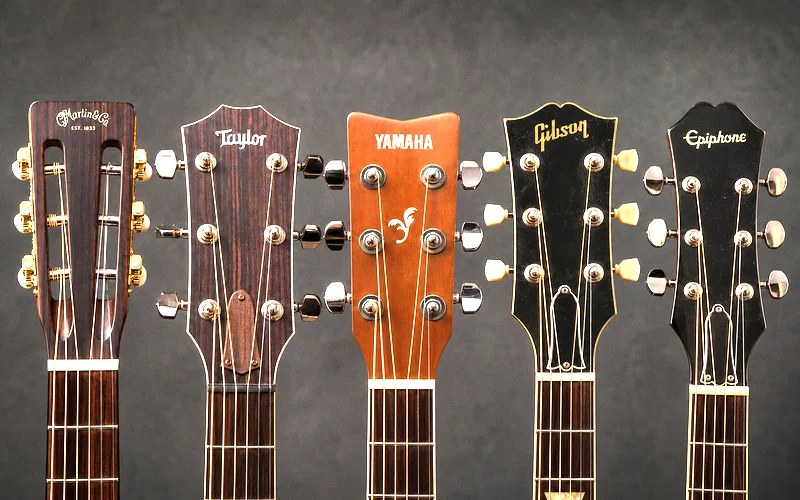
Gibson, Epiphone, Takamine, Seagull, and Fender round out the field. Gibson's J-45 and Hummingbird are legendary, Epiphone delivers Gibson designs at friendlier prices, Takamine builds outstanding acoustic-electric systems, and Seagull offers all-solid-wood construction at prices that undercut the competition.
Beginners can find quality solid-top acoustic guitars starting around $150 to $200, while professional-grade instruments with premium tonewoods typically start at $1,000.
How much you should actually spend depends on where you are as a player and what you plan to do with the guitar. Here's what each price tier gets you.
This range gets you a solid-top guitar from Yamaha, Fender, or Epiphone with laminate back and sides. A solid top resonates better than all-laminate construction and improves as the wood opens up.
The Yamaha FG800 and Fender CD-60S remain the top recommendations at this price.
Expect functional hardware and decent playability. Setup quality varies at this tier, so budget for a professional setup if the action feels too high out of the box.
Solid tops become standard and all-solid-wood options appear around $500, with improved bracing, upgraded tuners, bone nut and saddle, and refined finish work. Taylor, Martin, Seagull, and Takamine all offer strong options in this range.
Honestly, this is where most serious players find the sweet spot. Guitars in this bracket handle recording, gigging, and decades of playing without ever feeling like a compromise.
Premium tonewoods, hand-scalloped bracing, and meticulous quality control define this tier. You'll hear richer harmonics, longer sustain, and a dynamic responsiveness that lets every playing nuance come through.
Martin's D-28, Taylor's 314ce, and Gibson's J-45 anchor this range as benchmarks. Above $2,000, you enter the realm of custom shop builds and rare tonewoods that appreciate in value alongside their improving tone.
Proper acoustic guitar maintenance comes down to three things: controlling humidity, changing strings regularly, and storing the instrument safely.
Acoustic guitars are pickier about their environment than solid-body electrics. That resonant top reacts to humidity, temperature, and rough handling.
Keep relative humidity between 45% and 55% in the room where you store your guitar, using a soundhole humidifier during dry winter months or in arid climates. Prolonged exposure below 40% can crack tops, separate bridges, and warp necks beyond repair.
Store your guitar in a hardshell case when not playing, ideally in a room that stays between 65°F and 75°F. Avoid leaving it near heating vents, air conditioners, or direct sun. Rapid temperature swings are just as damaging as low humidity.
Change strings every one to three months based on playing frequency, and wipe them down after each session to remove oils that corrode the windings. Condition unfinished rosewood or ebony fretboards with fretboard oil two to three times per year.
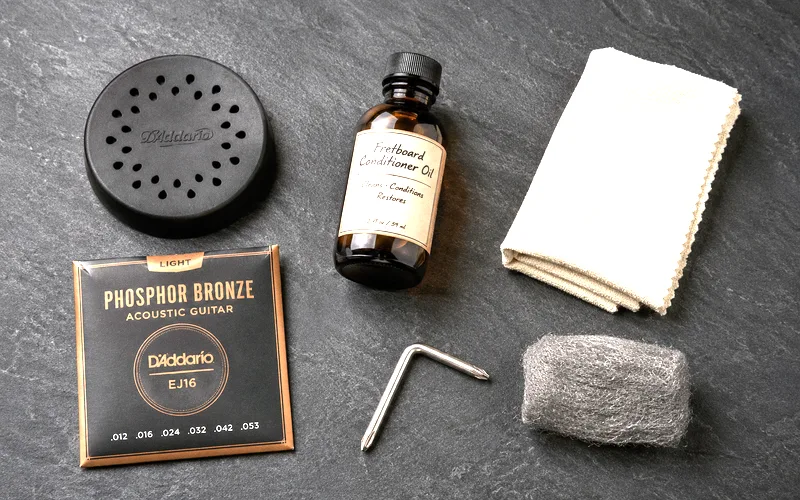
Check neck relief once per season. Humidity shifts between summer and winter often require minor truss rod adjustments to keep the action comfortable.
The grand auditorium handles strumming, fingerpicking, and flatpicking equally well without strongly favoring any single technique. Its balanced frequency response works across genres from folk and country to pop and blues, making it the safest single-guitar choice for players who don't specialize in one style.
The jump from a $200 laminate guitar to a $500 solid-wood instrument is dramatic and worth every dollar. Beyond $1,000, improvements become more incremental, and you're paying for premium materials and build quality that experienced players appreciate most.
A dreadnought or grand auditorium with a solid spruce top in the $150 to $300 range covers the widest ground for a first guitar. Both shapes are forgiving across playing styles, widely stocked at music stores, and versatile enough to serve you well as your technique develops.
A well-maintained acoustic guitar with a solid wood top can last 50 years or longer. Vintage Martins and Gibsons from the 1930s are still played professionally today.
Humidity control and regular string changes are the biggest factors in long-term playability.
Solid-top acoustic guitars do improve with age as the wood fibers loosen and the soundboard vibrates more freely. This is most noticeable during the first five to ten years but continues gradually over the guitar's lifetime.
A solid wood top is cut from a single piece of tonewood that resonates more richly and improves in tone as it ages. Laminate tops use thin pressed wood layers that are more durable and affordable but don't vibrate as freely or develop better sound over time.
Every acoustic guitar type exists to solve a specific problem. Dreadnoughts deliver raw volume for strummers, parlor guitars offer intimate warmth for solo playing, and grand auditoriums split the difference for players who need one guitar to do everything.
Understanding body shapes, tonewoods, and string types puts you in a stronger position to pick an instrument that matches how you play rather than how it looks on a wall. Start with the playing style table above, match it to your budget, and the right choice narrows itself down quickly.
roundup We rank 10 cutaway acoustic guitars under $1000 on tone, build, and electronics. From Blueridge to Martin, reach the high frets without overspending.
 review
 Taylor 914CE Dave Matthews Signature review: tone, build, and feel tested hands-on, plus who this premium Grand Auditorium really makes sense for in 2026.
 guide
guide Learn how an acoustic guitar produces its warm, resonant sound, why tonewood and strings change the tone, and how to get the best sound from your guitar.
 roundup
 We tested 10 of the best acoustic guitars across every budget, rated on tone, build quality, and playability to help you find the right one for your hands.
 review
 An in-depth Yamaha FS850 review covering its all-mahogany tone, small concert body, build quality, and who this affordable acoustic guitar is really for.
 review
 Yamaha JR-1 review: our verdict on this 3/4-size acoustic for kids and travelers, the FG pedigree behind it, and where the small body gives ground.
 roundup
 From Taylor and Martin to Yamaha and Guild, here are the 14 best acoustic guitar brands in 2026, with the history, tone, and value behind each one.
 roundup
 Looking for the best Taylor acoustic guitar? We rank 8 standout models by tone, build quality, and value, from the budget GS Mini to the flagship 814ce.
 roundup
 The best classical guitars for the money in 2026, reviewed and ranked: 4 nylon-string picks for first-timers, upgraders, and pint-sized players.
 guide
guide Are Taylor acoustic guitars good? Here's why the brand earns its premium reputation, what justifies the price tag, and which players gain the most from one.
 review
 Our hands-on Epiphone Dove Pro review tests the tone, build, and electronics behind those famous looks, and tells you exactly who should buy one.
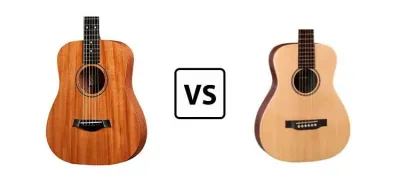 comparison
 Baby Taylor vs Little Martin: how these small-body rivals differ in tone, build, and feel, plus a clear verdict on which mini acoustic to buy.