
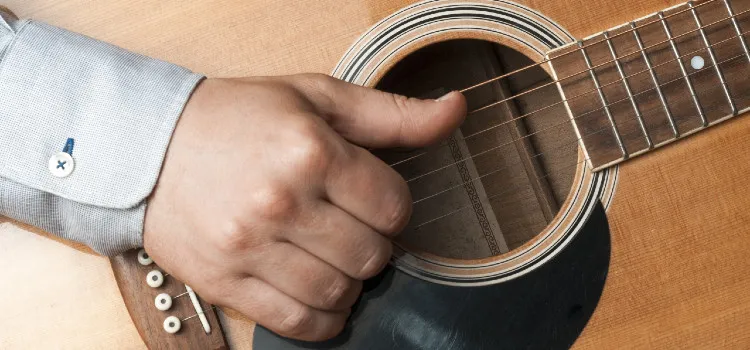
Strumming hides a guitar’s flaws, but fingerstyle exposes them. When you pluck each string on its own, every note has to ring clear, so how cleanly the guitar separates notes matters more than sheer volume.
The specs to look for are solid-wood construction for resonance, a body that balances projection with clarity, and a neck that stays comfy for hours. Smaller shapes like 000, auditorium, and grand performance tend to suit fingerpickers, while dreadnoughts trade some intimacy for power.
We rated nine guitars on what a fingerpicker really cares about: tonewood, note separation, playability, and value. The lineup spans premium all-solid builds down to friendlier bundles.
Whether you’re recording quiet pieces or learning your first Travis-picking pattern, there’s a fit here. The chart is next.
Quick Comparison Chart
| # | Product | Our Rating | ||
|---|---|---|---|---|
| 1 |  |
Martin 000-15M | ★★★★★ | Check Price |
| 2 |  |
Fender PM-3 Triple-0 All-Mahogany | ★★★★★ | Check Price |
| 3 |  |
Yamaha LL6 | ★★★★☆ | Check Price |
| 4 |  |
Martin Road Series GPC-13E | ★★★★☆ | Check Price |
| 5 |  |
Takamine GD20-NS | ★★★★☆ | Check Price |
| 6 |  |
Martin X Series D-X1E | ★★★★☆ | Check Price |
| 7 |  |
Epiphone DR-500MCE | ★★★★☆ | Check Price |
| 8 |  |
Taylor Big Baby Taylor | ★★★★☆ | Check Price |
| 9 |  |
Fender CD-60 Dreadnought | ★★★★☆ | Check Price |
Note Separation Comes First
All-mahogany builds take the top two spots, the Martin 000-15M and Fender PM-3, because mahogany’s focused midrange keeps plucked notes from blurring together. The Yamaha LL6 counters with a treated spruce top that sounds played-in from day one.
The Takamine GD20-NS hides a fingerstyle-specific detail: a split-saddle bridge that improves intonation across the middle strings, right where alternating-thumb patterns live.
1. Martin 000-15M

Martin 000-15M
All-solid mahogany auditorium guitar with a compensated bone saddle for warm, balanced fingerstyle tone.
Pros
- All-solid mahogany body, top, back, and sides
- 000 auditorium shape suits fingerstyle perfectly
- Compensated bone saddle improves intonation
- Standard-taper neck plays comfortably for hours
Cons
- Premium price for a no-frills build
- No onboard electronics or cutaway
The 000-15M is about as close to a purpose-built fingerstyle guitar as you’ll find at this price. Its all-solid mahogany construction gives a warm, woody voice with excellent note-to-note separation, and the 000 auditorium body delivers enough projection without the boominess of a dreadnought.
The compensated bone saddle and standard-taper neck round out an instrument that simply gets out of your way.
It isn’t the flashiest guitar on this list, and you pay a premium for a build with no electronics or cutaway. But for pure unplugged fingerstyle tone, nothing else here matches it.
It also arrives ready to play right out of the case.
2. Fender PM-3 Triple-0 All-Mahogany

Fender PM-3 Triple-0 All-Mahogany
Solid mahogany Triple-0 with an ovangkol bridge and fingerboard for warm, articulate fingerpicking.
Pros
- Solid mahogany top, back, and sides
- Triple-0 body balances volume and clarity
- Ovangkol bridge and fingerboard add warmth
- Vintage-inspired checkerboard purfling and rosette
Cons
- Not ideal for heavy strumming or hard picking
- Sits at a mid-to-high price point
Fender’s Paramount PM-3 proves the brand can do high-end acoustics, not just electrics. The all-solid mahogany Triple-0 body produces a focused, articulate tone that lets every plucked note breathe, while the ovangkol bridge and fingerboard add a touch of warmth and sustain.
Vintage-inspired checkerboard purfling and rosette give it real character on stage.
The trade-off is that it’s tuned for nuance rather than power, so it isn’t the guitar for heavy strumming or aggressive flatpicking. For fingerstyle players who want clarity and a bit of style, though, it’s a standout at its price.
3. Yamaha LL6

Yamaha LL6
Solid Engelmann spruce top treated with A.R.E. and a passive pickup for detailed amplified fingerstyle.
Pros
- Solid Engelmann spruce top treated with A.R.E.
- Rosewood back and sides for rich resonance
- SRT Zero Impact pickup keeps tone natural
- Comfortable 5-ply traditional-profile neck
Cons
- No cutaway for upper-fret access
- Active EQ controls are minimal
The LL6 is the value champion of this roundup. Yamaha puts a solid Engelmann spruce top treated with their Acoustic Resonance Enhancement process on a body with rosewood back and sides, a combination usually reserved for guitars costing far more.
The result is a rich, balanced tone with the note clarity fingerpickers need.
It also ships with Yamaha’s passive SRT Zero Impact pickup, which keeps the amplified sound natural and detailed rather than quacky. The lack of a cutaway is the only real knock, and the minimal onboard controls keep things simple rather than limiting.
4. Martin Road Series GPC-13E
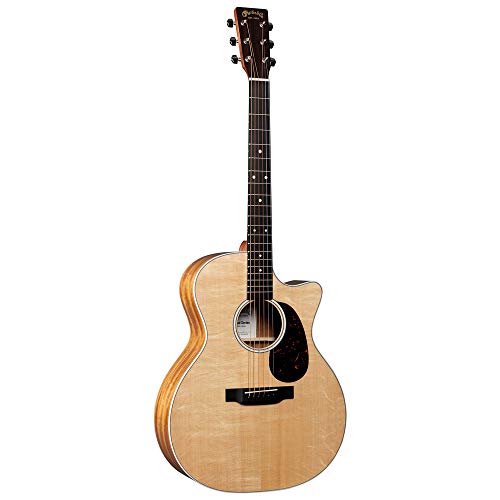
Martin Road Series GPC-13E
Grand Performance cutaway with a Sitka spruce top and Fishman MX-T electronics for stage-ready fingerstyle.
Pros
- Solid Sitka spruce top projects clearly
- Grand Performance waist improves mid response
- Cutaway gives easy upper-fret access
- Fishman MX-T electronics with onboard tuner
Cons
- Mutenye back and sides feel less traditional
- Pricier than other Road Series models
Built for players on the move, the GPC-13E pairs a solid Sitka spruce top with Martin’s Grand Performance body shape. The narrower waist sharpens mid-range response and makes the guitar comfortable to hug close during long sessions, while the cutaway opens up easy access to the upper frets for melodic fingerstyle lines.
Onboard Fishman MX-T electronics with a built-in tuner make it gig-ready out of the box. The mutenye back and sides feel a little unconventional next to traditional rosewood or mahogany, and it sits at the higher end of the Road Series, but the tone justifies it.
5. Takamine GD20-NS
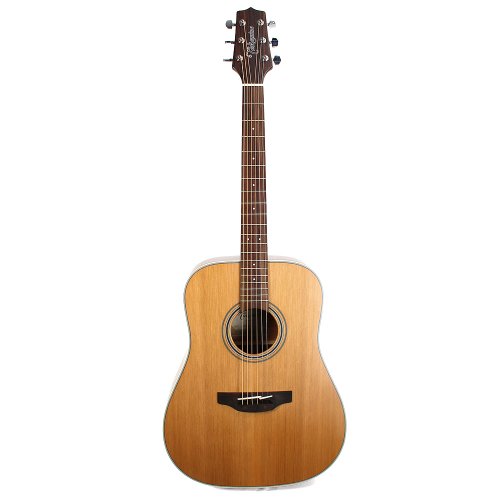
Takamine GD20-NS
Solid cedar dreadnought with a split-saddle pin-less bridge that sharpens single-note definition.
Pros
- Solid cedar top responds fast and warm
- Split-saddle bridge improves intonation
- Bone nut and saddle aid tone transfer
- Slim satin neck enhances playability
Cons
- Dreadnought size can muddy quiet passages
- No onboard electronics on this model
Takamine’s GD20-NS brings a solid cedar top to the table, and cedar’s fast, warm response is a natural match for fingerstyle. The standout feature is the split-saddle pin-less rosewood bridge, which improves intonation so single-note runs and chords ring true across the neck.
Bone nut and saddle help transfer that tone efficiently.
The slim satin-finish neck makes fretting easy, which matters for intricate picking patterns. Its dreadnought body can get a touch boomy on the quietest passages, and there are no electronics on this model, but as an affordable acoustic it punches well above its weight.
6. Martin X Series D-X1E
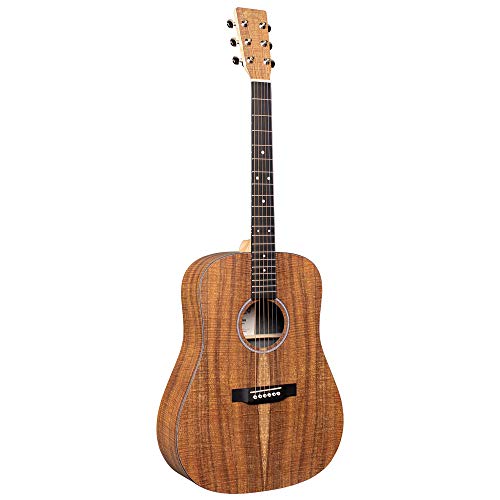
Martin X Series D-X1E
Lightweight koa-pattern HPL dreadnought with Fishman MX electronics that captures delicate fingerstyle dynamics.
Pros
- Fishman MX electronics amplify soft playing well
- Durable HPL shrugs off humidity swings
- Lightweight and easy to handle
- Includes a gig bag for travel
Cons
- HPL body lacks solid-wood resonance
- Birch laminate neck feels less premium
The D-X1E is the practical, take-anywhere option. Its koa-pattern high-pressure laminate body won’t match solid wood for resonance, but it shrugs off humidity and temperature swings that would’ve a finer guitar fighting its setup.
That durability makes it a great couch, campfire, or travel companion.
Where it really earns its place is the Fishman MX electronics, which capture even the softest fingerstyle dynamics and amplify them cleanly. The birch laminate neck feels a step down from premium models, but the included gig bag and rugged build make this a sensible workhorse.
7. Epiphone DR-500MCE

Epiphone DR-500MCE
Solid-wood acoustic-electric dreadnought with bright highs and rich lows for versatile fingerpicking.
Pros
- All-solid tonewoods at a reasonable price
- Clear highs and rich lows balance nicely
- Built-in preamp with onboard tuner
- Handcrafted dovetail neck joint
Cons
- Plastic bridge pins can break if mishandled
- Dreadnought is large for tight fingerstyle
Epiphone’s DR-500MCE delivers all-solid tonewoods at a price that undercuts most of its rivals. That solid-wood construction gives it bright highs and rich lows with controlled mids, a versatile voice that handles fingerpicking and light strumming alike.
The handcrafted dovetail neck joint shows real attention to build quality.
Its onboard preamp and tuner make it stage-friendly, and it sounds good plugged in or acoustic. The plastic bridge pins can be fragile if you’re careless during string changes, and the full dreadnought body is on the large side for tight fingerstyle, but the value is hard to argue with.
8. Taylor Big Baby Taylor

Taylor Big Baby Taylor
Slightly scaled-down dreadnought with a solid top and slim neck that stays comfortable for hours.
Pros
- Solid top gives a rich tonal range
- Slim neck makes fingerpicking easy
- Ergonomic size suits long practice sessions
- Strong mid tones for pleasing harmony
Cons
- Narrow nut width crowds the fretboard
- No onboard electronics included
The Big Baby Taylor is a slightly scaled-down dreadnought that stays remarkably comfortable for long practice stretches. Its solid top gives it a richer tonal range than its budget billing suggests, and the slim, easy-playing neck is forgiving for newer fingerpickers still building dexterity.
Strong mid tones lend a pleasing harmony to picked passages.
The main limitation is the narrower nut width, which crowds the strings and can make wide fingerstyle stretches feel cramped. There are no electronics here either, but as a comfortable, good-sounding guitar to grow with, it holds up well.
9. Fender CD-60 Dreadnought

Fender CD-60 Dreadnought
Budget laminate dreadnought that ships with a hard case, well-rounded for beginning fingerpickers.
Pros
- Well-rounded, mellow all-purpose tone
- Comfortable C-shaped mahogany neck
- Lightweight and easy to play
- Walnut fingerboard feels smooth under the fingers
Cons
- Laminate body limits projection and depth
- Some report tuning peg and hardware issues
Rounding out the list, the Fender CD-60 is the entry point for beginners who want everything in one box. The bundle includes a hard case, strap, tuner, strings, picks, and instructional materials, so a new player can start the same day it arrives.
The C-shaped mahogany neck is genuinely comfortable for learning picking patterns.
Its laminate body keeps the cost down but also limits projection and tonal depth compared with the solid-wood options above, and a few owners report hardware quibbles. Still, for a well-rounded, mellow-sounding first fingerstyle guitar on a tight budget, it does the job.
Final Thoughts
For pure fingerstyle tone, the Martin 000-15M is the one to beat. Its all-solid mahogany body and 000 auditorium shape deliver the warmth, note separation, and comfortable playability that fingerpicking demands, and it does it all unplugged without any gimmicks.
If your priority is stage performance, look to the Martin Road Series GPC-13E or the Yamaha LL6. Both pair solid tops with capable onboard electronics, the Martin adding a cutaway for upper-fret runs and the Yamaha offering remarkable value with its A.R.E.-treated spruce.
On a tighter budget, the Takamine GD20-NS and Taylor Big Baby Taylor both punch above their price, while the Fender CD-60 bundle remains a sensible starting point for anyone picking up fingerstyle for the first time.
The biggest differentiator across this category is solid-wood construction. Solid tops and bodies bring out the clarity and resonance that make fingerstyle sing, so if your budget allows, prioritize a guitar with a solid top before chasing extra features.