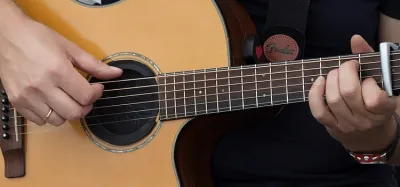
Buy a first guitar in a hurry and the regret shows up fast: high action, a flat voice, a neck that fights you. The Taylor Academy 10e was drawn up to head off that exact disappointment.
It isn’t a cut-down version of a costlier Taylor. Taylor designed it from scratch so beginners get real playability and a true spruce top without a four-figure price.
The target buyer is clear. You’re starting out, or trading up from a first guitar you wrestled with, and you want comfort that carries you well past month one.
It earns a spot among the top acoustic guitars for the money, and it shows up in our best Taylor acoustic guitars roundup too. We’ll start with how it sounds and plays.

Taylor Academy 10e
A beginner-friendly acoustic-electric dreadnought with genuine Taylor playability and stage-ready ES-B electronics.
Pros
- Genuine Taylor playability with low, comfortable action
- Bright, resonant Sitka spruce tone with strong projection
- ES-B electronics with a built-in chromatic tuner
- Armrest bevel adds real long-session comfort
Cons
- No dedicated bass control on the preamp
- Layered (not all-solid) sapele back and sides
- Battery access for the electronics is slightly awkward
Sound and Playability
The 10e has the bright, resonant character you expect from a Sitka spruce top, with clear trebles and solid projection. It carries the spruce-top hallmarks of the wider Taylor acoustic guitar range, so single notes ring out cleanly and chords have plenty of sparkle.
At low volumes it stays remarkably detailed and nuanced, which makes it just as rewarding for quiet practice as it’s for full-volume strumming.
As a dreadnought, the 10e leans into lower-mid presence and a deeper bass response than the smaller-bodied Academy 12e grand concert. It’s a genuine all-rounder: delicate fingerpicking comes through with definition, and the projection holds its shape even under heavy strumming without turning muddy.
Whether you prefer that fuller dreadnought voice over the tighter 12e is down to personal taste, but the 10e is the one to reach for if you want body and warmth.
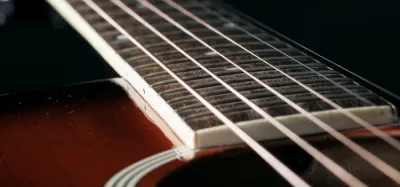
If there’s one thing the Taylor badge reliably buys you, it’s a neck that makes hard things feel easier. The action out of the box is low and welcoming across the ebony fingerboard, and the slim neck profile makes barre chords and longer playing sessions far less tiring.
New players in particular benefit here, because a guitar that feels easy is a guitar you actually keep picking up. Combined with the responsive top, it delivers an instantly pleasant playing experience.
Build and Features
The 10e is built around a Sitka spruce top with layered sapele back and sides. That layered construction uses a three-ply configuration, sapele veneer on the outer faces over a poplar core, which makes the body more resistant to humidity swings and knocks than an all-solid guitar.
The hardware is a notch above what you usually find at this price: an ebony bridge and fingerboard, a Micarta saddle, and a NuBone nut. The sapele neck has a 24-7/8 inch scale length, a 1-11/16 inch nut width, and 20 frets, with a slim profile that hints at a rounded “V” at its center.
The standout feature is the armrest bevel, an ergonomic touch usually reserved for far more expensive custom acoustics. It softens the edge where your forearm rests on the body, which genuinely improves comfort over long sessions.
The aesthetics are understated and elegant, with no binding or purfling. The visual details are limited to the Taylor name on the headstock, Italian acrylic dot inlays, and a three-ring rosette.
This is an acoustic-electric, and it ships with Taylor’s ES-B pickup and preamp system. That includes an onboard digital chromatic tuner alongside standard tone and volume controls, so you can tune up and plug straight into an amp or PA without adding an aftermarket pickup.
Plugged in, the 10e sounds impressive immediately, with a rich low end and strong note definition. The one caveat is that the high end can get punchy as you roll the tone control down, and with no dedicated bass control some live players dial things in via an external EQ pedal or the mixing desk.
Who It Is For
The Taylor Academy 10e is an easy recommendation for a few specific players:
- Beginners who want to start on a real instrument. The low action, slim neck, and forgiving build make it approachable, while the Taylor name guarantees the quality holds up as you improve.
- Players upgrading from an entry-level acoustic. If your first guitar fought you on playability or sounded thin, the 10e is a meaningful step up in both tone and feel.
- Singer-songwriters and small-venue performers. The onboard ES-B electronics and built-in tuner make it stage-ready out of the box, so it can travel from the bedroom to the stage with you.
It’s less ideal if you’re a working live player who needs granular control over your amplified bass response, or if you specifically want the brighter, tighter voice of a smaller-bodied guitar, in which case the Baby Taylor or the Academy 12e may suit you better.
Frequently Asked Questions
Is the Taylor Academy 10e good for beginners?
Yes. The Academy Series was designed with first-time players in mind, and the 10e delivers low action, a slim neck, and a forgiving body shape that make it easy to learn on.
Because it’s a real Taylor, the playability and tone are good enough that you won’t outgrow it quickly.
Does the Taylor Academy 10e have a pickup?
Yes. The 10e is an acoustic-electric fitted with Taylor’s ES-B pickup and preamp system, which also includes an onboard digital chromatic tuner plus tone and volume controls.
You can plug straight into an amp or PA with no extra hardware.
Is the Taylor Academy 10e a solid wood guitar?
It has a solid Sitka spruce top, but the back and sides are layered sapele, a three-ply construction with a poplar core. That layered build is more resistant to temperature and humidity changes than an all-solid guitar, which is part of why it stays stable and reliable.
What’s the difference between the Taylor 10e and 12e?
The main differences are body size, neck wood, and voice. The 10e is a dreadnought with a sapele neck and a fuller, bass-forward tone, while the 12e is a grand concert with a mahogany neck and a tighter, more treble-leaning voice.
Their features are otherwise nearly identical.
Final Thoughts
Taylor set out to build a high-quality, genuinely playable acoustic at an accessible price point, and the Academy 10e hits that brief with real style. It takes lessons learned from the brand’s more expensive instruments and channels them into a dreadnought that’s comfortable, resonant, and stage-ready thanks to its ES-B electronics.
The lack of a dedicated bass control is the only meaningful compromise, and for most players it’s an easy one to live with.
Like the GS Mini and the Baby Taylor, the 10e is the kind of guitar that earns fans well beyond the beginner bracket. If you want a first serious acoustic that you can grow into rather than out of, it’s an excellent choice.