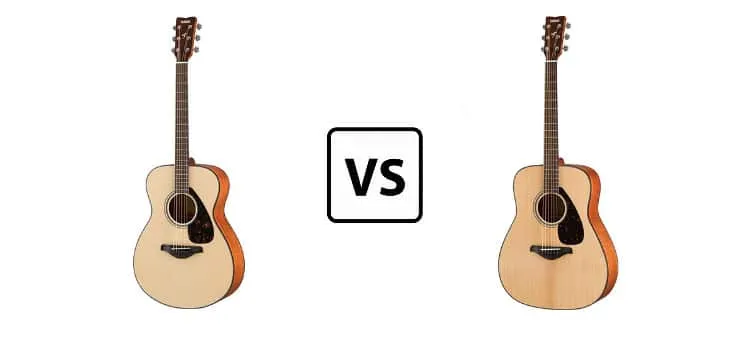
You’re choosing a first acoustic from Yamaha and keep bumping into two close picks. The FS800 and the FG800 use the same woods and the same build.
So the real question isn’t quality. It’s the shape that sits against your body.
The FS800 wears a smaller concert body with rounded curves. The FG800 is a full-size dreadnought with more low end and a bigger footprint.
This guide weighs how that one difference changes the sound, the weight, and the comfort of each guitar. Plenty ties these two together, though, so let’s start with what they share.
Quick Comparison
| Category | Yamaha FS800 | Yamaha FG800 | Winner |
|---|---|---|---|
| Body | Compact concert | Full dreadnought | Depends |
| Volume | Quieter and warmer | Louder, fuller, bolder | Yamaha FG800 |
| Small hands | The comfortable pick | Can feel bulky | Yamaha FS800 |
| Fingerpicking | Balanced voice favors it | A strummer's voice | Yamaha FS800 |
| Materials | Spruce top, nato body | Identical recipe | Tie |
| Case included | No | No | Tie |
| Overall | Comfort and fingerstyle | Volume and tradition | Depends |
What the Yamaha FS800 and FG800 Have in Common
The FS and FG series share a long list of features, which is why so many players cross-shop them. Here are the most important similarities:
- Neither the FS nor the FG acoustic guitars from Yamaha ship with a carrying case.
- Each is a pure acoustic with no built-in electronics, connections, or controls.
- Both the fingerboard and bridge are made of rosewood, which helps their durability and longevity.
- Both use a gloss-finished body that many amateur and professional guitarists love the look of.
- The nut and saddle on each model are made of urea.
- Both feature a Sitka spruce top and die-cast chrome tuners.
- All models use black ABS bridge pins with a white dot for a cleaner look.
- The fingerboard radius is around 15-3/4 inches on each guitar.
- Strings are typically D’Addario EXP11 paired with Yamaha hardware.
Where the FS800 and FG800 Differ
The two guitars also have clear differences, and almost all of them trace back to body size and shape:
- Body depth. The FG800 has a body depth ranging from 3-15/16 to 4-5/8 inches. The FS800 measures around 3-9/16 to 4-5/16 inches, so it sits a little shallower.
- Body length. The body length of the FG800 is 19-7/8 inches. The FS800 is slightly shorter at 19-9/16 inches.
- Body shape. The FG800 uses a traditional dreadnought shape, while the FS800 uses a smaller, rounded concert body.
- Pickguard. Most models in the series use a tortoise-pattern pickguard, but the FG800 uses a black one.
Yamaha FS800
Now that you know the shared features and the differences, let’s look closer at the Yamaha FS800 and, further down, the FG800.
The FS800 has built a strong following among both beginners and experienced players. It’s made with premium, top-grade materials and is constructed to last for years.
What many enthusiasts love most is its smaller, thinner concert body, which makes it an easy fit for younger players and anyone with a smaller frame.
That compact body also shapes its tone. The FS800 has a warmer, lighter, well-balanced sound with sweet tones, which makes it an excellent choice for fingerpicking and recording.
Measuring around 41.6 x 19.1 x 6 inches and weighing just 5.9 pounds, it’s genuinely light and easy to carry.
Whether you’re learning your first chords or playing on a stage, the FS800 is user-friendly and comfortable. It’s available in Natural and Ruby Red, so it looks as good as it plays.
FS800 Pros
- Compact and lightweight. The smaller concert body is portable and comfortable to hold for long sessions, which is a real advantage if a full dreadnought feels bulky.
- Sturdy and well-made. Yamaha builds these to high standards using quality materials, so the fit and finish punch above the price.
- Versatile across genres. Rock, classical, blues, country, and jazz all sit well on the FS800, making it a flexible practice instrument.
- A great choice for beginners. It’s functional and easy to play for newcomers, yet still satisfying for intermediate and advanced players.
FS800 Cons
- The smaller size isn’t for everyone. Players with larger hands or those who want a big, booming dreadnought voice may find the concert body too compact.
Yamaha FG800
The FG800 is the dreadnought sibling in Yamaha’s FG series. Like the FS800, it’s a barebones package aimed squarely at beginners and value-minded players.
It uses a 25-inch scale, a Sitka spruce top, and nato wood for the back and sides. The body has a glossy finish with a tortoiseshell pickguard and black-and-white bindings, giving it a classic, eye-catching look.
The fretboard is rosewood with 20 frets, and the neck has a satin finish that feels smooth in the hand. Die-cast chrome tuners help it hold tune well.
Thanks to its dreadnought shape and scalloped bracing, the FG800 delivers a resonant, loud, full-bodied sound. Measuring 42.5 x 20.7 x 6.1 inches and weighing 6.48 pounds, it’s heavier than the FS800 but still easy to carry.
FG800 Pros
- Competitively priced. It delivers serious value for players on a tight budget.
- Loud, full sound. The dreadnought body and scalloped bracing produce a clear, balanced, and noticeably louder tone than the FS800.
- Excellent for beginners. It’s a forgiving first guitar and also makes a great second guitar for rough, everyday practice.
FG800 Cons
- Handle with care. Like most gloss-finished acoustics, the body can scratch, so store it safely after long sessions to keep it looking good.
How the FS800 and FG800 Compare
Both guitars share the same Sitka spruce top, rosewood fingerboard, die-cast tuners, and Yamaha build quality, so you’re getting equal materials and reliability either way. The decision comes down to body shape and the sound and feel that follow from it.
For comfort and portability, the FS800 wins. Its smaller concert body is lighter and easier to wrap your arm around, which is ideal for younger players, smaller frames, and fingerstyle work where a warmer, more controlled tone is welcome.
For volume and projection, the FG800 takes the lead. The dreadnought body and scalloped bracing give it a bolder, louder, fuller voice that suits strumming and players who want a traditional acoustic sound.
If you mostly fingerpick, record, or want the most comfortable guitar to hold, go with the FS800. If you strum hard, play with others, or want maximum volume, the FG800 is the better pick.
You can also see how these two stack up against the rest of the lineup in our roundup of the best Yamaha acoustic guitars.
Frequently Asked Questions
Is the FS800 or FG800 better for beginners?
Both are excellent beginner guitars built to the same quality standard, so neither is a wrong choice. The FS800 is often easier for younger players or those with smaller hands because of its compact concert body.
The FG800’s dreadnought shape gives a more traditional acoustic feel and a louder sound, which some beginners prefer once they’re comfortable holding a full-size body.
Which Yamaha has the louder sound?
The FG800 is the louder of the two. Its larger dreadnought body and scalloped bracing produce more volume and a fuller, bolder tone.
The FS800 is quieter and warmer, with a balanced sound that favors fingerpicking and recording over raw projection.
Is the FS800 good for small hands?
Yes. The FS800’s smaller concert body and shallower depth make it more comfortable for players with smaller hands or shorter arms.
That compact size is one of the main reasons many newer and younger players choose it over the larger FG800.
Do the FS800 and FG800 come with a case?
No. Neither the FS800 nor the FG800 ships with a carrying case, so you’ll want to budget for a gig bag or hard case separately.
Picking up a case is worth it to protect the gloss finish, which can scratch with regular handling.
Final Thoughts
The Yamaha FS800 and FG800 are two of the best budget acoustics you can buy, and you genuinely can’t go wrong with either. They share the same top-grade materials and reliable build, so the real question is which body shape suits you.
Choose the FS800 if you want a lighter, more compact guitar that’s comfortable to hold and great for fingerpicking and recording. Choose the FG800 if you want a traditional dreadnought with a louder, fuller sound for strumming and playing with others.
Once you’ve decided, match the guitar to how you actually play, and you’ll have a dependable instrument that grows with you. When you’re ready to compare more options, check out our picks for the best Yamaha acoustic guitars.