
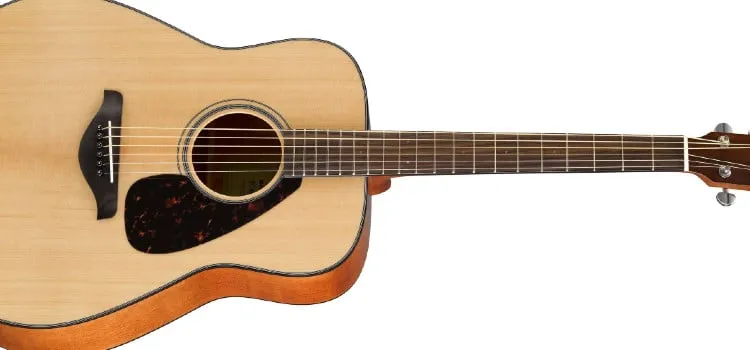
You’re shopping for a first acoustic, and the FG800 keeps landing on every shortlist you read. That kind of repeat recommendation usually means something.
The draw is simple. Yamaha built this dreadnought around a solid sitka top, then priced it under most rivals using the same wood.
We’ve spent real time with this one, and this review covers how it sounds, how it plays, what’s inside, and where it gives ground. By the end you’ll know if it belongs in your hands or if your cash is better spent elsewhere.
It also turns up often among the best sounding acoustic guitar picks at this level. Here’s our full take, starting with the specs and our verdict below.

Yamaha FG800
A solid-top dreadnought acoustic built for beginners and casual players who want real tone on a budget.
Pros
- Solid sitka spruce top that opens up over time
- Loud, balanced dreadnought tone
- Comfortable, beginner-friendly neck
- Diecast tuners and adjustable truss rod
Cons
- Usually benefits from a setup out of the box
- No onboard electronics on this model
Sound and Playability
The headline here’s the solid sitka spruce top. Most guitars at this price use fully laminated bodies, but the FG800’s solid top is what gives it real acoustic character.
It produces a loud, projecting voice with clear highs and a present low end, and because the top is solid, the tone continues to open up and resonate more richly the longer you play it. That’s something laminate tops simply can’t do.
The dreadnought body shape backs that up with volume and warmth. Strummed chords come through full and even, neither thin nor boomy, while fingerpicking stays articulate.
It handles aggressive strumming without breaking up, which makes it forgiving for players still developing their dynamics. For an instrument in this range, the balance between the strings is genuinely impressive.
Playability is where the FG800 wins over a lot of beginners. The neck profile is comfortable for new hands, and once it’s set up well, the action is low enough to make barre chords and longer practice sessions far less painful.
That ease of play matters more than people realize when you’re learning, since a guitar that fights you is a guitar that gets left in the case.
Build and Features
Yamaha didn’t cut the corners that usually get cut at this price. The back and sides are made from nato, a tonewood often called eastern mahogany, which adds warmth and keeps the body durable.
The fingerboard and bridge are both rosewood, giving you a smooth, broken-in feel under the fingers and a stable platform for the strings.
A few practical details round out the package:
- Solid sitka spruce top for tone that improves with age
- Nato back and sides for warmth and durability
- Rosewood fingerboard and bridge for a smooth, stable playing surface
- Diecast tuners that hold pitch reliably and turn smoothly
- An adjustable truss rod, so the neck relief can be dialed in as the seasons change
That truss rod is an underrated feature on a budget guitar. It means a tech, or you, can correct neck bow over time rather than living with a guitar that slowly drifts out of spec.
Combined with the diecast tuners, the FG800 stays in tune and stays playable, which is exactly what you want when you’re putting in the hours. If you want to see how it stacks up against the rest of the lineup, our roundup of the best Yamaha acoustic guitar models puts it in context.
Who It Is For
The FG800 is built first and foremost for beginners and returning players who want a real acoustic guitar without spending a fortune. If you’re buying your first instrument, this gives you a solid-top tone and a forgiving neck that won’t hold back your progress.
It’s also a smart pick for parents buying for a teen, since it’s durable enough to survive the learning curve.
It suits casual and intermediate players too. Plenty of people keep an FG800 around as a knockabout couch guitar or a take-anywhere strummer precisely because it sounds good, holds up, and wasn’t expensive enough to worry about.
Where it’s less of a fit is the gigging pro who needs an onboard pickup out of the box, since this version is acoustic only. But as a pure acoustic at this price, it’s hard to beat.
Frequently Asked Questions
Is the Yamaha FG800 good for beginners?
Yes, the FG800 is one of the most recommended beginner acoustics on the market. The comfortable neck, low action after a setup, and solid spruce top give new players an easy-to-handle guitar that still sounds genuinely good, which keeps motivation high while learning.
Does the Yamaha FG800 have a solid top?
It does. The FG800 features a solid sitka spruce top rather than a laminate, which is rare at this price.
A solid top resonates more openly and its tone matures the more you play it, so the guitar actually sounds better over the years.
Is the FG800 better than the FG830?
They share the same solid spruce top and body shape, so playability is similar. The main difference is the back and sides: the FG830 uses rosewood for a brighter, more detailed top end, while the FG800 uses nato for a warmer voice.
The FG800 is the better value, and many players prefer its warmth.
Does the FG800 need a setup?
Like most affordable guitars, the FG800 often plays best after a basic setup to lower the action and dial in the neck relief. Thanks to its adjustable truss rod, this is straightforward for a tech, and it makes a noticeable difference to comfort and fretting.
Final Thoughts
The Yamaha FG800 remains the benchmark beginner acoustic for a simple reason: it gives you a solid sitka spruce top, dependable hardware, and a forgiving neck at a price most competitors can’t match. Pair it with a quick setup and you have a guitar that sounds great, stays in tune, and will only get better as the top ages.
For first-time buyers and casual players alike, it’s an easy recommendation. Check Price on Amazon