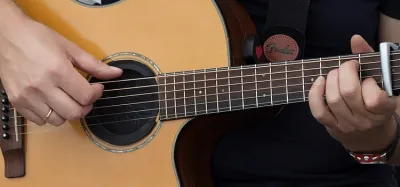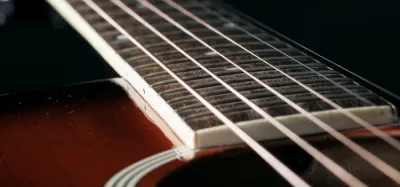

That square-shouldered Hummingbird body and hand-painted pickguard tempt almost everyone who sees one, until they check the price of a real Gibson and stop cold. The Epiphone Hummingbird Pro is built to bridge that gap.
It backs the famous look with a solid spruce top, a mahogany body, and Fishman Sonitone electronics. The result lands in mid-range territory while still being ready for the stage.
This one is aimed at developing and performing players who want that iconic style without Gibson money. If you want one acoustic to strum, fingerpick, and plug into a PA, keep reading.
We played it at home, at open-mic volume, and straight into an amp to see what survived the price cut. The sound and feel come first.

Epiphone Hummingbird Pro
A solid-top acoustic-electric for developing and performing players who want iconic Hummingbird style on a budget.
Pros
- Solid spruce top punches above its price
- Iconic Hummingbird looks and pickguard
- Reliable Grover Rotomatic tuners
- Built-in Fishman Sonitone electronics
Cons
- Often benefits from a setup out of the box
- Laminate back and sides, not all-solid
- Basic electronics with no built-in tuner
Sound and Playability
The Hummingbird Pro sounds noticeably better than its price suggests, and that comes down to the solid spruce top. Unlike fully laminated guitars in this bracket, a solid top vibrates more freely and opens up as it ages, so you get a warm, balanced tone with real projection.
Strummed chords ring out with a bright top end and enough low-end body to feel full, while fingerstyle passages stay clear and articulate.
The mahogany back and sides add warmth and a focused midrange, which keeps the sound from getting muddy when you dig in. It’s a versatile voice that suits singer-songwriter material, folk, country, and casual rock equally well.
Playability is a real strength here. This top Epiphone acoustic guitar ships with a slim-taper mahogany neck and a 24.75 inch scale length, the same shorter scale Gibson uses.
That shorter scale means slightly lower string tension, so chords and bends feel easier on the fingers and the action sits comfortably low. The adjustable truss rod lets you dial in the relief you want, and the rosewood fretboard with 20 frets feels smooth under the hand.
Build and Features
Visually, this is the part that sells most players. The Hummingbird Pro nails the classic aesthetic with its signature engraved Hummingbird pickguard, pearloid parallelogram inlays, and chrome hardware.
It looks far more expensive than it’s.
Under the looks, the spec sheet is strong for the money:
- Solid spruce top for resonance, projection, and tone that improves over time
- Mahogany body and neck for warmth and a focused midrange
- Rosewood fretboard with 20 frets and a 24.75 inch scale length
- Grover Rotomatic 18:1 tuners for precise, stable tuning that holds well
- Rosewood bridge with a compensated saddle for accurate intonation up the neck
- Fishman Sonitone electronics with a soundhole-mounted preamp for easy plug-in use
The Grover tuners are a genuine highlight at this price. Their high gear ratio makes fine tuning easy and keeps the guitar in tune through long sessions.
The compensated saddle is another thoughtful touch, helping notes stay in tune as you move up the fretboard.
The onboard Fishman Sonitone system is what turns this from a good acoustic into a true acoustic-electric. The volume and tone controls are tucked neatly inside the soundhole, keeping the body clean, and you can run straight into an amp or PA without any extra gear.
Who It Is For
The Hummingbird Pro is a strong fit for the player who wants that legendary Hummingbird look and a solid-top tone but isn’t ready to spend Gibson money, typically landing well under $600. It’s versatile enough to cover a wide range of styles, which makes it a smart pick for a developing player who wants one acoustic that can do it all.
It’s especially appealing if you plan to perform. With the Fishman electronics built in, you can rehearse acoustically at home and then plug into a PA at an open mic or small gig without buying anything else.
Beginners who have outgrown their first guitar and intermediate players wanting a reliable, good-looking second instrument will both feel right at home.
If you’re a stickler who demands a flawless factory setup or you want an all-solid-wood tonewood build, you may want to look higher up the range. For everyone else, the value here’s hard to beat.
Frequently Asked Questions
Is the Epiphone Hummingbird Pro a solid-top guitar?
Yes. The Hummingbird Pro has a solid spruce top, which is a big reason it sounds better than many laminate guitars at this price.
The back and sides are mahogany. A solid top resonates more freely and continues to open up tonally the more you play it.
Does the Hummingbird Pro need a setup out of the box?
Many players report dialing in a quick setup when the guitar arrives to get the action and intonation exactly how they like it. This is common for guitars in this price range and is easily handled thanks to the adjustable truss rod and compensated saddle.
A short visit to a tech, or a careful DIY adjustment, gets it playing beautifully.
Can you plug the Epiphone Hummingbird Pro into an amp?
Yes. It comes with a Fishman Sonitone preamp system, with volume and tone controls mounted discreetly inside the soundhole.
You can plug straight into an acoustic amp or a PA system, which makes it ready for open mics, rehearsals, and small gigs without any added gear.
How does it compare to a Gibson Hummingbird?
The Epiphone captures the look, the short scale, and much of the vibe of its Gibson namesake for a fraction of the cost. The main differences are the laminate back and sides versus Gibson’s all-solid construction, and the more affordable hardware and finish work.
If you want the full Gibson experience, you can read our review of the Gibson Hummingbird models for the comparison.
Final Thoughts
The Epiphone Hummingbird Pro is one of the smartest value buys in the mid-range acoustic-electric category. You get a solid spruce top, genuinely good Grover tuners, plug-and-play Fishman electronics, and that unmistakable Hummingbird styling, all for far less than the Gibson it’s modeled on.
The tone is warm and versatile, the short-scale neck is friendly to play, and the onboard pickup makes it gig-ready straight from the case.
Factor in a quick setup and accept that the back and sides are laminate rather than solid, and there’s very little to complain about. For a developing or performing player who wants a great-looking, great-sounding acoustic that won’t break the bank, this one is easy to recommend.