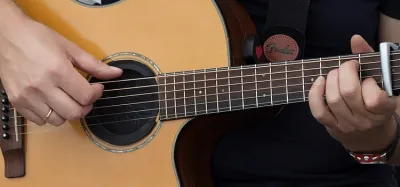

Tell a friend you play classical guitar and watch the assumptions roll in. They picture strict teachers, hard sheet music, and a hobby for people three times your age.
Almost none of it holds up. Nylon strings press easier than steel, and plenty of people learn on one as their very first instrument.
These wrong ideas do real damage. They steer curious players away from an instrument they would probably love.
Below we take on 11 of the most stubborn beliefs and show what’s actually true. Let’s start with the myths themselves.
11 Common Myths About Classical Guitar
There are plenty of myths floating around about classical guitar and the guitarists who play it. Let’s clear them up one by one.
1. Classical Guitar Is for Old People
Not true. Classical guitar can be played by anyone, of any age.
It may have carried an “older player” image in the past, but plenty of younger musicians have been picking it up for years now.
With so many young people interested in playing music today, classical guitar has actually become a popular starting point. Its forgiving nylon strings and slower repertoire make it a natural first instrument.
2. Classical Guitarists Are Boring
Not true. While you could argue that some classical players lean a little to the “stuffy” side, most of us who play classical guitar are fun, laid-back folks.
We love to have fun and make music, just like any other guitarist. The instrument you choose says very little about your personality.
3. Classical Guitarists Don’t Know How to Rock Out
Not true. In fact, a good rock-style solo on a classical guitar, done right, can be all sorts of awesome.
It isn’t just about raw technical ability either. The nylon-string tone brings its own character to phrasing and dynamics that many electric players never explore.
4. Classical Guitarists Have Extraordinarily Sensitive Fingers
When I was a kid, my little brother used to tease me and ask if I was an alien because he had never heard anyone talk about their calluses. Sure, we tend to build calluses on our fingertips, but they’re really not that bad.
Our fingertips simply adapt over time. That’s why you rarely see classical guitarists wearing bandages on their fingertips or complaining about how sore they’re.
5. Learning Classical Guitar Takes a Lot of Money
Learning classical guitar can be done with inexpensive, readily available materials. Whether you take lessons or learn on your own, which is usually more cost effective, all it really takes is the desire to learn plus some basic tools or a good teacher.
You don’t have to spend a fortune on the guitar itself, either. There are plenty of great beginner models that don’t break the bank.
6. Classical Guitars Are Expensive
On average, classical guitars range from a few hundred dollars to well over $20,000, and that isn’t even including the case. But the price you pay doesn’t always reflect the quality you get.
So yes, classical guitars can get expensive, but if you shop around you can find solid options at almost any price point. A modest budget is plenty to get started.
7. Classical Guitarists Can’t Play Any Other Music
There are plenty of players who do far more than classical pieces. The nylon-string guitar shows up in flamenco, bossa nova, jazz, folk, and even rock arrangements.
It isn’t nearly as uncommon as you’d think. The instrument is far more flexible than its name suggests.
8. Classical Guitar Is a Bad Choice for Beginners
Not true. Classical guitar is often called “the instrument without pretension” because its slower tempo and softer nylon strings ask less of a new player, which makes it accessible at any level.
There are certainly harder pieces for players with prior experience, but starting on classical guitar is most certainly not out of the question for beginners. For many, it’s the gentlest way in.
9. Classical Guitarists Don’t Have Personal Lives
To be fair, the slower, more contemplative nature of classical guitar does attract players who love deep study and can lean introverted. It isn’t unusual to find a classical guitarist at home with a book when they aren’t playing.
But that’s a love of the craft, not a lack of a life. Plenty of classical players are out gigging, teaching, and socializing like any other musician.
10. Classical Guitarists Are Old-Fashioned
Not true at all. Since the revival of the classical guitar around a century ago, it has built a reputation as a remarkably modern and forward-thinking instrument.
Composers and players continue to push it in new directions, blending traditional technique with contemporary styles and recording approaches.
11. Classical Guitarists Can’t Play Other Instruments
Again, not true. Many classical guitarists pick up other instruments, and many musicians come to classical guitar from somewhere else.
Learning a second instrument keeps your hands and brain busy enough that you’re far less likely to get bored, so plenty of classical players branch out naturally.
Frequently Asked Questions
Is classical guitar harder to learn than acoustic guitar?
Not necessarily. The wider neck and nylon strings of a classical guitar feel different from a steel-string acoustic, but those soft nylon strings are much easier on beginner fingertips.
Many new players actually find classical guitar more comfortable to start on. The techniques you build transfer well if you later switch to steel-string or electric.
Can you play modern songs on a classical guitar?
Absolutely. While the instrument was built for classical repertoire, the nylon-string tone works beautifully for pop, folk, jazz, bossa nova, and flamenco.
You’ll lose some of the brightness and sustain of a steel-string guitar, but plenty of contemporary songs sound great, and often more intimate, on a classical guitar.
How much should a beginner spend on a classical guitar?
A capable beginner classical guitar is widely available without spending a fortune. The goal is an instrument that stays in tune and plays comfortably so you stick with practice.
Spending more buys better tonewoods and craftsmanship, but it isn’t required to learn. Focus on playability and a comfortable neck before chasing a premium price tag.
Do you need long fingernails to play classical guitar?
Many classical players grow and shape the fingernails on their picking hand to get a clearer, fuller tone. It’s a common technique, but it isn’t strictly required, especially when you’re starting out.
You can play perfectly well with the flesh of your fingertips. Nail technique is something you can explore later as your playing develops.
Final Thoughts
Most of the reputations that follow the classical guitar around simply don’t hold up. It isn’t just for older players, it isn’t boring, and it doesn’t demand a huge budget or superhuman fingers.
The reality is that classical guitar is one of the most versatile and beginner-friendly instruments you can choose. The nylon strings are gentle on new players, the repertoire spans far beyond classical music, and the technique you build carries over to almost any other style.
So if any of these 11 misconceptions had you hesitating, consider this your nudge to think again, and maybe pick one up for yourself.