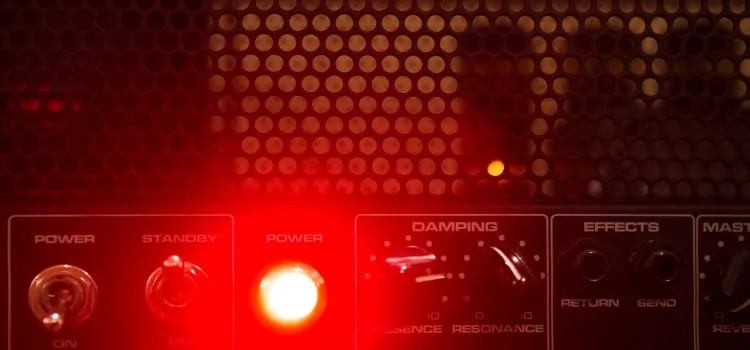
Shopping for a tube amp usually starts with one honest question. Where will you actually play it?
A bedroom, a corner bar, and a packed club each need something different. That’s why a 15-watt Fender Blues Junior IV can suit a home player better than an 85-watt Twin Reverb.
Wattage trips people up the most, since loud amps want real volume before the tubes start to sing. We picked ten amps and spelled out who each one fits and where it comes up short.
If you’re still torn between tubes, modeling, and solid-state, our guide to choosing a guitar amp covers the trade-offs. The chart below lines up all ten so you can scan them fast.
Quick Comparison Chart
| # | Product | Our Rating | ||
|---|---|---|---|---|
| 1 |  |
Fender 65 Twin Reverb | ★★★★★ | Check Price |
| 2 |  |
Marshall DSL40CR | ★★★★★ | Check Price |
| 3 |  |
Fender Blues Junior IV | ★★★★☆ | Check Price |
| 4 |  |
EVH 5150 III 50W EL34 | ★★★★☆ | Check Price |
| 5 |  |
Vox AC30C2 | ★★★★☆ | Check Price |
| 6 |  |
Marshall SV20C Studio Vintage | ★★★★☆ | Check Price |
| 7 |  |
Fender Bassbreaker 30R | ★★★★☆ | Check Price |
| 8 |  |
Friedman Runt 20 | ★★★★☆ | Check Price |
| 9 |  |
Blackstar HT Stage 60 Mark II | ★★★★☆ | Check Price |
| 10 |  |
Fender 59 Bassman LTD | ★★★★☆ | Check Price |
Watts for Every Room
The ladder runs from the Blues Junior’s 15 watts to the Twin Reverb’s 85, with the smart middle held by switchable designs like the DSL40CR and SV20C that drop power for home use.
The Friedman Runt 20 is the modern thinker with an XLR cab-sim output for silent recording, while the ‘59 Bassman LTD remains the vintage benchmark everything else borrowed from.
1. Fender 65 Twin Reverb

Fender 65 Twin Reverb
85-watt all-tube combo with two Jensen C-12K speakers and legendary Fender spring reverb for pristine clean tone.
Pros
- Massive clean headroom that stays clear at volume
- Two 12-inch Jensen speakers deliver clarity and note separation
- Spacious, surf-worthy all-tube spring reverb
- The benchmark clean tone trusted by countless pros
Cons
- Heavy and awkward to carry to gigs
- Overkill wattage for bedroom practice
The Fender 65 Twin Reverb is the standard against which clean tube tone is measured. Its 85 watts and two 12-inch Jensen C-12K speakers deliver incredible clarity and note separation, with enough clean headroom to stay glassy even at stage volume.
The legendary all-tube spring reverb adds spacious, surf-worthy ambience that has defined countless records, which is why so many pros keep one in their rig despite the weight.
2. Marshall DSL40CR
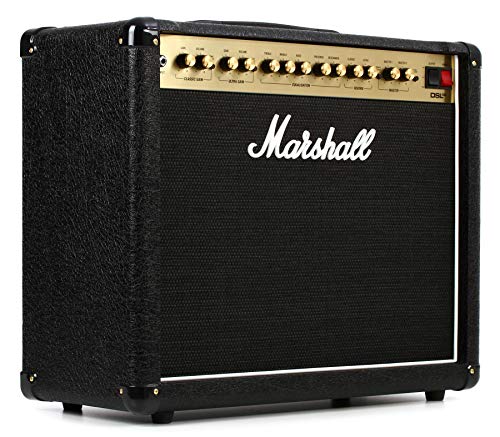
Marshall DSL40CR
Versatile 40-watt all-tube combo with two channels, reverb, and a power reduction switch down to 20 watts.
Pros
- Two footswitchable channels span clean to high gain
- Power reduction to 20W for cranked tone at lower volume
- Built-in digital reverb and resonance control
- Celestion V-Type speaker and EL34 power tubes
Cons
- Clean channel can be a touch noisy
- Single 12-inch speaker limits low-end push
The Marshall DSL40CR is one of the most versatile and best-value tube combos on the market. Its two footswitchable channels move from sparkling clean to thick high gain, and the power reduction switch drops the 40-watt output to 20 watts so you can get cranked tube tone without polluting the neighborhood.
A Celestion V-Type speaker, EL34 power tubes, built-in digital reverb, and a dedicated resonance control round out a genuine workhorse for gigging and recording.
3. Fender Blues Junior IV

Fender Blues Junior IV
15-watt all-tube combo with a Celestion A-Type speaker, modified spring reverb, and a fat mid-boost footswitch.
Pros
- Authentic, touch-sensitive Fender tube tone
- Revised preamp adds fullness and warmth
- Smoother spring reverb than earlier versions
- Grab-and-go size with a fat mid-boost footswitch
Cons
- Loudest settings overwhelm a small room
- Single channel limits onboard versatility
The Fender Blues Junior IV serves up that distinctive, touch-sensitive Fender tone in a reliable 15-watt grab-and-go package. Its revised preamp circuit adds fullness while the modified spring reverb is smoother than earlier versions, and the Celestion A-Type speaker keeps things warm and punchy.
A one-button footswitch engages a fat mid boost, making this combo a perfect fit for both seasoned players and beginners chasing real tube sounds. See our full small tube amps guide and our Fender Blues Jr review for more.
4. EVH 5150 III 50W EL34

EVH 5150 III 50W EL34
50-watt three-channel all-tube head with EL34 power tubes, resonance control, effects loop, and preamp out.
Pros
- Three channels cover clean, crunch, and searing lead
- EL34 power tubes give an aggressive, modern voice
- Resonance control tunes low-end response
- Effects loop and preamp out for flexible rigs
Cons
- Built for hard rock and metal, not subtle
- Needs a separate cabinet to play
The EVH 5150 III 50W EL34 is built for metal and hard rock players who want devastating high gain. Its three channels handle pristine cleans, tight crunch, and searing lead, while the EL34 power tubes give it a more aggressive, modern voice than the original 6L6 version.
A global resonance control, footswitchable effects loop, and preamp out make this 50-watt head flexible enough to anchor a serious touring or studio rig.
5. Vox AC30C2

Vox AC30C2
30-watt tube combo with the classic Top Boost circuit, EL84 tubes, and two 12-inch Celestion Greenback speakers.
Pros
- Iconic chimey Top Boost tone heard on countless records
- Two 12-inch Celestion Greenbacks project clearly
- EL84 power tubes deliver authentic British sparkle
- Normal and Top Boost channels with independent volumes
Cons
- Takes time to dial in coming from solid-state
- Heavy for a 2x12 combo
The Vox AC30C2 is the definitive source of chimey British clean tone, powered by the classic Top Boost circuit that defined records from the Beatles to U2. Its EL84 power tubes and two 12-inch Celestion Greenback speakers project with rich, articulate sparkle, and the separate Normal and Top Boost channels each have independent volume controls for dialing in your sound.
It’s extremely versatile and powerful for its size, though it rewards players who take time to learn its voice.
6. Marshall SV20C Studio Vintage
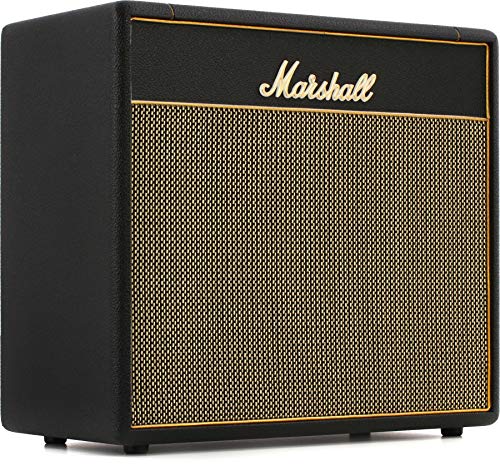
Marshall SV20C Studio Vintage
20/5-watt 1x10 tube combo voiced after the 1959 plexi, with EL34 tubes, power reduction, and effects loop.
Pros
- Authentic dual-EL34 plexi tone in a compact box
- Power reduction to 5W tames the volume for home use
- Mid-focused voice with beefy lows and warm treble
- Made in the UK with a built-in effects loop
Cons
- No master volume, so big tone needs volume
- Single 10-inch speaker limits projection
The Marshall SV20C Studio Vintage packs authentic 1959 plexi tone into a compact 20-watt combo. It uses a pair of EL34s, the same tubes found in the big plexis, giving it prominent mids, beefy lows, and a darker, warmer treble response than smaller EL84 amps.
A power reduction circuit drops it to 5 watts for home use, and while there’s no master volume, jumping the bright and normal channels summons even more gain and grit.
7. Fender Bassbreaker 30R

Fender Bassbreaker 30R
30-watt tube combo with a Celestion V-Type speaker, four EL84 power tubes, and two channels with onboard reverb.
Pros
- Classic Fender sparkle with extra top-end bite
- Musical drive channel that's fat and warm
- Two channels handle clean and overdriven tones
- Single 12-inch Celestion V-Type keeps it portable
Cons
- Price sits above entry-level combos
- EL84 voice is brighter than some Fender fans expect
The Fender Bassbreaker 30R might be the most versatile amp Fender has released in years. Its clean channel keeps the timeless Fender sparkle and chime with a little extra bite from the EL84 output tubes, while the drive channel delivers fat, warm, genuinely musical overdrive.
With four EL84 power tubes, a single 12-inch Celestion V-Type speaker, and onboard reverb, this 30-watt combo handles almost any style you throw at it.
8. Friedman Runt 20

Friedman Runt 20
Boutique 20-watt two-channel all-tube head with a boost, cab-simulated XLR output, and internal load box.
Pros
- Legendary Friedman gain in a compact 20-watt head
- Internal load box lets you crank it silently
- Cab-simulated XLR output for direct recording
- Clean channel cleans up beautifully with the guitar volume
Cons
- Boutique price tag is a serious investment
- Head-only, so you supply the cabinet
The Friedman Runt 20 distills the brand’s legendary, sought-after gain into a tiny two-channel head. The clean channel ranges from slightly broken-up to pristine, and the overdrive channel takes you from classic rock to full assault with a Gain knob and Boost switch.
An internal load box lets you crank it silently, and the cab-simulated XLR output makes it a recording-friendly boutique amp that cleans up beautifully with your guitar’s volume knob.
9. Blackstar HT Stage 60 Mark II

Blackstar HT Stage 60 Mark II
60-watt 2x12 three-channel all-tube combo with the Infinite Shape Feature, voice switches, and USB output.
Pros
- Three channels with shimmering cleans and throaty drive
- ISF control blends American and British voicings
- USB output for plugging straight into a computer
- Plenty of power for loud stage gigs
Cons
- Heavy 2x12 cabinet to transport
- Channel switching takes time to master
The Blackstar HT Stage 60 Mark II brings shimmering cleans, throaty overdrives, and 60 watts of stage-ready power in a 2x12 all-tube combo. Three channels and two voice switches cover a huge range of tones, and the Infinite Shape Feature blends seamlessly between American and British voicings.
A USB output lets you plug straight into a computer for recording, making it a genuine do-it-all amp for players who gig and track at home.
10. Fender 59 Bassman LTD

Fender 59 Bassman LTD
Vintage-style 4x10 tube combo with Jensen P-10R Alnico speakers and four inputs across two blendable channels.
Pros
- Legendary tweed Bassman tone loved by the greats
- Four Jensen P-10R Alnico speakers sound huge
- Two channels blend for expanded vintage tones
- An exceptional pedal platform
Cons
- Pricey for a vintage-reissue combo
- Heavy and large for everyday transport
The Fender 59 Bassman LTD recreates the legendary tweed 4x10 amp adored by Buddy Guy, Eric Clapton, and so many others. Four Jensen P-10R Alnico speakers in a solid pine cabinet produce a harmonically rich, sparkling tone that solidifies into delightful distortion when cranked.
Its four inputs and two blendable channels make it endlessly tweakable, and it’s one of the all-time great amps for blues and an exceptional pedal platform.
Final Thoughts
The Fender 65 Twin Reverb takes our top spot for the same reasons it has earned a place on countless stages for decades. Nothing matches its clean headroom, its all-tube spring reverb, or the sheer authority of 85 watts through two Jensens.
If your priority is the purest clean tone money can buy, this is the amp to beat.
For most players, though, the Marshall DSL40CR is the smartest buy in this roundup. Its two channels, power reduction switch, and onboard reverb make it equally at home in a bedroom, a studio, or a club, and it does all of it at a price that undercuts the boutique competition.
Metal players should jump straight to the EVH 5150 III, while anyone chasing British chime will be happiest with the Vox AC30C2.
Ultimately, the best tube amp comes down to the tone in your head and the volume you can live with. Whether you want vintage tweed grit, plexi crunch, or modern high gain, there’s a genuine valve amp on this list that’ll color your sound in a way no solid-state modeler can truly replace.