
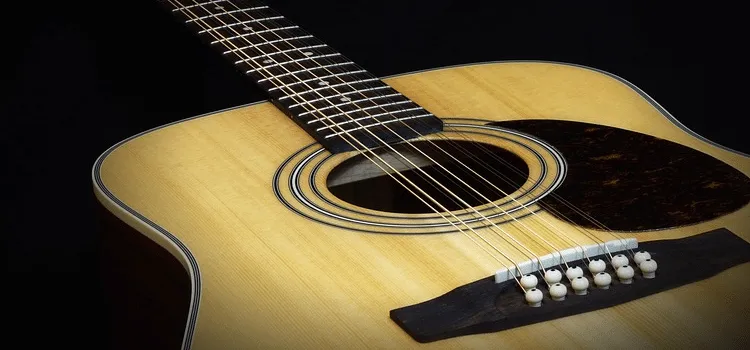
You’ve narrowed your next acoustic down to two outlines, and they look almost the same size on the wall. The real split between a grand auditorium and a dreadnought is that pinched waist, and it changes the sound far more than the photos suggest.
A dreadnought keeps the boxy, traditional shape. A grand auditorium runs about as tall but curves in tighter at the middle, and that one tweak shifts the balance of these two acoustic guitar shapes.
Brands measure their bodies differently, so the guitar body sizes never line up perfectly. Even so, knowing each shape’s strengths lets you guess how a guitar plays before you touch it.
We’ll size them up, compare the tone, and sort out who each one fits, with our best acoustic guitar roundup for a wider look. We’ll begin with the dreadnought, the shape that started it all.
Quick Comparison
| Category | Grand Auditorium | Dreadnought | Winner |
|---|---|---|---|
| Published size | Nearly identical specs | Nearly identical specs | Tie |
| Waist | Narrow, tucks on the leg | Wide and boxy | Grand Auditorium |
| Volume | Even across the range | Louder with a big low end | Dreadnought |
| Fingerstyle | The natural fit | Works, with less nuance | Grand Auditorium |
| Strumming | Handles it cleanly | The classic strummer | Dreadnought |
| Seated comfort | Easier to hold | Can feel bulky | Grand Auditorium |
| Overall | The balanced all-rounder | The loud workhorse | Depends |
The Dreadnought: The Original Classic
C.F. Martin & Company originally designed the dreadnought guitar style in 1916.
It was intended to be louder, bolder, and bigger than the small guitars common at the time. The name is borrowed from HMS Dreadnought, a massive gunship launched in 1906, and the robustness fits.
The dreadnought quickly became the go-to shape for acoustic players and remains the most popular format in country, blues, rock, and bluegrass.
Powerful and loud, a dreadnought is one of the rare acoustics that can stand up to an electric band without help. Its aesthetic is boxier to reach that preferred projection, and the body is relatively deep.
That extra air adds punch and power, producing strong mids and lows for full chords and a big kick into bluegrass runs.
The dreadnought’s broad, large body makes for a full, bold tone that suits both heavy strumming and fingerstyle. It’s ideal for singers, songwriters, or anyone chasing a big sound with a dominant low end.
Today, companies like Gibson and Taylor all offer their own takes on the shape.
The Grand Auditorium: The Modern Balancer
The auditorium-style guitar is a newer shape that emerged to bridge the gap between the nuanced, petite parlor and the corpulent dreadnought. That in-between status gives the grand auditorium one notable advantage with fingerstyle and folk players who want to jump between intricate picking and still keep low end when they dig into the chords.
The grand auditorium is about as large as a dreadnought but carries a narrower waist. Playability is similar between the two, though dreadnoughts are usually set up for medium-gauge strings while auditorium guitars are designed around lighter gauges.
Because the grand auditorium has plenty of soundboard area, it stays loud, and it tends to reproduce higher frequencies better than the dreadnought, which leans toward emphasizing the lows.
If you also want to compare a smaller-bodied option, our dreadnought vs concert guitar breakdown covers that pairing.
Differences in Dimensions
People often have preconceived notions about which body suits a single playing style, but plenty of fingerstylists use strummers’ shapes and plenty of strummers reach for grand auditoriums. The factor that really decides which guitar is right for you is the body that appeals to you most, not what anyone else says.
The headline tonal difference comes down to that waist. The grand auditorium’s tighter waist tends to balance the frequency range, while the dreadnought’s larger, deeper box pushes the low end forward.
The published body dimensions of each are highlighted below.
Grand Auditorium Guitar Size
- Body Depth: 4 5/8 inches
- Body Width: 16 inches
- Body Length: 20 inches
- Overall Length: 41 inches
Dreadnought Size
- Body Length: 20 inches
- Body Depth: 4 5/8 inches
- Body Width: 16 inches
- Overall Length: 41 inches
Who Is Each Body Shape Best Suited For?
One of the most significant differences between the grand auditorium and the dreadnought is the type of player each one suits. It’s always best to try a few different options and find the model that feels right in your hands.
Who Is the Grand Auditorium Best For?
Grand auditorium models are a great choice for musicians who want a single, do-it-all guitar. The tone works well for both picking and strumming and performs nicely in the studio or on stage.
The shape is popular with songwriters and singers because it sits well in a mix and plays well alongside other instruments.
You can expect a grand auditorium to produce a clear, big sound while being easier to hold thanks to its tighter waist and upper bout. It fits comfortably on the knee when seated and stays balanced whether you’re performing, recording, or writing.
It also has well-defined low, mid, and treble notes and uses a standard fret-scale length. Many players agree that even if you own several guitars, the grand auditorium is the one you’ll reach for most often.
In short, it’s best for fingerstyle players, casual players, performers, pickers, and heavy strummers alike.
Who Is the Dreadnought Best For?
The dreadnought (or “dread” for short) is the Swiss Army Knife of acoustic guitars and one of the most versatile shapes available. Dreads are best suited for strummers and flatpickers chasing the traditional shape, acoustic sound, string tension, and ample volume across the tonal spectrum.
It’s often called the ultimate workhorse and will serve you on stage, in the studio, with a group, solo, or at home.
It also works surprisingly well for fingerpickers and is known for a balanced, high-quality tonal response that picks up treble notes without difficulty. On top of that, a dreadnought doesn’t require much energy to get those big notes that other shapes struggle to deliver.
If you’re after a guitar with a more traditional sound and a lot of versatility, the dreadnought is an ideal option.
How the Grand Auditorium and Dreadnought Compare
So we’ve covered the strengths of both shapes. Here’s how they stack up head to head.
On size and silhouette, the two share nearly identical published dimensions, but the difference you feel is the waist, where the grand auditorium narrows and the dreadnought stays boxy. That makes the grand auditorium a bit easier to hold when seated.
On tone, the dreadnought emphasizes lows and strong mids for a big, bold sound, while the grand auditorium delivers a more balanced range with clearer highs. For raw volume and low-end punch, the dreadnought edges ahead.
For balance, clarity, and recorded tone, the grand auditorium pulls in front.
On playing style, both shapes are versatile, but the dreadnought leans toward strummers, flatpickers, and traditional players, while the grand auditorium leans toward fingerstyle players, singer-songwriters, and anyone who wants one guitar that does a little of everything.
Neither shape is “better” in the abstract. The right pick is the one that matches your sound and feels comfortable in your hands.
Frequently Asked Questions
Is a grand auditorium or dreadnought better for beginners?
Both work well for beginners, but many new players find the grand auditorium slightly more comfortable because its narrower waist sits more easily on the leg when seated. If you’re mainly strumming chords and want maximum volume, a dreadnought is just as friendly a starting point.
Which body shape is louder?
The dreadnought is generally the louder of the two, especially in the low end, thanks to its deep, boxy body. The grand auditorium is still plenty loud and projects well, but it spreads its volume more evenly across the frequency range rather than pushing the bass forward.
Is a grand auditorium good for strumming?
Yes. While the grand auditorium is often praised for fingerstyle, its balanced voice and clear highs make it a strong strumming guitar too.
It handles heavy strumming well without getting muddy, which is part of why it’s such a popular all-rounder.
Which shape is more comfortable to play sitting down?
Most players find the grand auditorium more comfortable seated because its tighter waist tucks against the leg and the upper bout is easier to wrap an arm around. Some people find a dreadnought a little bulky to hold while sitting, though body comfort is personal and worth testing in person.
Final Thoughts
The grand auditorium and the dreadnought are both excellent acoustic body shapes, and neither is objectively superior. The dreadnought is the classic workhorse: loud, bold, low-end heavy, and right at home with strummers, flatpickers, and traditional players.
The grand auditorium is the modern balancer: clear, even, comfortable, and a favorite of fingerstyle players and singer-songwriters who want a single versatile guitar.
The best way to decide is to play both. Pay attention to how each shape feels against your body when seated and which voice makes you want to keep playing.
Tone preference is personal, and the guitar that inspires you is almost always the right one.
Now that you have a clearer picture of both the grand auditorium and the dreadnought, choosing the shape that suits you and your playing technique should be much easier.