You want a Gibson-style acoustic without the Gibson price, and Epiphone keeps landing on shortlists for exactly that. The brand has built dependable guitars for almost a century, and it earns its spot on our acoustic picks.
Gibson bought Epiphone back in 1957. Since then the company has made cheaper takes on classics like the Dove, plus its own hits, so the catalog runs from a first beginner dreadnought up to gig-ready, solid-top acoustic-electrics.
These aren’t only first guitars, either. A lot of seasoned players keep one around as a beater they can grab without sweating a scratch.
We ranked six Epiphone acoustics across every budget and style on tone, build, and feel. The chart below lines them up before the reviews.
Quick Comparison Chart
| # | Product | Our Rating | ||
|---|---|---|---|---|
| 1 |  |
Epiphone Songmaker DR-100 | ★★★★★ | Check Price |
| 2 |  |
Epiphone J45 Studio Solid Top | ★★★★☆ | Check Price |
| 3 |  |
Epiphone Dove Studio Solid Top Acoustic-Electric | ★★★★☆ | Check Price |
| 4 |  |
Epiphone PRO-1 Steel String Acoustic | ★★★★☆ | Check Price |
| 5 |  |
Epiphone PR-4E Acoustic/Electric Player Package | ★★★★☆ | Check Price |
| 6 |  |
Epiphone PR-150 Acoustic Guitar | ★★★★☆ | Check Price |
Gibson Shapes at Epiphone Prices
Two picks borrow directly from Gibson’s most famous acoustics, the J45 Studio and the Dove Studio, both with solid tops and the silhouettes that made the originals legendary.
The PRO-1 was designed for first-timers down to its EZ-Profile neck and jumbo frets, and the PR-4E pack adds a 15-watt amp for plug-in beginners.
1. Epiphone Songmaker DR-100

Epiphone Songmaker DR-100
Full dreadnought with mahogany body, SlimTaper C-profile neck, rosewood fingerboard, and premium die-cast tuners.
Pros
- Rich, punchy dreadnought tone and volume
- SlimTaper C-profile neck is easy to play
- Premium die-cast tuners hold pitch well
- Classic Sloped Dovewing headstock styling
Cons
- Laminate top rather than solid wood
- Stage use means adding your own pickup
Any list of the best Epiphone guitars has to start with the DR-100. It sits right in the sweet spot of the entry-level range, and the quality on offer proves you can get more than you pay for here.
The full dreadnought body, mahogany back and sides, and select spruce top deliver a rich tone and punchy volume that belie the price.
What makes it so easy to recommend is the playability. The SlimTaper C-profile neck and rosewood fingerboard make forming chords comfortable for new players, while the premium die-cast tuners hold pitch better than you’d expect at this level.
Add the classic Sloped Dovewing headstock and you have a guitar that’s just as happy as a first instrument or a knock-around travel guitar for a seasoned player. Take a look at our full Epiphone DR-100 review for the deep dive.
2. Epiphone J45 Studio Solid Top

Epiphone J45 Studio Solid Top
Advanced jumbo with a solid Sitka spruce top, mahogany back and sides, and 14:1 die-cast tuners.
Pros
- Solid Sitka spruce top opens up over time
- Advanced jumbo body gives broad dynamic range
- Sealed 14:1 tuners for precise tuning
- Rosewood bridge and fingerboard
Cons
- Costs more than the laminate models
- Plain natural finish looks understated
The J45 Studio is where Epiphone’s acoustic line takes a real step up in quality. The headline feature is the solid Sitka spruce top, which, unlike a laminate, actually matures and opens up over the years, warming the tone and bringing out more harmonic complexity the more you play it.
The advanced jumbo body, paired with mahogany back and sides and a rosewood bridge and fretboard, gives this guitar a broad dynamic range that suits fingerpicking, flatpicking, and strumming equally well. Sealed die-cast tuners with a 14:1 ratio make precise tuning easy.
It costs more than the laminate models on this list, but for a player ready to invest in a guitar they’ll keep for years, the solid top is well worth it.
3. Epiphone Dove Studio Solid Top Acoustic-Electric
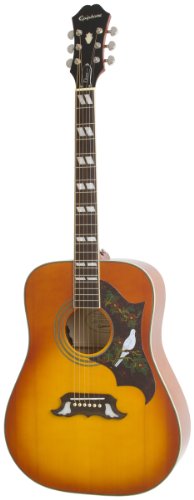
Epiphone Dove Studio Solid Top Acoustic-Electric
Square-shoulder dreadnought with select maple body and a Fishman Presys VT undersaddle pickup and preamp.
Pros
- Fishman Presys VT pickup for stage and studio
- Solid top delivers warm, dynamic tone
- Select maple back and sides add brightness
- Iconic Gibson Dove looks at a fraction of the cost
Cons
- Maple body leans bright for some tastes
- Square-shoulder shape has no cutaway
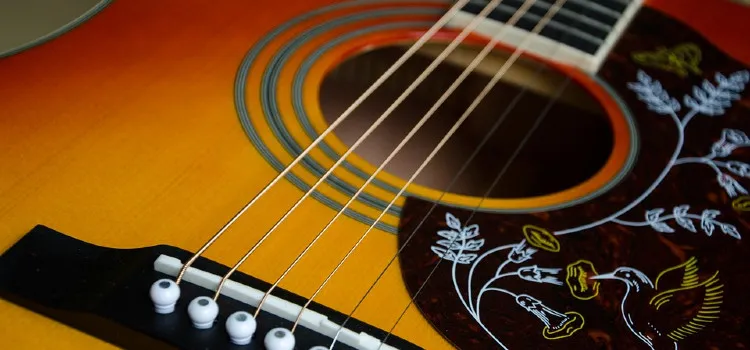
If you’ve ever wanted a Gibson Dove but found the price too steep, the Dove Studio brings that icon within reach. This square-shoulder dreadnought pairs a solid top and a select maple body with a Fishman Presys VT undersaddle pickup and preamp, so it’s just as at home at a solo gig as it’s plugged into a band’s PA.
The solid top gives it a warm, dynamic voice, while the maple back and sides add a bit of brightness and snap that cuts through a mix. Onboard electronics mean you can go from the couch to the stage without changing instruments.
Formerly sold as the Dove Pro, it carries the same rock ‘n’ roll looks the original is famous for, at a fraction of what a real Gibson Dove commands. Our Epiphone Dove Pro review covers it in more detail.
4. Epiphone PRO-1 Steel String Acoustic
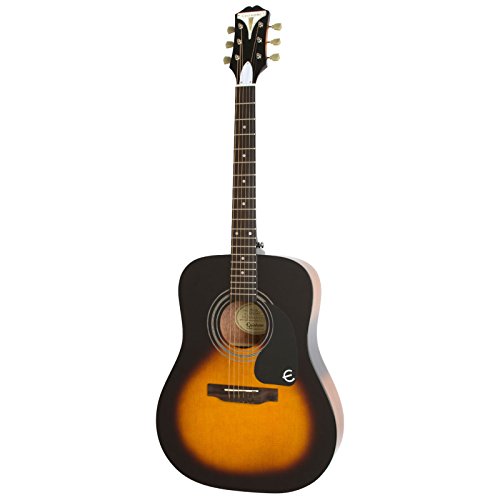
Epiphone PRO-1 Steel String Acoustic
Beginner-focused acoustic with an EZ-Profile neck, JumboPRO frets, and a shorter, easier-to-fret scale length.
Pros
- EZ-Profile neck reduces hand fatigue
- Shorter scale lowers string tension
- JumboPRO frets make fretting effortless
- Ships set up with Ultra-Light strings
Cons
- Tone aimed at learners, not pros
- No cutaway or onboard electronics
The PRO-1 is built from the ground up for beginners, and it shows in every design choice. Epiphone’s EZ-Profile neck is shaped so your hand can form chords without fatiguing, and the JumboPRO frets are taller and wider than standard frets, which means you make string contact more easily and press with less effort.
The real trick is the shorter scale length, almost an inch less than most acoustics, which loosens up the string tension so you don’t have to dig in hard to get good tone. Every PRO-1 ships set up with Epiphone Ultra-Light strings and a PRO-Ease coating to reduce friction and string noise.
The tone is aimed squarely at learners rather than professionals, but for anyone fighting sore fingers in their first months, this is the guitar that keeps you playing. See our Epiphone PRO-1 review for the full breakdown.
5. Epiphone PR-4E Acoustic/Electric Player Package

Epiphone PR-4E Acoustic/Electric Player Package
Complete acoustic-electric bundle with a mahogany-body guitar, 15W amplifier, gig bag, strap, and accessories.
Pros
- Comes with a 15W amplifier included
- Passive piezo pickups for easy plug-in
- Bundle adds gig bag, strap, and cord
- Everything a first player needs in one box
Cons
- Guitar itself is entry-level quality
- Heavier than the standalone dreadnoughts
The PR-4E is the most affordable way to go from owning nothing to playing plugged in. It’s a complete player package built around a mahogany-body acoustic-electric, and it ships with a 15W amplifier, a gig bag, a strap, a cord, and the rest of the accessories a first-timer needs to get started.
The guitar uses passive piezo pickups that make plugging into the included amp or a larger PA simple, so beginners can experiment with amplified tone right away. The instrument itself is entry-level, and the package weighs more than a bare dreadnought, but the value of getting a guitar, an amp, and accessories together in one box is hard to beat for someone testing the waters.
6. Epiphone PR-150 Acoustic Guitar

Epiphone PR-150 Acoustic Guitar
Affordable dreadnought with a mahogany body and select spruce top aimed at first-time players.
Pros
- One of the most affordable Epiphones
- Spruce top and mahogany body for warm tone
- Durable build that takes a beating
- Easy, low-maintenance beginner guitar
Cons
- Stock tuners feel a little cheap
- Plastic nut and basic appointments
The PR-150 sits at the very bottom of Epiphone’s price ladder, and it’s one of their most affordable guitars, period. It follows the classic dreadnought shape with a mahogany body and a select spruce top, a tonewood pairing used on far pricier guitars, which gives it a surprisingly warm and clear sound for the money.
It’s built to take a beating, which makes it a great low-maintenance choice for a beginner on a tight budget. The compromises are exactly where you’d expect them on a guitar this cheap: the stock tuners feel a bit flimsy and the appointments are basic, with a plastic nut.
None of that stops it from being a durable, easy-to-play first guitar. Our Epiphone PR-150 review has the full rundown.
Final Thoughts
The Epiphone Songmaker DR-100 is the model we’d put in most players’ hands first. It nails the balance of rich dreadnought tone, comfortable playability, and low price that has made it Epiphone’s best-selling acoustic for years.
Whether it’s your first guitar or a knock-around to keep by the couch, it simply doesn’t disappoint.
If you’re ready to spend a little more for a guitar you’ll keep for the long haul, step up to the J45 Studio. Its solid Sitka spruce top will only sound better as the years go by, something none of the laminate models can match.
And for players who want to plug in, the Dove Studio pairs that solid-top quality with a Fishman pickup and unmistakable Gibson Dove looks.
Across the whole lineup, Epiphone delivers rich tone, solid projection, and genuine playability for beginners and seasoned players alike. Want to know more about the brand before you buy?
Read are Epiphone guitars good for the full story.