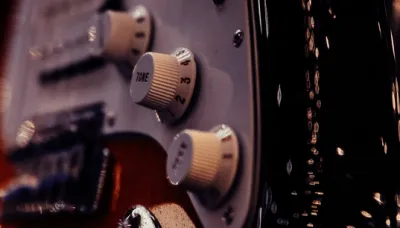

A cranked tube amp sounds incredible. It can also get you evicted.
A small tube amp hands you the same warmth, touch response, and natural breakup at a volume your house can survive. The hard part is finding one that stays alive when it’s turned down, since most big amps sound choked at bedroom levels.
Every amp below runs 5 to 30 watts, and many add a power reduction switch for a couple of watts of late-night grind. That one feature decides whether an amp gets played daily or buried in a closet.
This guide ranks nine of them on tone, build, features like reverb and effects loops, and honest value. A few are tiny heads that need a cab, so it helps to pick the right amp for your Strat or whatever you play.
Quick Comparison Chart
| # | Product | Our Rating | ||
|---|---|---|---|---|
| 1 |  |
Blackstar HT-5R MK III | ★★★★★ | Check Price |
| 2 |  |
Fender Blues Junior IV | ★★★★★ | Check Price |
| 3 |  |
Vox AC30C2X | ★★★★☆ | Check Price |
| 4 |  |
Marshall SV20C Studio Vintage | ★★★★☆ | Check Price |
| 5 |  |
Fender '65 Princeton Reverb | ★★★★☆ | Check Price |
| 6 |  |
EVH 5150III LBXII | ★★★★☆ | Check Price |
| 7 |  |
Fender Blues Junior (Lacquered Tweed) | ★★★★☆ | Check Price |
| 8 |  |
Orange Micro Terror | ★★★★☆ | Check Price |
| 9 |  |
Bugera V5 INFINIUM | ★★★★☆ | Check Price |
Valve Watts That Fit the House
Power scaling is the recurring trick: the Blackstar HT-5R drops to two watts, the EVH LBXII quarters its power, and the Marshall SV20C halves to five for plexi tone at TV volume.
The two Blues Juniors split on speakers, Celestion A-Type standard or the lacquered tweed’s Jensen P12N, a real tonal fork in the same amp.
1. Blackstar HT-5R MK III
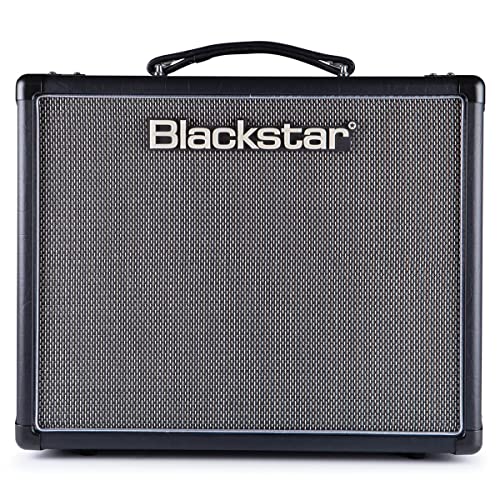
Blackstar HT-5R MK III
5-watt tube combo with clean and overdrive channels, 12-inch Celestion speaker, onboard reverb, and ISF voicing control.
Pros
- Two channels cover clean and high-gain tones
- ISF blends British and American voicings
- Power reduction to 2W for home practice
- 12-inch Celestion keeps tone full at low volume
Cons
- Footswitch not included in the box
- 5W can still get loud in an apartment
The HT-5R MK III is the most flexible amp on this list, and that versatility is why it takes the top spot. Its two channels cover everything from glassy cleans to thick modern gain, and the patented ISF knob lets you sweep between British and American voicings to find your own sweet spot.
Onboard reverb and a 12-inch Celestion keep the tone full, while the power reduction switch drops it to 2 watts so you can crank the tubes without waking the house.
2. Fender Blues Junior IV

Fender Blues Junior IV
15-watt single-channel combo with a Celestion A-Type speaker, improved spring reverb, and footswitchable Mid boost.
Pros
- Sparkling Fender clean tone with great headroom
- Revised preamp adds fullness and warmth
- Smoother spring reverb than earlier versions
- Includes 1-button footswitch for Mid boost
Cons
- Single channel with no master volume
- Gets loud fast for home use
If you live for shimmering Fender cleans, the Blues Junior IV delivers them in a 15-watt package that fits in any car. The revised preamp circuit adds noticeable fullness over earlier versions, the Celestion A-Type speaker has a touch more grind, and the spring reverb is smoother than ever.
The included footswitch flips on a fat Mid boost for thicker rhythm and lead tones when you want them.
3. Vox AC30C2X
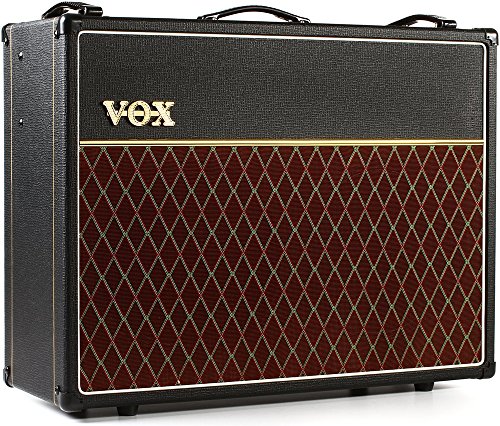
Vox AC30C2X
30-watt 2x12 combo with Alnico Blue speakers, EL84 power tubes, Top Boost channel, reverb, and tremolo.
Pros
- Iconic chiming British clean tone
- Two 12-inch Alnico Blue speakers for clarity
- Normal and Top Boost channels with own volumes
- Built-in reverb and tremolo effects
Cons
- Heavy and large for a small amp
- 30W is a lot for bedroom volume
No tube amp roundup is complete without the AC30, and the C2X version pairs the legendary Top Boost chime with two 12-inch Alnico Blue speakers for stunning clarity. At 30 watts with two channels, reverb, and tremolo, it covers far more than the “small amp” label suggests.
The only catch is the weight and the volume, so this is the one to grab if you also gig and want that unmistakable British Invasion jangle.
4. Marshall SV20C Studio Vintage
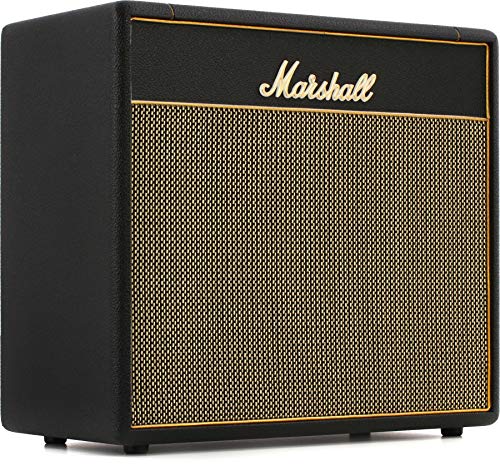
Marshall SV20C Studio Vintage
20/5-watt 1x10 combo delivering the classic Plexi tone with a power reduction circuit and built-in effects loop.
Pros
- Authentic Plexi crunch in a compact combo
- Power reduction to 5W for smaller rooms
- High and Low sensitivity inputs
- Effects loop for pedals and processors
Cons
- Single channel needs a pedal for cleans
- Premium price for the format
The Studio Vintage shrinks the iconic Marshall Plexi into a 20-watt 1x10 combo that captures that biting, saturated crunch made famous in the 1960s. A power reduction circuit drops it to 5 watts for smaller rooms, and the built-in effects loop makes it easy to slot in delays and modulation.
It’s a single-channel amp, so you’ll want an overdrive pedal up front for clean playing, but the core tone is pure Plexi magic.
5. Fender ‘65 Princeton Reverb
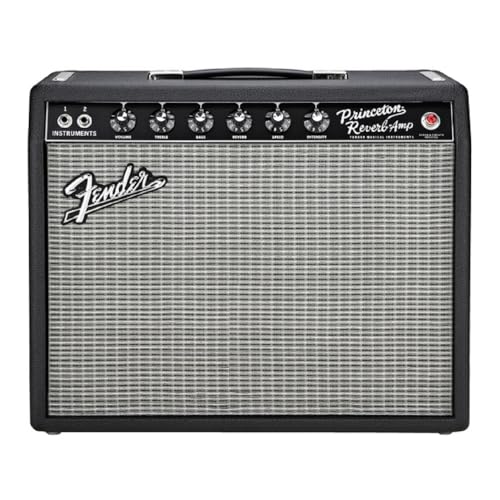
Fender '65 Princeton Reverb
15-watt all-tube combo with a 10-inch Jensen speaker, legendary long-spring reverb, and tube vibrato.
Pros
- Studio-favorite tone for stages and recording
- Lush long-spring Fender reverb
- Real tube vibrato adds movement
- Includes amp cover and 2-button footswitch
Cons
- 10-inch speaker limits low-end thump
- No channel switching for high gain
The Princeton Reverb is a studio legend for good reason, packing genuine tube rectification, lush long-spring reverb, and real tube vibrato into a 15-watt combo. The 10-inch Jensen speaker keeps things tight and articulate, ideal for small stages where a bigger amp would overwhelm the room.
It ships with an amp cover and a two-button footswitch for the reverb and vibrato, making it a complete package straight out of the box. For more on this classic, see our Deluxe Reverb vs Princeton Reverb comparison.
6. EVH 5150III LBXII

EVH 5150III LBXII
15-watt two-channel tube head with a quarter-power switch and effects loop for crushing high-gain metal tones.
Pros
- Massive high-gain metal tones from the blue channel
- Surprisingly broad clean headroom on green channel
- Quarter-power switch for lower-volume practice
- Effects loop and footswitch built in
Cons
- Head only, requires a separate cabinet
- Limited tone-shaping controls
For metal players who want serious gain in a tiny footprint, the 5150III LBXII is hard to beat. The blue channel serves up the crushing, saturated high-gain tones the 5150 line is famous for, while the green channel offers surprisingly broad clean headroom.
A quarter-power switch tames the 15 watts for lower-volume sessions, and the built-in effects loop and footswitch round out a head that punches well above its size. Just remember it needs a cabinet to make noise.
7. Fender Blues Junior (Lacquered Tweed)

Fender Blues Junior (Lacquered Tweed)
15-watt tweed combo with EL84 power tubes, a Jensen P12N speaker, spring reverb, and footswitchable FAT boost.
Pros
- Warm articulate tone from the Jensen P12N
- Footswitchable FAT adds thicker overdrive
- Onboard spring reverb for big echo
- Durable lacquered tweed cabinet looks classic
Cons
- Premium tweed variant costs more
- Single channel with limited gain
This lacquered tweed Blues Junior is the boutique-flavored sibling to the standard model, swapping in a Jensen P12N speaker for warm, articulate tones with vintage character. EL84 power tubes give it a slightly different flavor of breakup, and the footswitchable FAT option adds thicker body and subtle overdrive on demand.
The onboard spring reverb and classic lacquered tweed cabinet make it as nice to look at as it’s to play. Check out our full Fender Blues Junior review for a deeper look.
8. Orange Micro Terror

Orange Micro Terror
20-watt hybrid micro head with a 12AX7 tube preamp, simple Volume, Tone, and Gain controls, and headphone output.
Pros
- Big Orange grind from a pocket-sized head
- 12AX7 tube preamp for warmth
- Headphone out and aux in for silent practice
- Very affordable entry point
Cons
- Hybrid design with solid-state power amp
- Head only, needs a cabinet to play
The Micro Terror is the budget hero here, cramming a 12AX7 tube preamp into a head smaller than a lunchbox. It’s a hybrid design with a solid-state power section, but the tube preamp gives it that unmistakable gritty Orange grind that sounds great cranked.
A headphone output and aux input make it handy for silent practice, and the price is low enough to make it an easy first tube-flavored amp. Pair it with a small cabinet and you have a giggable rig for very little money.
9. Bugera V5 INFINIUM

Bugera V5 INFINIUM
Hand-built 5-watt Class-A combo with an EL84 tube, Turbosound speaker, reverb, and a power attenuator.
Pros
- Warm vintage Class-A tone from blues to crunch
- INFINIUM technology extends tube life
- Attenuator drops power to 1W and 0.1W
- Onboard reverb is rare at this price
Cons
- Limited controls to dial in tone
- Small 8-inch speaker thins out low end
The Bugera V5 INFINIUM rounds out the list as a hand-built 5-watt Class-A combo that punches above its budget price. A single EL84 tube and 12AX7 preamp deliver warm vintage tones that run from purring blues cleans to surprising crunch, and the onboard reverb is a rare treat at this level.
The power attenuator drops output to 1 watt and 0.1 watt for quiet practice, while INFINIUM technology extends tube life so you replace valves less often. The small 8-inch speaker is the main compromise, thinning out the low end.
Final Thoughts
For most players, the Blackstar HT-5R MK III is the small tube amp to beat. It nails the balance this whole category is chasing: real valve tone that sounds great at 2 watts, two channels that cover nearly any style, onboard reverb, and the ISF control to fine-tune your voicing.
It’s the amp I’d hand to someone who wants one box that does everything from quiet practice to a small gig.
If your priority is pristine cleans, the Fender Blues Junior IV remains the gold standard, while metal players will get everything they need from the EVH 5150III LBXII. Budget-focused buyers should look hard at the Orange Micro Terror or the Bugera V5 INFINIUM, both of which deliver genuine tube character for a fraction of the cost of the bigger names.
Whichever you choose, focus on the tone that fits your playing and make sure the wattage and power-reduction options match where you actually play. A small tube amp you can crank in your own room will always beat a bigger one you’re afraid to turn up.
For more on building the right rig, browse our guides on the best amps for a Stratocaster and the best clean guitar amps.