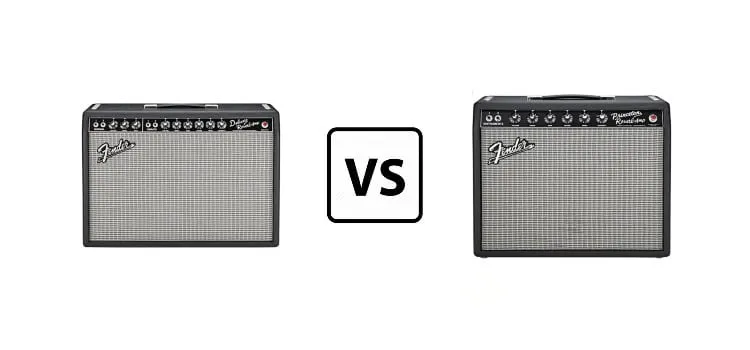
Two Fender reissues keep landing on the same shortlist: the ‘65 Princeton Reverb and the ‘65 Deluxe Reverb. They share a look and a family sound, so the choice between them isn’t obvious.
The real split is headroom. The Deluxe stays clean as you push the volume, while the Princeton starts to break up much sooner.
That changes where each amp feels at home. One rewards a bedroom or small room, the other holds its own against a drummer on stage.
Here we look at each guitar amplifier on its own, then put them side by side for practice, studio, and gig use. We start with the Princeton.
Quick Comparison
| Category | Princeton Reverb | Deluxe Reverb | Winner |
|---|---|---|---|
| Power | 15 watts | 22 watts | Deluxe Reverb |
| Speaker | 10-inch Jensen | 12-inch Jensen C-12K | Deluxe Reverb |
| Breakup volume | Bedroom-friendly | Needs more push | Princeton Reverb |
| Gigging headroom | Smaller venues only | Cuts through a full band | Deluxe Reverb |
| Recording | The studio favorite | Records beautifully, louder | Princeton Reverb |
| Portability | Compact and lighter | More to carry | Princeton Reverb |
| Overall | Home, studio, small stages | Gig-ready workhorse | Depends |
Fender Princeton Reverb Guitar Amp
The Fender ‘65 Princeton Reverb is a legendary tube combo that works well across all three settings - studio, practice, and smaller stages. It brings back the vintage classic vibe and tone of the original amp, and Princeton-style amps are among my favorites.
Plug straight in for an unmistakable Fender clean tone, or build your own signature sounds by stacking your favorite stompboxes in front of it. Either way, you get the excellent-sounding vibrato and reverb the amp is known for.
Because it’s only 15 watts into a single 10-inch speaker, it also breaks up into warm tube overdrive at lower volumes than a bigger amp would.
Check out the full Fender ‘65 Princeton Reverb review here.
Princeton Reverb Features
The Princeton Reverb packs a focused set of features into a compact cabinet:
- Dimensions: 16” H x 19.88” W x 9.5” D.
- Belongs to the vintage reissue series of Fender amps.
- All-tube amp.
- 15W total wattage into 8 ohms.
- 1 x 10-inch speaker - a Jensen specially designed C-10R.
- A single channel with two instrument inputs and two speaker outputs.
- Simple volume, treble, bass, reverb, speed, and intensity controls.
- Sensational-sounding vibrato and reverb effects.
- A 2-button footswitch (1 x 1/4” jack) for switching reverb and vibrato on or off.
- Preamp tubes: 3 x 12AX7, 1 x 12AT7. Power section: 2 x 6V6 plus 1 x 5AR4 rectifier tube.
- Tough cabinet construction with black-textured vinyl covering.
- 2-band EQ.
Those specs make the Princeton Reverb a flexible little workhorse. Guitarists tend to use it as:
- A legendary Fender amp for crafting signature sounds, delivering great tone, headroom, and dynamics in an affordable, road-worthy package.
- A studio stalwart, thanks to its small footprint, portability, and characterful tone.
- A live amp for smaller venues where you want that signature breakup at moderate volumes.
- A premium practice amp for everyday playing at home.
Overall, the Princeton is great for chasing tube tones and still has enough output for small gigs and rehearsals. Time to move on to the second contender.
Fender Deluxe Reverb Guitar Amp
Known for its higher power output, the Deluxe Reverb simply bleeds tube tone. Both its vibrato and its spring reverb are tube-driven, and its 12-inch speaker fills out any kind of fat, rounded sound.
It’s a handy amp for players who crave both sparkling cleans and dirty, cranked tones.
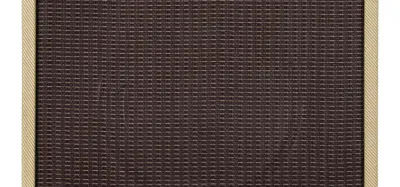
For looks, the amp is rounded off with black vinyl and silver grille cloth to bring out the vintage style of the ‘65s.
Deluxe Reverb Features
The Deluxe Reverb steps up the power and adds a second channel:
- All-tube amp.
- A ceramic-magnet Jensen C-12K 12-inch speaker.
- 22W total power into 8 ohms.
- Two channels - vibrato and normal.
- Both vibrato and spring reverb are tube-driven.
- A 2-button footswitch, similar to the Princeton’s.
- A Baltic plywood cabinet.
- Finished with a silver grille cloth and black vinyl.
- Tubes: 1 x 5AR4 rectifier, 2 x 6V6 power tubes, 4 x 12AX7 preamp Deluxe Reverb tubes, and 2 x 12AT7.
The Deluxe Reverb sits in the same family as the Fender Twin Reverb, just with less wattage. A few other amps in a similar vein include:
- Fender Blues Junior
- Fender Tone Master Deluxe
- Vox AC15
- Fender ‘64 Custom Deluxe
How the Princeton Reverb and Deluxe Reverb Compare
Both amps share the same vintage Fender DNA, so they sound like close relatives. The differences come down to power, speaker size, channels, and how loud you can get before the amp starts to break up.
| Feature | Princeton Reverb | Deluxe Reverb |
|---|---|---|
| Power | 15 watts | 22 watts |
| Speaker | 1 x 10” Jensen C-10R | 1 x 12” Jensen C-12K |
| Channels | 1 channel | 2 channels (normal + vibrato) |
| Reverb / vibrato | Tube reverb, tube vibrato | Tube reverb, tube vibrato |
| Best for | Practice, studio, small rooms | Larger rehearsals and gigs |
In practice, the Princeton’s lower wattage and 10-inch speaker mean it breaks up into sweet tube overdrive sooner and at lower volumes, which is great for bedroom playing, recording, and small rooms. It’s also lighter and easier to carry.
The Deluxe Reverb’s extra wattage and 12-inch speaker give it more clean headroom, more low-end thump, and the volume to keep up with a drummer. The second channel adds a bit more flexibility on stage.
If you mostly play at home or in the studio, the Princeton is plenty. If you need to crank it for band practice or gigs, the Deluxe Reverb is the safer bet.
Frequently Asked Questions
Is the Princeton Reverb or Deluxe Reverb better for gigging?
For most full-band gigs, the Deluxe Reverb is the better choice. Its 22 watts and 12-inch speaker give it the clean headroom and volume to cut through drums and bass without breaking up too early.
The Princeton Reverb can still handle smaller venues and quieter stages, especially if it’s mic’d through the PA, but it’ll run out of clean headroom sooner.
Can you get clean pedal-platform headroom from a Princeton Reverb?
You can, but only up to a point. At lower volumes the Princeton stays clean and takes pedals well, which makes it a fun, compact pedal platform for practice and recording.
Push the volume up and the 15-watt amp starts to break up, so if you want big, loud, always-clean headroom for stacked effects, the Deluxe Reverb’s extra wattage handles that better.
Which amp is better for recording?
Both record beautifully, but the Princeton Reverb is a longtime studio favorite for a reason. Its lower wattage lets you reach that classic Fender breakup at room-friendly volumes, which is easy to mic without overwhelming a small space.
The Deluxe Reverb is also a great recording amp when you want more headroom and a fuller low end, but you may need to manage the extra volume in a tight room.
Are the Princeton Reverb and Deluxe Reverb hard to maintain?
Both are tube amps, so the main upkeep is replacing tubes as they wear and having the amp biased correctly when power tubes are swapped. The Deluxe Reverb has more preamp tubes, but the routine is the same for both.
With normal care, either amp can last for decades. If you want to dig into the details, our guide on the tubes in a Fender Deluxe Reverb breaks down what each one does.
Final Thoughts
Overall, the Princeton Reverb and Deluxe Reverb sound a lot alike because they share the same vintage Fender voice. The real decision comes down to how loud you need to get and how much you want to carry.
For small gigs, the studio, and rehearsals at moderate volume, the 15-watt Princeton Reverb is hard to beat - it’s lighter, breaks up earlier, and nails that classic clean-to-crunch Fender tone. If you want to crank it and need extra headroom and low end for a full band, the 22-watt Deluxe Reverb is the one to grab.
Either way, you’re getting a genuine Fender tube classic with lush reverb and vibrato. Match the wattage to your loudest regular gig, and you’ll end up with the right amp for your sound.