Few small amps get recommended as quickly as the Fender ‘65 Princeton Reverb. Before you spend reissue money, though, it helps to know where this 15-watt combo wins and where it won’t.
Plug in and the draw is instant. You get chiming cleans with that splash of spring reverb and the wobble of genuine tube vibrato, no pedals required.
Its sweet spot is the recording room and gigs where volume stays sane, all in a cabinet you can carry one-handed. If you need to cut through a loud band or want onboard distortion, look elsewhere.
We dug into how it sounds, how it’s built, and whether it earns a spot in your rig. The sound and feel are next.
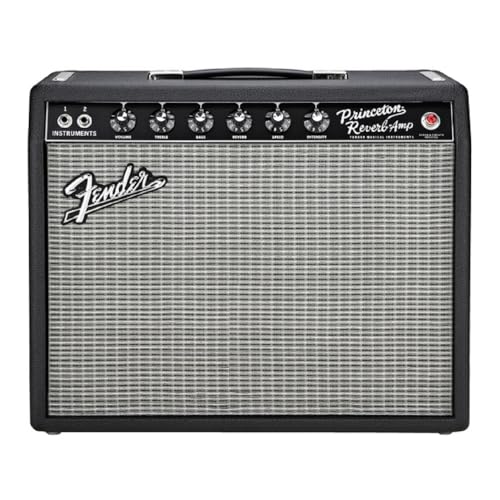
Fender '65 Princeton Reverb
A 15-watt all-tube combo for studio and small-stage players who want classic Fender cleans.
Pros
- Sparkling, articulate all-tube Fender clean tone
- Legendary long-spring reverb and genuine tube vibrato
- Compact and lightweight for studio and small stages
- Includes amp cover and 2-button footswitch
Cons
- 15 watts and a single 10-inch speaker limit loud, large stages
- No built-in distortion, so high-gain needs pedals
Sound and Playability
The Princeton Reverb is all about that classic Fender clean. With 15 watts of all-tube power feeding a single 10-inch speaker, it delivers bright, chimey cleans with plenty of sparkle and definition, exactly the kind of tone that has made it a studio favorite for decades.
It stays clean and composed through most of its volume range, then starts to break up into a warm, touch-sensitive tube overdrive when you push the volume up and dig in. Because the amp uses tube rectification, that breakup has a soft, springy feel that responds to how hard you play rather than just to the knob settings.
The real headline, though, is the onboard effects. This amp carries Fender’s legendary long-spring reverb, which is deep, lush, and three-dimensional in a way that digital reproductions still chase.
Pair that with the genuine tube vibrato (the watery, pulsing modulation Fender has always labeled “vibrato”), and you have an amp that sounds inspiring before you even reach for a pedal. Surf, blues, country, indie, and clean rhythm work all sit perfectly in its wheelhouse.
If you want to explore that world further, it’s worth comparing it against the other best tube amps in this size class.
Build and Features
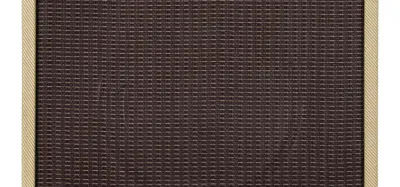
Fender keeps the ‘65 Princeton Reverb’s recipe simple and proven. It’s a 15-watt all-tube combo, including tube rectification, loaded with a single 10-inch Jensen C-10R ceramic-magnet speaker rated at 8 ohms and 40 watts.
That speaker is a big part of the amp’s character, giving the tone extra sparkle and definition while keeping the whole package light enough to carry to a session or a club with one hand.
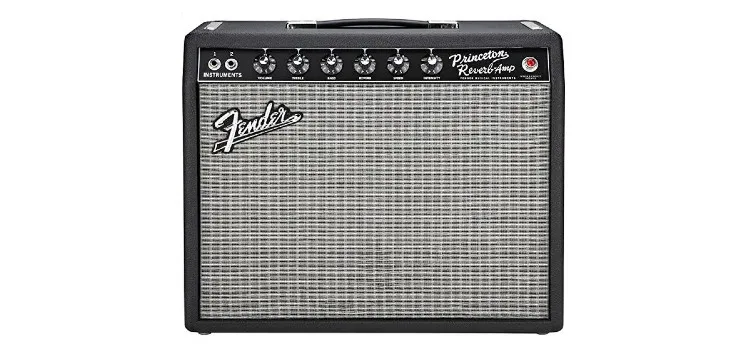
The control layout is classic blackface Fender: Volume, Treble, and Bass, plus dedicated controls for the reverb and the tube vibrato (Speed and Intensity). It’s refreshingly straightforward, with no menus or modeling to wade through.
Fender also includes a fitted amp cover and a 2-button footswitch out of the box, so you can toggle the reverb and vibrato on and off with your foot during a song. As a compact small tube amp, it’s purpose-built for players who want real tube tone without lugging a half-stack to every gig.
Who It Is For
The Fender ‘65 Princeton Reverb is aimed squarely at the recording musician and the small-stage player who wants authentic Fender clean tone, lush reverb, and real tube vibrato in a portable package. If you track guitars at home or in a studio, play coffee shops, churches, and clubs, or simply want a pedal-platform amp that makes everything you plug in sound better, this is an easy recommendation.
It’s light, it’s loud enough for those rooms, and the built-in effects mean you can get a finished, inspiring tone with nothing else in the chain.
It’s less of a fit if you need an amp to cut through a loud band on a big stage without mic support, or if you’re looking for built-in high-gain distortion. The 15 watts and single 10-inch speaker keep the Princeton in club-and-studio territory rather than arena territory, and the amp is voiced for clean tones, so heavy overdrive is a job for your pedalboard.
For the player it’s built for, though, it covers all the essentials and then some. If you’re weighing your options at this budget, it also stands tall among the best guitar amps for tone-first players.
Frequently Asked Questions
Is the Fender ‘65 Princeton Reverb loud enough to gig?
For small to medium rooms, yes. Its 15 all-tube watts and single 10-inch Jensen speaker are plenty for coffee shops, churches, studios, and most clubs, especially with a little mic support through the PA.
For loud, large stages with a hard-hitting drummer, you may find yourself wanting more power and speaker area, in which case the Deluxe Reverb is the natural step up.
Is the Princeton Reverb good for recording?
Absolutely, and it’s one of the main reasons this amp is so beloved. The clean, articulate tone, the lush spring reverb, and the manageable 15-watt output make it easy to capture great guitar sounds at room-friendly volumes.
It’s a staple in professional studios precisely because it delivers classic Fender tone without needing to be cranked to ear-splitting levels.
Does the ‘65 Princeton Reverb take pedals well?
It does. The Princeton’s clean headroom and flat, honest voicing make it an excellent pedal platform.
Overdrive, fuzz, delay, and modulation pedals all sit nicely in front of it, and many players use it specifically because it lets their pedalboard do the talking while the amp supplies the reverb and vibrato. If you want even more dirt options, browse the best guitar amps and pedal pairings that suit a clean-platform combo like this.
What’s the difference between the Princeton and Deluxe Reverb?
The Princeton Reverb is the smaller, lower-powered sibling, with 15 watts and a single 10-inch speaker, while the Deluxe Reverb steps up to 22 watts and a 12-inch speaker for more volume, headroom, and low-end punch. We break the two down side by side in our Princeton vs Deluxe Reverb comparison if you’re deciding between them.
Final Thoughts
The Fender ‘65 Princeton Reverb is a genuinely special amp for the recording and small-stage player who values tone over sheer volume. It nails the sparkling Fender clean, delivers some of the best spring reverb and tube vibrato you’ll find anywhere, and does it all in a compact, lightweight cabinet you can carry with one hand.
The trade-offs are predictable and easy to live with: it isn’t built to dominate a loud, large stage on its own, and high-gain distortion is a job for your pedals.
If you’re after an authentic-sounding tube combo for the studio, the club, or the living room, and you want an amp that makes everything you plug into it sound better, the ‘65 Princeton Reverb is hard to beat. While you’re shopping, it’s also worth reading our Fender Deluxe Reverb review to see whether you want the extra headroom of its bigger sibling.