The biggest thing standing between you and daily practice is often the setup itself. Unpacking your guitar and finding a cable every time is enough hassle to talk yourself out of playing.
A room that’s always ready removes that excuse. When the guitar is on a stand and the amp is plugged in, you sit down and play instead of getting things out.
We’ll walk through choosing the space, what to put in it, and whether soundproofing is worth the trouble. You’ll also get a rough sense of the cost.
None of it has to be expensive or large. Let’s start with the room you’ll build it in.
Start With Your Room
You probably already have a specific room or corner in your home that you plan to use, so start there. How the room functions depends on its size, the furniture in it, and what you need it to do.
Room size is one of the first things to consider. Do you need something large enough to play comfortably while lounging around, or do you need something more basic?
A small bedroom or living room corner can work just fine as long as there’s good lighting and a comfortable place for your guitar.
Benefits of Creating Your Own Home Guitar Practice Space
There are several reasons a dedicated guitar space is worth the effort:
- You get a place to really focus on your practice without distractions.
- You no longer have to carve practice time out of everything else going on in your day.
When you want to play, you hop into your space and get lost in the music. 3. If you’ve always wanted a dedicated space but were scared off by the cost of a full soundproof studio, a simple room is a far cheaper and more economical way to do it, especially if you have a room that’s already big enough. 4. The room can do double duty.
You can turn it into a media or computer room, or an office and recording area for yourself or others. 5. It’s usually cleaner and more organized than wherever you currently practice, and it’s far better for caring for your guitars than a store-bought plastic guitar hutch. 6. You can spend hours in there on your own, invite friends over for a jam session, or practice with a band.
It’s up to you. 7. Having the space and time to focus solely on playing tends to make your performances better.
What You Should Include in Your Guitar Room
As far as equipment goes, you want the room stocked with whatever you actually use when practicing. That includes your guitar amp or amps, some pedals, and of course the guitar itself.
These are the essentials, so start with them.
If you want the room to be more than a practice space, you can add other gear into the mix, like drums or a keyboard. Beyond the obvious essentials, here are the smaller items that make a real difference.
Metronome
If you’re going to practice guitar, you need a metronome. A metronome keeps track of time in your practice routine, which is essential because many techniques and chords are rhythm based and you need to develop a solid sense of timing.
If you don’t have one yet, it’s time to get one.
Guitar Tuner
Keeping your guitar in tune at all times is crucial for any guitarist who’s serious about playing, so keep a tuner on hand. There are several types of tuners to choose from depending on how sophisticated you need yours to be.
Looking for a tuner? We put together a bunch of buyer’s guides you can check out:
Guitar Stand
A guitar stand is essential for any guitar you keep in the room. It keeps the instrument secure so it doesn’t fall over and break.
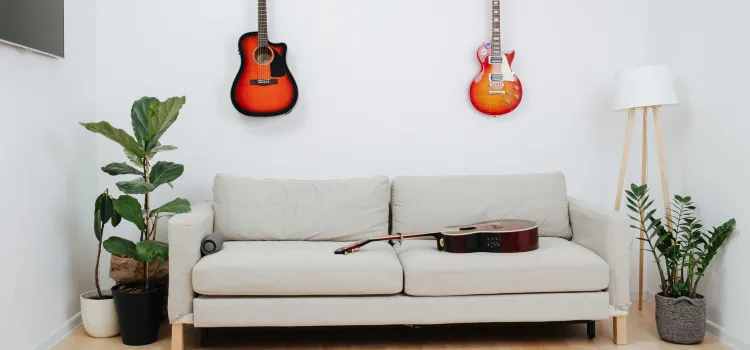
You can also install guitar wall hangers and hang your guitars on the wall.
Check out our buyer’s guide on guitar stands and our take on how many guitars do you need?
Amp Stand
Personally, I like to use an amp stand because it slants the amp upward toward me. This puts the amp in a good position to play and helps the sound project.
If you already have one you like, great. If not, it’s an inexpensive addition that makes a noticeable difference in how you hear yourself.
Pedal Board
If you own any effects pedals, keep them within easy reach of wherever you play, whether that’s by your guitar stand or on your desk. Some pedals need a power source, so make sure these can all be plugged in at the same time.
Check out our buyer’s guide on small pedalboards.
Chair
A comfortable chair is an absolute essential. You’re going to spend a lot of time in this room, so you want to be comfortable while you play.
Some people like rocking chairs, some like bean bags, and others prefer a simple desk chair. It’s up to you, but you can also read our detailed buyer’s guide on guitar chairs.
Music Stand
If you’re going to write music or read tab, a music stand or some kind of holder for your sheets is very important. It keeps your material at eye level so you aren’t constantly looking down, which is easier on your posture during long sessions.
Humidifier
Keeping your room humidity at the right level matters because it helps keep your guitar from cracking and warping. It also protects the condition of the wood and frets so they don’t crack or split apart.
If you live in a dry place, you’re going to need a humidifier for sure. If you’re unsure what you need, take a look at our guitar room humidifier guide.
Computer / DAW
This one is optional, but if you want to record guitar, a DAW is a great thing to have, especially while you’re learning. I use the free version of Audacity and it works great.
It has all the features I need to record, edit, and even mix, and I actually prefer it over some of the larger, more expensive recording products out there.
What About Soundproofing?
Should you soundproof your guitar room? Yes and no.
It’s up to you, but it’s worth doing if you’re concerned about the noise your gear makes.
If you have a loud amp or simply want to make sure no one can hear you while you practice, soundproofing the room is a worthwhile project to look into.
How Much Should You Expect to Spend on a Guitar Practice Room?
So how much of a budget do you need? It really depends on what you already have.
If you already own all the gear except your guitar and amp, the room may not be too expensive at all. If you don’t have any gear yet, that’s a whole other story.
You can go the very cheap route and build it yourself for well under $100, or you can go the expensive route and buy everything brand new from the start.
Frequently Asked Questions
How big does a guitar room need to be?
It doesn’t need to be big at all. A small bedroom, spare room, or even a corner of a living room works fine for one player.
As long as there’s good lighting, room to sit comfortably, and space for your amp and stand, the size is secondary. Bigger rooms only matter if you plan to host band practice or jam sessions.
Do I need to soundproof my guitar room?
Not necessarily. Soundproofing is most useful if you play a loud amp, practice late, or share walls with neighbors.
For quiet practice or headphone use, you can skip it entirely. If noise is a concern, basic treatments like acoustic panels, door seals, and rugs go a long way before you commit to a full soundproof build.
What’s the most important thing to have in a guitar room?
After the guitar and amp themselves, a stand and a tuner are the two items that matter most. A stand keeps the instrument safe and within reach, which is what makes a dedicated room so convenient, and a tuner keeps you playing in tune every session.
A metronome is a close third for building solid timing.
Should I keep a humidifier in my guitar room?
If you live in a dry climate or run heating in winter, yes. Low humidity cracks and warps guitar wood over time, so keeping the room in the 40 to 60 percent range protects your instruments.
In naturally humid areas you may not need one, but a hygrometer is cheap and tells you exactly where you stand.
Final Thoughts
That’s the guitar room planned out from start to finish. Hopefully it’s enough to get you moving in the right direction.
At one point a proper guitar room felt prohibitively expensive, and many players just built one themselves. These days, if you have the equipment, the tools, and a bit of space, you can put one together for well under $100.
Start with the room you’ve, add the essentials, and grow it from there.