You’re shopping for an electric guitar and keep hitting the same spec line: single coil or humbucker. The two pickups don’t just look different, they push your tone in opposite directions.
One gives you a sharp, glassy attack with a side of background hum. The other trades some of that sparkle for a thicker sound that stays quiet under high gain.
This comparison walks through how the two sound, why one hums and the other doesn’t, and the famous guitars and players behind each. We also touch on how pickups work, how they’re made, and which fits your next electric guitar.
First up, what exactly is a single coil pickup?
Quick Comparison
| Category | Single Coil | Humbucker | Winner |
|---|---|---|---|
| Tone | Bright, crisp, vibrant | Smooth, full, heavier | Depends |
| Noise | Prone to 60-cycle hum | Built to cancel it | Humbucker |
| High gain | Can get noisy and thin | Tight and quiet | Humbucker |
| Classic guitars | Fender Strats and Teles | Gibsons and Epiphones | Tie |
| Famous hands | Hendrix, Stevie Ray Vaughan | Gibson's heavier icons | Tie |
| Clean playing | The sparkle king | Darker and rounder | Single Coil |
| Overall | Brightness with a buzz | Quiet power | Depends |
Single Coil Pickups: What Are They?
The single coil guitar pickup was the original electric amplifier for the electric guitar. It’s said to have been first invented by a guitar player named George Beauchamp, with the support of none other than Adolph Rickenbacker, during the 1920s.
A single coil pickup has two magnets and one copper wire coil attached to a multimeter. This device changes the voltage as the guitar strings vibrate over the magnetic field from each pole piece to pick up the electronic signal, whether it’s a passive or active pickup.
It’s this direct connection to the strings that made the guitar electrified, but it also created a lot of uncontrollable noise.
This was the standard until the humbucker came to the market.
Humbucker Pickups: What Are They?
Until the mid-1950s the humbucker pickup style wasn’t widely known. Single coil pickups were how you transmitted the electricity to make your guitar scream, but they delivered a lot of extra buzzing and humming on the guitar strings.
This noise was common in other electric guitar equipment, particularly speakers and microphones. So in 1934, the dual coil or humbucking coil pickup was designed and utilized to improve the performance of this type of equipment.
A year later, this twin coil humbucker design was installed in a guitar. It took that electricity and sent it through two coils with two magnets set up to oppose each other.
Bottom line, the hum was gone, the sound was smoother and heavier, and the humbucker pickup was born with a fuller sound.
In 1955, a Gibson engineer named Seth Lover filed a patent for his design of this device. Gretsch guitars followed suit, and humbuckers have been a standard ever since.
Well known metal players usually reach for these, but some blues players do too.
If you’re looking for gear that pairs well with a humbucker pickup, start here:
The Sound Difference
If you’re deciding on humbucker vs single coil pickups, one of the biggest factors will be which sound you prefer when choosing from the types of guitar pickups.
Single coils are known for their clean, bright sound, and there are still a lot of popular guitars made with them today. Of course, digital amps and pedals can give any guitar a library of sounds, but a bright, crisp tone is where the single coil starts.
Humbuckers, by contrast, deliver a smoother, heavier, and fuller sound. The dual coil design that cancels the hum also rolls off some of the highest frequencies, which is why humbuckers feel warmer and thicker while single coils feel more vibrant and articulate.
Guitars and Guitarists That Use Single Coils
Most Fenders Use Single Coils
There are still many guitars made with single coil pickups, and they’ve been the go-to choice for names like Stevie Ray Vaughan, Jimi Hendrix, and many others. The majority of Fender guitars have single coil pickups, including the Fender Telecaster single coil models (although some Telecasters have humbuckers).
Danelectro is also well known for its vintage sound and style based on guitars with single coil pickups.
Although most Gibson guitars are fitted with humbuckers (also sometimes called humbucking pickups), Gibson was one of the first to install the original single coil, what they called their “bar pickup,” in their Hawaiian lap steel in 1935 and in the ES-150 Spanish guitar in 1936.
It’s interesting to note that Jimi and Stevie Ray got a wide variety of sounds from their single coils, particularly Jimi Hendrix. This was due to his extensive experimentation inside the studio and out, but it demonstrates that it’s as much about what the guitarist wants to accomplish as what the pickup can deliver.
Guitars and Guitarists That Use Humbuckers
As mentioned above, Gibson guitars use humbuckers almost exclusively, as do Danelectro and Epiphone. This pickup has become so popular that using a guitar with one single coil is usually done if the guitarist wants to differentiate their sound from the masses because of the higher frequency response.
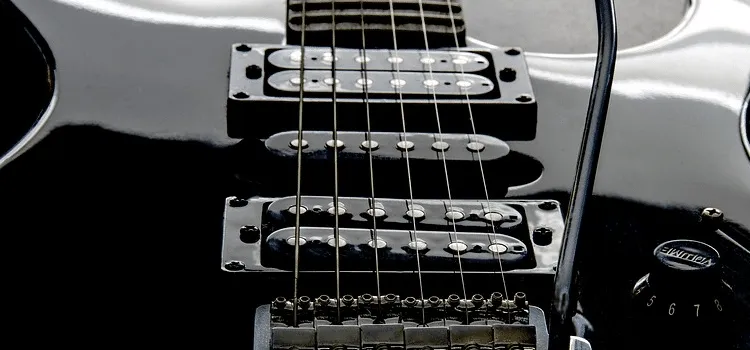
That said, designs like the Fender Stratocaster use three single coil type pickups that the player flips through with a switch. One pickup is for the neck, one is for the bridge, and one is for the mids.
The neck pickup corresponds to deeper, heavier sounds, the mid-range emphasizes mid-tones, and the bridge pickup amplifies highs and treble tones.
Popular Pickup Brands and Other Pickup Types
If you decide to swap or upgrade your pickups, several brands dominate the aftermarket. A few of the most popular pickup brands are:
- Seymour Duncan
- EMG
- DiMarzio
Single coils and humbuckers aren’t the only options either. Other popular pickup types you’ll run into include:
- P90 pickups
- ceramic magnet pickups
- acoustic pickups
How Single Coils and Humbuckers Compare
So we’ve talked about the history, the noise, and the tone of each design. Here’s how the two stack up when it’s time to choose.
On noise, the humbucker wins outright. Its two opposing coils were built specifically to cancel the hum that single coils pick up, which is exactly why it was invented.
On tone, it comes down to taste rather than a winner: single coils are bright, crisp, and vibrant, while humbuckers are smoother, warmer, and fuller.
On versatility, both can cover a lot of ground. Players like Jimi Hendrix pulled enormous range out of single coils, and the Stratocaster’s three-pickup switching system gives a single coil guitar a wide palette.
Humbuckers, meanwhile, are the default for heavier styles but still show up in plenty of blues rigs.
As with so many things today, we have a lot of quality choices. Whether you prefer humbucker or single coil pickups comes down to whether you like the way a guitar feels and plays, first and foremost.
After that you’ve to consider what kind of sound you want from your guitar pickups and how to sound great with them.
Frequently Asked Questions
Are humbuckers or single coils better for beginners?
Neither is inherently better for a beginner, but humbuckers are more forgiving because they cancel the hum that single coils produce. That means less unwanted noise while you’re still learning to control your tone and your amp.
If you mostly want bright, clean sounds for blues, country, or classic rock, a single coil guitar like a Stratocaster or Telecaster is a great starting point.
Why do single coil pickups hum?
A single coil has one coil of wire with a direct connection to the strings, and that single coil also acts like an antenna for electrical interference from lights, screens, and power lines. The result is the familiar 60-cycle hum.
Humbuckers solve this by using two coils wired to oppose each other so the noise cancels out while the guitar signal is preserved. You can read more about chasing down hum with nothing plugged in if your rig is noisy.
Can you put humbuckers in a Stratocaster?
Yes. Many players swap one or more of a Stratocaster’s single coil pickups for a humbucker, often in the bridge position, to get a thicker, hotter sound for heavier music while keeping single coil tones elsewhere.
This is one of the most common pickup customizations.
The reverse happens on Telecasters too, since some Telecaster models ship with humbuckers from the factory.
Which pickup type is best for metal?
Humbuckers are the traditional choice for metal because their higher output and noise cancellation hold up well under heavy gain and distortion. They stay tight and quiet where a single coil might get noisy and thin.
If you’re building a metal rig, our guide to the best guitar pickups for metal is a good next stop.
Final Thoughts
As a general rule, humbuckers are smoother with a richer, fuller sound, while single coils have a brighter, more vibrant tone and a touch more noise. The humbucker was literally invented to kill the hum that single coils create, so if a quiet signal under high gain matters to you, that’s the safer pick.
But rules were made to be broken, and modern technology can do a lot to change either sound. Digital amps and pedals can push a single coil guitar toward heavier territory and warm a humbucker, so neither design boxes you in the way it once did.
In the end, the right pickup is the one in a guitar that feels and plays great in your hands. Decide on that first, then dial in the tone you want with your pickup choice, your amp, and your pedals.