You spend money chasing tone with pedals and amps, while the fastest changes sit right under your strumming hand. Most players barely touch them.
The knobs and switch on your electric guitar shape your sound before it ever reaches the amp. Those are your volume and tone pots and the pickup selector.
Leave them parked and you’re hearing one flat slice of what the guitar can do. Worse, the wrong tone setting can make a good part sound harsh.
This guide walks through what each control does and how to work them together while you play. First, let’s break down exactly what the knobs and switch are doing.
More related reading - Can You Use WD40 On Guitar Pots?
What the Knobs and Switch Actually Do
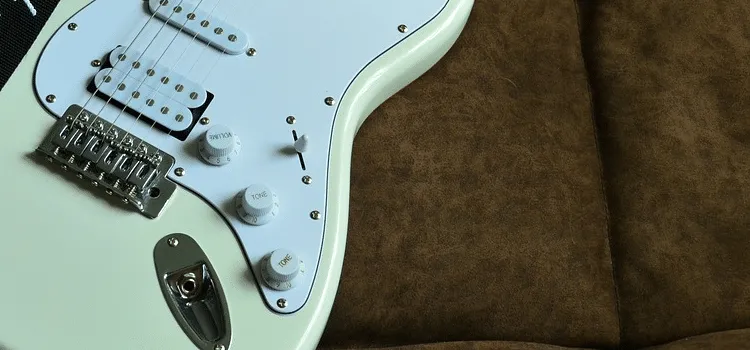
Before you can manipulate your guitar to sound better, it helps to know what each control is for. The round knobs are your volume and tone pots, and the lever or switch beside them is the toggle switch, also called the pickup selector.
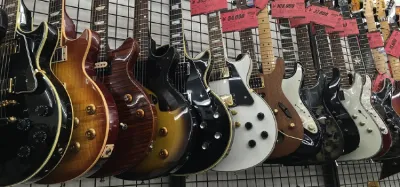
There are many guitars available with different kinds of toggle switches. The Fender Stratocaster has a five-way switch, while other guitars, like a Gibson Les Paul, have a three-way switch.
The toggle switch chooses which pickups transform the vibrations of the guitar string into electrical signals.
All the different pickups emit a very different sound compared to the rest, so it’s important to choose the right pickup. That can only be done when you’re completely familiar with which position of the toggle switch selects which kind of pickup.
Using the Different Kinds of Pickups
Choosing the right pickup for the precise type of sound you’re aiming for isn’t a piece of cake, but there’s a simple strategy that makes it easier.
If you’re trying to create a sound that moves toward the rhythms of rock music, you want a more sharply defined sound. When you’re playing power chords, you need a sharp edge that’ll, in turn, give way to an edge for powerful riffs.
If you’re trying to create a sound that moves toward the rhythms of blues music, you want a warmer, wobblier sound instead of a sharp one. Matching the pickup to the genre is the first step before you ever touch the tone knob.
Switching Positions With the Pickup Selector
It’s important for guitarists to understand that sticking to one position of the guitar’s scale can be limiting. If you switch between the high and low ranges of the neck instead, the results turn out to be far more impressive.
If you watch the best guitarists on the planet, you’ll see how they move around the fretboard as they switch pickups with the pickup selector switch. Switching pickups can help you create the best sounds possible, but it can also create obnoxious sounds if not used properly.
As you play solos on the higher end of the neck, don’t use the bridge pickup all the time, since it ends up creating a very sharp sound. Instead, try the neck pickup when you’re soloing on the higher end of the neck.
As you reach the lower range of the fretboard, use the bridge pickup, as it creates just the right sound for that register.
How to Fine-Tune Your Guitar With the Tone Knob
The purpose of the tone knob is to help you fine-tune your guitar toward an absolutely heavenly sound. Here’s how to use it without killing your tone.
If you drive your tone knob all the way to the lowest level, it’ll create a rather unpleasant, muffled sound. All the high frequencies get cancelled and only low frequencies stay.
That can be great if you’re aiming for a jazzy tone, and combined with some great distortion it can produce some genuinely impressive results.
The more useful, everyday move is to turn the tone control down just a slight bit. This is especially advantageous for players who aren’t fans of a razor-blade-sharp sound but still want clarity.
To finesse your skills, experiment as much as you can with the tone knob. Small changes between a 10 and a 6 or 7 make a surprising difference, so sweep through the range while you play and listen for the point where the sound stops being harsh.
How to Use the Volume Knob (and Volume-Knob Hacks)
Most guitarists reach for a volume pedal to regulate volume. Try using the volume knob for the same effect, because it can do far more than simply make the guitar louder or quieter.
Start with the volume rolled off and slowly turn it up toward 10. As you do, bring up your amp at the same time, to the point that it starts to overdrive your tone.
Now start dialing back the guitar’s volume. This cleans up your tone until it turns quieter, and you can turn it back up to boost your sound whenever you need it.
The volume knob works much the same way a volume pedal does, which means you can switch between clean and gritty just by rolling it.
Use this to manage gain over fuzz and overdrive. Dial it back to change the tonality of the guitar on the fly, and roll it forward when you want the full, driven sound to return.
If you rely only on pedals, you often get more versatility than you actually need, so using the volume knob is the more efficient option. Keep in mind that most guitars lose a little treble as you roll the volume off.
For the tone control, instead of leaving it pinned at 10, try reducing it to around 6. This can add more usable treble than you expect and is, once again, often a better option than reaching for a pedal.
Turn the tone up when you want a more cutting sound, roll the volume back, and see what you can achieve.
Frequently Asked Questions
What do the knobs on an electric guitar do?
The knobs are volume and tone pots. The volume pot controls how much signal the guitar sends to the amp, and the tone pot rolls off high frequencies to make the sound warmer or darker.
The switch next to them is the pickup selector, which decides which pickup is feeding the signal in the first place.
What number should my volume and tone knobs be on?
There’s no single correct number, but a useful starting point is volume on 10 and tone somewhere between 6 and 8. From there, roll the volume back to clean up gain and lower the tone when a pickup sounds too sharp.
The right setting depends on your pickups, your amp, and the style you’re playing.
Why does my guitar sound dull when I turn the tone down?
Turning the tone knob all the way down cancels the high frequencies and leaves only the lows, which produces that dull, muffled sound. That can be exactly what you want for a jazzy tone, but for most playing you only want to roll the tone back slightly rather than all the way.
Can I clean up distortion without a pedal?
Yes. Set your amp so it overdrives with the guitar volume on full, then roll the volume knob back.
Lowering the volume cleans up the tone and reduces gain, and turning it back up restores the drive, so the volume knob effectively works like a clean boost or volume pedal.
Final Thoughts
Not being aware of how to use the toggle switch and the knobs correctly will produce an obnoxious sound even when you’re playing well, so it’s worth slowing down and learning each control. The pickup selector chooses the voice, the volume knob sets the output and tames gain, and the tone knob shapes brightness.
Used together, they turn a static, one-dimensional rig into a responsive instrument.
The best way to learn is to experiment. Sweep the tone knob while you play, roll the volume back against an overdriven amp, and switch pickups as you move across the neck.
Over time these adjustments become second nature, and you’ll rely far less on extra pedals to get the sounds you want.
More related articles: