Your Squier Strat already plays better than its price suggests. A few weak spots, though, are what stand between it and a guitar you stop wanting to replace.
Most of those gripes trace back to two things: a neck that drifts out of tune and single coils that sound a touch thin. Small, focused mods can fix both.
These tips work across the line, including the Bullet Strat, the Affinity Stratocaster, and the Mini Strat. Several are cheap, and you can handle them yourself at the kitchen table.
We start with the tuning machines, since that’s where most of the tuning trouble begins. For routine upkeep, our guitar care tips are worth a read first.
Upgrade the Tuning Machines
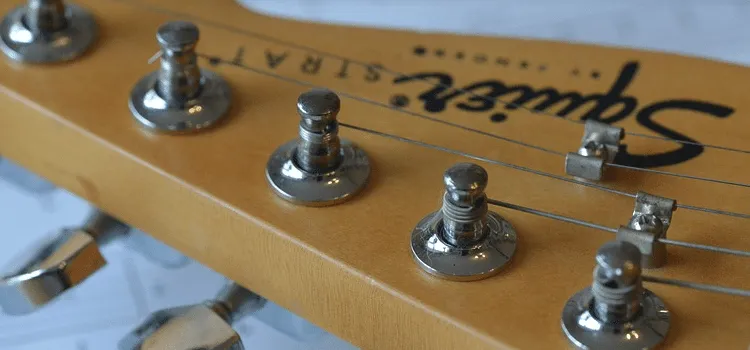
Tuners hold the strings in place so they vibrate at the right pitch. Tuning stability isn’t one of the Squier Strat’s strong points, and many players complain that they’ve to retune frequently.
If you already own one, you know the feeling. That makes the tuners one of the first places worth spending money.
Swapping in a better set, such as locking tuners, is the most common upgrade owners reach for. A quality set starts at around $100.
That may feel steep for a budget guitar, but once it’s done you stop fighting the tuning and spend more time playing.
Upgrade or Block the Tremolo System
One of the main reasons this guitar drifts out of tune is the tremolo system. Plenty of players love the guitar but find the trem works against stable tuning, so many choose to lock or block the tremolo bridge in place.
Eric Clapton famously blocked the tremolo on his Strat and was one of the first big-name guitarists to do it, and a lot of players agree with that call.
If you love the signature bends and dives that only a floating tremolo can give, you’ll have to take the good with the bad on the Squier Strat. But for most players, the constant retuning is more annoying than the trem is useful, so blocking it’s the better trade.
There are plenty of blocking and upgrade options at varying prices. Just know that once you lock the tremolo you’ll need to adjust to playing without it, and restringing the guitar takes a little more time.
Add a Shielding Plate
In the 1950s, Fender placed an aluminum shielding plate under the scratch plate. Those guitars sold extremely well and were known for a thicker, earthier sound.
Adding a shielding plate to your Squier Strat is one way to chase that vintage character.
Before you commit, listen to recordings or watch videos of guitars built this way so you know what the change actually does to the tone. It’s a subtle, vibe-driven mod rather than a fix for a specific problem.
Upgrade the Strings
Old strings need replacing because they go thin and lose tension over time. Even when they don’t break, they start to produce weaker tone than they had when fresh.
Regular string changes are the cheapest upgrade there’s.
Many players find the Squier Strat sounds a touch thin. If that’s your experience, try a heavier string gauge.
Thicker strings are harder to play at first, but you adapt quickly with practice, and the heavier gauge sends a stronger signal to the pickups for a fuller output. If a beefier tone is what you’re after, a string gauge change is well worth it.
Lubricate the Nut and String Path
Guitarists have long understood that friction is the enemy of stable tuning. If you don’t want to block the tremolo, lubricating the points where the strings move is a simple alternative.
This is an easy DIY job with no technician required. Take a little petroleum jelly and carefully work it into the string slots at the guitar nut.
Cutting the friction there helps the strings return to pitch and holds your tuning. If you’d rather not use petroleum jelly, graphite, Chapstick, and silicone grease all work as alternatives.
Upgrade the Pickups
The Squier Strat uses three single-coil pickups: bridge, middle, and neck. Upgrading the electronics is one of the best changes you can make to any guitar, and it’s near the top of the list here.
New pickups won’t cure everything, but they meaningfully lift the tone. Well-regarded brands to look at include Seymour Duncan, EMG, and DiMarzio.
For more on getting the most from the platform, see our guides to the best amps for Stratocaster guitars and the best Strat pickups.
Frequently Asked Questions
Which Squier Strat upgrade should I do first?
Start with whatever bothers you most. If the guitar won’t hold tune, nut lubrication and locking tuners are the cheapest, highest-impact first steps.
If you mostly dislike the thin single-coil sound, fresh heavier strings followed by a pickup swap will do more.
Are Squier Strat upgrades worth the money?
For a guitar you enjoy playing, yes. Cheap fixes like nut lube and new strings cost very little and improve tuning and tone right away.
Bigger jobs like tuners and pickups add up, so weigh the total against the price of stepping up to a higher-end instrument.
Do these upgrades work on the Bullet and Affinity models?
Yes. The same six upgrades apply across the Squier line, including the Mini Strat, Bullet Strat, and Affinity Stratocaster.
Always confirm parts like tuners and pickups match your specific model’s dimensions and routing before buying.
Can I do these upgrades myself?
Several are beginner-friendly DIY jobs. Lubricating the nut and changing strings take only basic tools.
Tremolo blocking, shielding plates, and especially pickup swaps involve more work and soldering, so take it to a tech if you’re not comfortable opening up the guitar.
Final Thoughts
The Squier Stratocaster is a strong guitar at its price, and most of its weaknesses come down to two things: tuning stability and a slightly thin single-coil tone. The six upgrades here target both, from simple nut lubrication and string changes to bigger jobs like locking tuners and new pickups.
You don’t need to do all of them. Start with the cheap, high-impact fixes, see how the guitar responds, and only move up to the larger mods if you still want more.
Done thoughtfully, a handful of upgrades turns a good budget Strat into one you’ll keep reaching for.