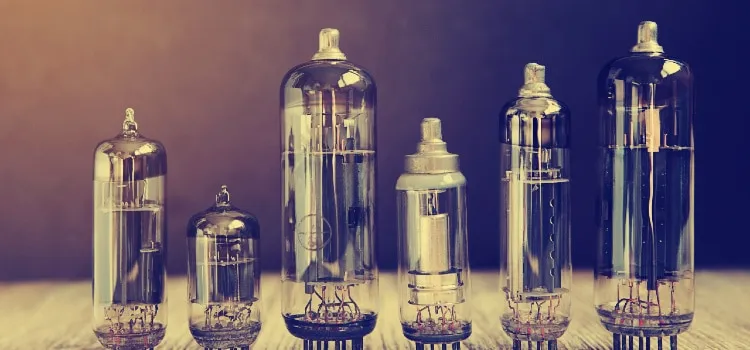
Your Fender Deluxe Reverb starts sounding dull or crackly, and you suspect a tube. Before you can swap one out, you need to know exactly what’s glowing inside the chassis.
This amp first appeared in 1963 and has gone through several eras since. The exact lineup shifts a little between the early blackface circuits, the later silverface ones, and modern reissues, so it helps to know which you own.
This guide lays out the full tube chart and explains what each one handles. We also cover how the amp changed over the years and the warning signs that a tube is fading.
Still shopping? Our picks for the best guitar amp and the best tube amp can help, but first, here’s the lineup inside.
Read more - best reverb pedal recommendations from our guitar blog here.
Fender Deluxe Reverb Tubes
The Fender Deluxe Reverb uses a mix of power, preamp, and rectifier tubes to deliver its 22-watt output at 8 ohms. The amp is driven by two power tubes (6V6GT), one GZ34 rectifier tube (also labeled 5AR4), and four 12AX7 preamp tubes that handle the preamp gain stages, phase inverter, tremolo oscillation, and reverb circuit.
The 12AX7 tubes are sometimes marked as 7025 in the preamp positions.
With its 22-watt output, the 6V6 power tube set can still push sound well past its maximum rated operating voltage, which is part of what gives the amp its signature breakup. Even so, it’s important to maintain proper voltage and the right input and output settings to preserve both performance and longevity.
The amp has mainly featured the Jensen C-12Q series 12-inch loudspeaker throughout its production life, one of the most respected speakers in the industry. Over the years the amp has also shipped with Eminence, Oxford 12K5, and Marlboro SE speakers for added performance.
The combo weighs around 42 pounds, so it takes a little strength to move, but it stays mobile enough for indoor or outdoor sessions and practices.
The Full Deluxe Reverb Tube Chart
Here’s the standard tube complement for a vintage-style or reissue Deluxe Reverb at a glance:
| Position | Tube | Job |
|---|---|---|
| Power tubes (x2) | 6V6GT | Final power amplification (22 watts) |
| Rectifier (x1) | GZ34 / 5AR4 | Converts AC to DC for the amp |
| Preamp (x4) | 12AX7 / 7025 | Preamp gain, phase inverter, tremolo, and reverb |
How Many Different Deluxe Reverbs Are There?
The original Deluxe Reverb featured a black control panel with white lettering, the blackface style of the era, which played a key role in the visibility of the controls. This blackface combo used the famous AB763 circuit schematic.
In 1967, Fender was purchased by CBS and the design shifted to the silverface Deluxe, with metallic control panels and blue lettering. The hand-wired circuit stayed largely intact, but the control face was revised a few times in search of better performance.
The original Deluxe Reverb was discontinued in 1982, and the second version launched that same year.
The Deluxe Reverb II featured a 20-watt amp with a solid-state rectifier and tubes. The tremolo circuit was removed, while master volume, gain, and other controls were added.
The new unit also offered two switchable channels, unlike the single-channel original. It was discontinued in 1986 but drew good reviews from players of all levels.
Fender brought the model back in 1993 with the Classic ‘65 Deluxe Reverb reissue. This version uses the original circuitry and cosmetics for both looks and tone, though the circuit board is wired rather than hand-built like the original.
It remains in production and continues to grow in popularity worldwide.
A limited-edition run of the Deluxe Reverb reissue arrived in 2013. The following year it was added to the regular Vintage Reissue lineup.
The silver cosmetics also returned on Fender’s 1968 Custom Deluxe Reverb amplifier, which earned strong reviews thanks to its construction and aesthetic appeal.
Related reading - choosing between tube and solid state amps.
What Exactly Are Amp Tubes?
Amp tubes are valve amplifiers that boost an input or output signal. Guitar players favor tube amps because they enhance tone and pitch, shaping what the industry calls timbre, which can include the sound distortions and pitch colors that give an amp its character.
Valve tube sounds in guitar amps are widely considered more pleasing to the ear than conventional transistors. These tones are treated as the standard for professional guitar players and even audio engineers who specialize in microphone pre-amp setups.
Tube amps also respond differently than transistors as signals approach their limits. In a tube amp the amplification is less abrupt, so you get smoother, more musical distortion.
Transistor amps tend to distort more harshly, especially when signals reach the point of clipping. The debate between tube and solid-state amps continues among players today, but the warmth of tubes is exactly why amps like the Deluxe Reverb endure.
How to Tell When Your Tubes Need Replacing
Tubes wear out gradually, so the signs can be easy to miss until your tone suffers. Power tubes like the 6V6GT typically need replacing first because they work the hardest, while preamp 12AX7 tubes can last much longer.
Watch for a few common warning signs. A loss of volume or punch, tone that goes thin or muddy, and excessive hiss, hum, or crackle all point to aging tubes.
Microphonic squeal, a blue or red glow inside a power tube, or a tube that has gone dark while others glow are clearer signals that a replacement is due.
When you do replace the power tubes, buy a matched pair of 6V6GT tubes so the amp stays balanced, and have the bias checked or set afterward. If you’re tracking down a specific noise, swapping the preamp tubes one at a time can help you isolate which stage, such as the reverb or tremolo circuit, is causing trouble.
Frequently Asked Questions
How often should I replace the tubes in a Deluxe Reverb?
There’s no fixed schedule, but power tubes generally last one to three years of regular playing, while preamp tubes can last several years or longer. Gigging players who run the amp loud will go through power tubes faster than someone practicing quietly at home.
The best approach is to listen for changes in tone and watch for the warning signs rather than replacing on a timer.
Do I need to rebias the amp after replacing power tubes?
The Deluxe Reverb is a fixed-bias amp, so yes, the bias should be checked and set whenever you install new 6V6GT power tubes. Buying a matched pair helps, but the correct bias still needs to be dialed in for that specific set.
If you’re not comfortable working inside an amp where lethal voltages are present, have a qualified tech handle the bias adjustment.
Can I use 6L6 tubes instead of 6V6 in a Deluxe Reverb?
The Deluxe Reverb is designed around 6V6GT power tubes, and 6L6 tubes aren’t a direct drop-in replacement because they’ve different power and bias requirements. Forcing the wrong tube can stress the output transformer and other components.
Stick with 6V6GT power tubes to keep the amp running safely and to preserve its classic 22-watt character.
What does the GZ34 rectifier tube actually do?
The GZ34 (also labeled 5AR4) is the rectifier tube, and its job is to convert the incoming AC voltage into the DC voltage the rest of the amp needs. It also contributes to the amp’s feel, since a tube rectifier produces a slight “sag” under heavy playing.
That sag is part of why many players prefer the tube-rectified original over later solid-state versions like the Deluxe Reverb II.
Final Thoughts
The Fender Deluxe Reverb remains one of the best tube amps ever produced, and its tube lineup is a big reason why. Two 6V6GT power tubes, four 12AX7 preamp tubes, and a GZ34 rectifier work together to deliver that warm, dynamic blackface tone players have chased for decades.
Whatever version you own, keeping fresh, properly biased tubes in the amp is the single best thing you can do for its tone and longevity. Pay attention to the warning signs, use the right tube types, and the Deluxe Reverb will reward you in the studio or on stage.
Want more info on Fender amps? Take a look at our guide to the 6 best small Fender amps.