You’re staring at your board, eyeing a distortion pedal, and quietly asking if you even need it. Fair question.
The honest answer hangs on two things: the sounds you’re chasing and the amp you already own. Some rigs hand you all the grit you want, while others leave you wishing for more bite.
This article sorts out when a distortion box earns its spot and when you can pass. We’ll cover what the effect really does, the control it adds, and how to pick a model.
First, let’s pin down what distortion actually is.
What Is Distortion, Exactly?
Distortion is created by a massive increase in the gain of an amplified signal. Pushing the signal harder clips the waveform, which adds the grit, harmonics, and sustain that define rock and metal tones.
Over the years, players have achieved this effect in several ways. In the old days it came mostly from cranked tube amps, and today it’s just as often produced through digital effect processing.
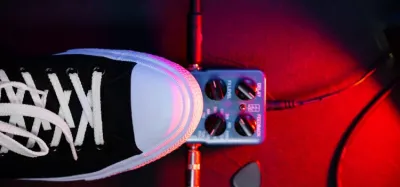
A distortion pedal simply gives you that gain boost in a compact, footswitchable box you can place in front of your guitar rig.
Used carefully, a distortion pedal is one of the best ways to get more out of your playing. These pedals are popular because they add a different, exciting sonic flavor on top of whatever tone you already have.
Are Distortion Pedals Actually Necessary?
Players who have never used distortion before often wonder whether the investment is worth it. Can you get by with just your tube amp’s natural distortion?
In many cases, yes - but the right pedal can take your guitar game to the next level.
Distortion pedals are especially useful when you’re playing a lead part that needs more volume and more bite to the tone. With a single footswitch you can jump from a clean or crunchy rhythm sound into a saturated, cutting lead.
That’s the kind of on-the-fly control that amp distortion alone struggles to deliver, and it’s one of several reasons players keep adding them to their pedalboard.
Benefits of Adding a Distortion Pedal
The advantages go well beyond a louder lead tone. Here are the main reasons a quality distortion pedal earns its place on your board.
Incredible Sound
The sound coming from your guitar is what makes playing interesting in the first place. The more compelling that sound, the more people enjoy listening.
A quality distortion pedal gives you tight, focused saturation with minimal noise, and its harmonics work in unison to bring out the best tone without muddying your signal. With the right guitar effects pedal, you also get the flexibility to cover a wide range of genres.
Ease of Use
Whether you’re a seasoned player or just getting into the game, distortion pedals are easy to work with. The controls are laid out so you can dial in the tone you want in seconds.
The tone knob lets you shape your high and low frequencies, while the level knob controls overall volume - simple adjustments that make the pedal approachable for anyone.
Solid Construction
When you’re playing, the last thing you want is to knock a setting out of place by accident. Quality distortion pedals are built to prevent that.
Many use a recessed or sunken knob design so you won’t change anything by mistake, and the housings are tough enough to survive constant stomping and travel. Good materials are a big part of what makes a distortion pedal last for years.
When You Don’t Need a Distortion Pedal
A distortion pedal isn’t mandatory, and there are plenty of situations where you can skip it. If you play through a high-gain tube amp that already delivers the saturation you want, a dedicated pedal may be redundant.
Many amps have a built-in gain channel or a master volume that pushes the preamp into natural breakup.
You can also get away without one if you mostly play clean or lightly driven styles like jazz, blues, or folk, where heavy distortion would work against the music. And if you already run a modeling unit or multi-effects processor, distortion is usually baked in alongside your other effects.
The pedal becomes worthwhile when you want a specific flavor of grit, more gain than your amp produces, or instant footswitchable control over your lead tone.
How to Choose a Distortion Pedal
Once you decide a distortion pedal is right for you, the next step is picking the best one for your needs. That can feel daunting given how many brands are on the market, but a few criteria narrow it down quickly: your taste and preferences, your musical requirements, and how much gain you need.
If you want to play crunchy, heavy riffs with a good pedal for metal, look for something with high-gain capabilities. It also helps to explore the different types of distortion pedals so you understand which voicing suits your style.
Pay close attention to two controls in particular. The gain knob determines how much distortion you get, and the tone knob shapes the character and quality of that sound.
Together they decide how the pedal sits with your guitar and amp. Where you buy matters too - stick to a reputable retailer so you’re less likely to end up with a counterfeit product.
To see how the criteria above play out across real models, here are some of the best distortion pedals guitarists reach for:
- Boss DS-1
- Ibanez TS-9 TubeScreamer
- TC Electronic MojoMojo
- Electro-Harmonix Big Muff Pi
- Fulltone OCD Obsessive Compulsive Drive
Frequently Asked Questions
Is a distortion pedal the same as overdrive?
Not quite. Overdrive emulates the warm, dynamic breakup of a tube amp pushed hard and reacts to your playing touch.
Distortion is more aggressive and compressed, delivering heavier, more consistent saturation regardless of how soft or hard you pick.
Many players use overdrive for blues and classic rock and reach for distortion when they want a thicker, more modern high-gain sound.
Can I get distortion without a pedal?
Yes. A tube amp cranked into its natural breakup produces real distortion, and most modern amps include a dedicated gain or lead channel.
Modeling amps and multi-effects units also generate distortion digitally.
A pedal is mainly worth it when you want a specific tone, more gain than your amp offers, or footswitchable control over your sound mid-song.
Do I need a distortion pedal as a beginner?
You don’t need one to start learning. Focus first on technique, chords, and a clean or lightly driven tone.
That said, an affordable distortion pedal is a fun and inexpensive way to explore rock and metal sounds early on.
If you’re unsure where to begin, our guide on what guitar pedals to start with walks through sensible first choices.
Does a distortion pedal work with any amp?
A distortion pedal will work with virtually any amp, but it sounds best through a clean channel. Stacking it on top of an already-distorted amp tone can get muddy or harsh.
For the cleanest results, set your amp to a neutral sound and let the pedal do the heavy lifting on the saturation.
Final Thoughts
So, are distortion pedals necessary? Strictly speaking, no - plenty of guitarists get the tones they want straight from their amp or a modeling unit.
But that doesn’t mean a pedal isn’t worth owning.
The right distortion pedal gives you more gain, more bite, and instant control over your lead and rhythm sounds, all in a durable, easy-to-use box. For lead playing in particular, that footswitchable boost is hard to beat.
If the tones you’re after demand more than your amp provides, a distortion pedal is one of the most rewarding additions you can make to your setup. Weigh your style, your gear, and your gain needs, then choose a model that fits the music you want to play.