You bought an amp with an effects loop, and now you’re staring at it. Should the drive pedal go there, or stay up front by the guitar?
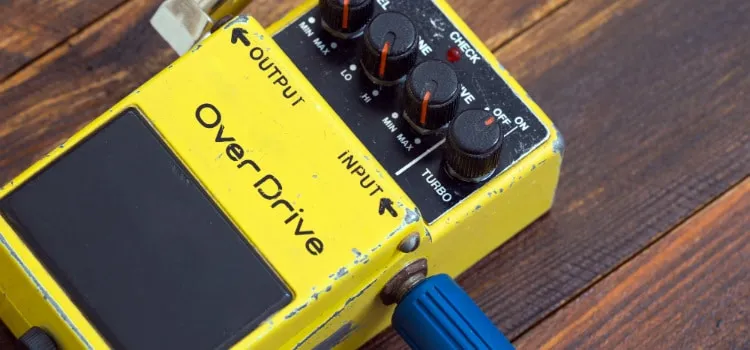
My own rig keeps top overdrive pedals, distortion, and fuzz ahead of the amp. The way an effects loop sits after the preamp changes how a drive pedal reacts.
Below we look at why placement matters, what shifts when you move dirt into the loop, and the cases where breaking the rule pays off.
Read more: Best overdrive pedal for Fender Deluxe Reverb | Best overdrive pedal for humbuckers | Using a distortion pedal | Uses for overdrive pedals
Should Distortion or Overdrive Go in the Effects Loop?
My personal opinion is no. Keep your dirt pedals in the front end of the guitar amp and use a sensible guitar pedal signal chain with the right pedalboard order.
When I researched this online to see how other players handle it, I didn’t find a whole lot written on the subject. That alone suggests most people aren’t running their overdrive in the loop, and the conventional wisdom leans heavily toward keeping drive up front.
Why Drive Pedals Sound Better in Front of the Amp
The clearest explanation I came across was from Sweetwater, and I completely agree with it:
Much as reverb and delay almost always work better in the loop, your dirt boxes almost always sound better in front of the amp. This is thanks to the way the amp’s compression rounds off the harsh top end of these effects. Technically, you can use them in the loop. Just don’t say we didn’t warn you. (sweetwater.com)
That compression point is the heart of it. When an overdrive or distortion hits the front of the amp, the preamp interacts with the pedal and smooths off the harsh high end.
Run that same pedal in the loop, after the preamp, and you lose that interaction, which often leaves the tone harsher and less musical.
When Running Overdrive in the Loop Can Work
There’s a legitimate case for putting distortion or overdrive in the loop: more tone options. The idea is gain stacking, the technique of combining the flavor of a few gain pedals to create a tone that’s uniquely yours.
A pedal’s crunch combines with the amp’s own character to create something new. Those frequencies mix and amplify each other, and with a little experimentation you can land on a tone that becomes your signature sound.
You can even put your distortion pedal in the effects loop to get total control over this effect. Just keep one thing in mind: a drive pedal in the loop now acts as a master volume for your amp when engaged, so don’t crank it while you’re practicing.
This is the same principle covered in why you might put a distortion pedal before a distorted amp, and it applies to overdrive too since the two effects are closely related.
How It Sounds Through an Effects Loop
Demos of drive in the loop actually sound okay, and hearing one prompted me to run some of my own tone experiments this way with my own guitar gear. Most of those demos focus on distortion, but I can’t see why an overdrive like a Tube Screamer wouldn’t apply here as well.
To be honest, after experimenting I’d still opt for putting these types of effects in front of my amplifier. So, should you put your overdrive in your effects loop?
My opinion is probably not, but there’s nothing wrong with trying it yourself to see how it works for you.
What Pedals Should Go in the FX Loop?
For me, anything in the modulation and time-based family belongs in the FX loop: delay, reverb, chorus, and flanger. These effects sit after the preamp gain, so they stay clear and defined instead of getting smeared by distortion.
Everything else I like on the front end. That includes volume pedal placement, distortion pedals, drive pedals, your overdrive pedal, a noise gate or noise suppressor, a compressor, and a multi-effects unit.
If you’re still deciding between drive types, see whether you should use an overdrive or distortion. And if you run a wah, here’s how to set up a wah pedal in the effects loop versus in front of the amp.
Frequently Asked Questions
Can you put overdrive in the effects loop?
Yes, you technically can put overdrive in the effects loop, and the amp will pass the signal. Most players find it sounds better in front of the amp, though, because the preamp’s compression rounds off the harsh top end of the drive.
If you want to experiment, start with the pedal’s gain and level low, since a drive in the loop behaves more like a master volume than a typical front-of-amp boost.
Does distortion belong in front of the amp or in the loop?
Distortion almost always belongs in front of the amp. Like overdrive and fuzz, it interacts with the preamp and benefits from the amp’s natural compression, which produces a smoother, more musical tone.
You can put distortion in the loop for gain stacking and extra tone options, but expect a harsher character and remember it’ll act as a master volume when engaged.
What happens if you put a distortion pedal in the effects loop?
When a distortion pedal sits in the loop, it lands after the preamp, so it no longer gets the front-end interaction that softens its high end. The tone can come out harsher, and the pedal effectively becomes a master volume for the amp.
That isn’t always a bad thing. Some players use it intentionally to stack gain and shape a unique sound, just be careful with the levels at lower volumes.
Where does a Tube Screamer go in the signal chain?
A Tube Screamer is an overdrive, so it typically goes in front of the amp along with your other dirt pedals. That placement lets it push the preamp and take advantage of the amp’s compression.
You can run a Tube Screamer in the loop if you’re chasing a specific stacked tone, but for most rigs the front of the amp is the standard and best-sounding spot.
Final Thoughts
For the vast majority of players, overdrive, distortion, and fuzz sound best in front of the amp. The amp’s compression rounds off the harsh top end of dirt pedals, which is exactly why time-based effects like delay and reverb go in the loop and drive pedals stay up front.
That said, the effects loop isn’t off-limits. Running drive in the loop opens up gain-stacking possibilities and extra tone options, as long as you remember the pedal now behaves like a master volume.
So, should you put your overdrive in your effects loop? My answer is probably not, but the best tone is the one you like.
Plug in, experiment with both placements, and let your own ears make the final call.