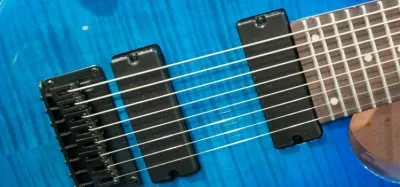
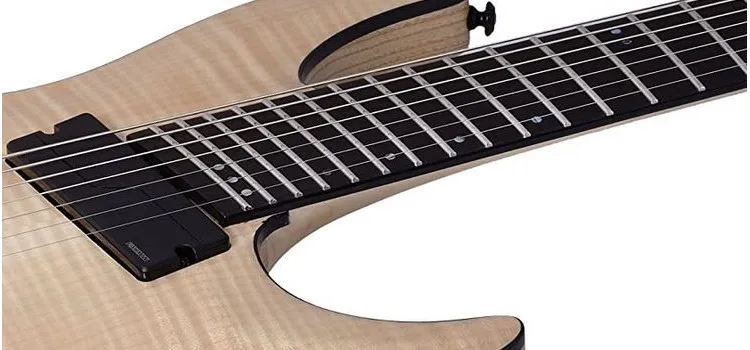
Look at a multiscale guitar and the first thing you notice is the frets: they fan out at an angle instead of running straight across the neck. That’s not styling, it’s engineering.
Each string gets its own scale length, which means truer intonation, a tighter low end, and more even tension under your fingers.
This guide covers how fanned frets work, how they feel to play, and which brands build them well. If you’re already sold, jump straight to our best multiscale guitars roundup.
What Is a Multiscale (Fanned Fret) Guitar?
A multiscale guitar puts two or more scale lengths on one fretboard. The frets are installed at a progressive angle, “fanned,” rather than in a straight line across the neck.
You can spot one instantly by that fan. The angle is usually subtle near the middle of the board and more pronounced out toward the nut and bridge.
The goal is simple: give your fingers more accurate places to land on every string, instead of forcing all six (or seven, or eight) strings to share one compromise layout.
Why Multiscale?
On a traditional guitar, straight frets are spaced from a single scale-length calculation, and that math is a compromise. Most fretted notes land a tiny bit out of tune.
Close, but never perfect.
Fanning the frets puts the working portion of each fret in a more accurate position for its string. The result is a guitar that simply plays more in tune, especially as you move up the neck.
Tuning and Sound
Tuning a multiscale works exactly like tuning a regular guitar, and fretting notes is no different either. Nothing about the layout changes your tuner routine.
Tone-wise, a fanned fret guitar in standard tuning doesn’t sound dramatically different from a straight-fret equivalent. The differences show up as tighter intonation and a clearer low end, not a brand-new voice.
Scale Length on a Multiscale Guitar
Scale length, measured from nut to bridge saddle, varies per string on a multiscale. A typical six-string design might run 25.5 inches on the high E and stretch to a full 27 inches by the low E.
That spread is the whole point. The bass strings get the extra length they need for clarity and tension, while the trebles stay at a familiar, bendable scale.
Strings and Intonation
Multiscale guitars take normal strings; they’re just distributed across different scale lengths. Some extended-range players pick slightly different gauges to lean into the geometry, but nothing exotic is required.
Intonation is where fanned frets quietly excel. Because each string’s speaking length is set independently, dialing in accurate intonation across the whole board is easier than on many standard guitars, and it stays accurate as you fret notes all over the neck.
Should You Get a Fanned Fret Guitar?
Fanned frets aren’t designed for beginners. The hand positioning takes real adjustment, and learning the instrument is hard enough without it.
A standard electric guitar is the better first buy.
For intermediate and advanced players, the trade is straightforward. You gain truer tuning and intonation, richer resonance, and more even tension; you pay in complexity, a short learning curve, and a higher build cost, since these necks demand extra care to make.
We break the trade-offs down line by line in our fanned fret guitar pros and cons guide.
Playing a Fanned Fret Guitar
Playing multiscale uses the same mental map as standard guitar: same notes, same positions, slightly different finger angles. Most players stop noticing the fan within a few sessions.
Bends are the one genuine adjustment. Keeping your fingers seated correctly through a bend takes practice, because the fret angle changes how the string travels under your fingertip.
Multiscale and Fanned Fret Guitar Brands
ESP builds multiscale models in both solid and hollow body styles, usually in alder or basswood. They sit at the high end of the market and deliver serious tone and playability.
Schecter makes some of the most popular fanned fret guitars you can buy: durable, easy to play, and impressively voiced, though not cheap. Jackson’s multiscale models chase effortless speed for players who want to fly across the neck.
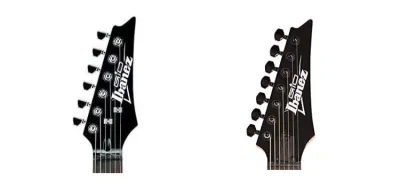
Ibanez owns the compact end of the field. Their fan fret designs pack a lot of thought into accessible instruments, and they’re some of the best value multiscale builds around.
Final Thoughts
Multiscale guitars solve a real problem, the quiet intonation error built into straight frets, and they do it without changing how you fundamentally play. Most listeners won’t hear the difference; your tuner and your fretting hand will notice it constantly.
If you’re an intermediate player curious about extended range or just better intonation, it’s a worthwhile experiment. Start with our best multiscale fanned fret guitar picks and get one in your hands before you commit.