Maybe a favorite band’s low riffs got you curious, or your drop tunings keep running out of room down low. Either way, paying for a seventh string you might never touch feels like a gamble.
The extra string only earns its keep if the music you play actually reaches for those lower notes. Feel matters just as much as tone, since a wider neck and a slightly heavier body can either suit you fine or wear on you fast.
The sections below work through that call step by step, from who really benefits to how the neck compares. When you’re ready to shop, our guide to the best 7 string guitars covers the top picks.
First, is it worth the money?
Is a 7 String Guitar Worth the Money?
Yes, but it depends on the model and how comfortable it’s to play. If you like how it feels in your hands, go for it.
Having a seven-string guitar doesn’t mean you’ve to play the seventh string all the time. It’s simply a tool to broaden your tonal range, and the other six strings stay exactly the same.
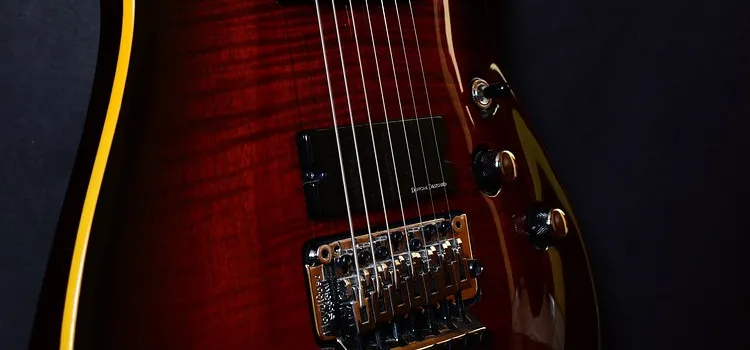
They’re usually tuned B, E, A, D, G, B, e, with the top six strings tuned just like a standard six-string guitar. Seven strings are great for getting a wider tonal range while keeping a comfortable scale length, and that extra string is the low B that opens up heavier, deeper riffs.
Is a 7 String Guitar Right for Me?
Only you can decide whether a 7 string is right for you. If you can, try to find a 7 string version of one of your favorite 6 string guitars and experiment with different chords and tunings.
At the very least, play something similar to what you’re already used to so the comparison is fair.
If you’re weighing the two formats against each other, our breakdown of the 7 string vs 6 string guitar covers the practical differences in more detail.
Are My Hands Too Small for a 7 String Guitar?
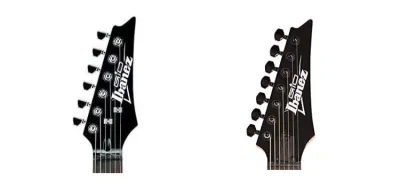
This mainly depends on the guitar you choose. For example, Ibanez guitars are known for their slim necks and smooth playing feel.
They’re also affordable, so if you go that route, you wouldn’t be breaking the bank.
The best bet is to try a few out yourself before buying to see whether the neck is comfortable to play. If you’re coming from a six-string, our tips on how to transition from 6 to 7 string guitar make the adjustment easier.
How Much Does a 7 String Guitar Weigh?
The weight of a seven string guitar isn’t much more than a regular six string. The average guitar weighs somewhere between 6 and 12 pounds, and a 7 string usually falls right inside that range.
In practice, the extra string adds very little, so weight is rarely a reason to avoid one. Comfort comes down to body shape, neck profile, and how the guitar balances against you when standing.
Buying a 7 String Guitar
If you’re in the market for a new 7 string guitar, start with our best 7 string electric guitars guide for models across a range of budgets and playing styles.
Before you commit, it’s also worth thinking about your wider setup:
- Pair it with the right rig using our picks for the best amp for a 7 string guitar.
- Dial in a clear low end with our 7 string guitar EQ tips.
- Not sure about the learning curve? See whether a 7 string guitar is hard to play.
Frequently Asked Questions
What’s the extra string on a 7 string guitar tuned to?
The extra string on a standard 7 string guitar is a low B, sitting a fourth below the low E. The full tuning runs B, E, A, D, G, B, e, so the top six strings match a standard six-string guitar.
This means everything you already know still applies, and the low B simply extends your range downward for heavier riffs and lower chord voicings.
Is a 7 string guitar harder to play than a 6 string?
It can take a short adjustment period because the neck is wider and there’s an extra string to track. Most players adapt quickly, especially on a guitar with a slim neck profile.
The top six strings play identically to a six-string, so your existing chords and scales transfer directly. The main learning curve is muting the low B and getting comfortable with the wider fretboard.
Do I need a special amp for a 7 string guitar?
You don’t strictly need a special amp, but a low B can sound muddy through gear that isn’t built for extended-range tones. An amp with a tight, well-defined low end helps the seventh string stay clear.
For specific recommendations, see our guide to the best amp for a 7 string guitar, and dial in your tone with our 7 string guitar EQ tips.
Can beginners start on a 7 string guitar?
Beginners can start on a 7 string, though many find it easier to learn the fundamentals on a six-string first. If you’re set on a 7 string, choose one with a comfortable, slim neck.
Because the top six strings are tuned the same way, most beginner lessons and songs still apply. You can simply ignore the low B until you’re ready to use it.
Final Thoughts
Whether a 7 string electric guitar is worth it really comes down to your own preference and how the instrument feels in your hands. The extra low B string gives you a wider tonal range and heavier low end without changing how the rest of the guitar plays.
My recommendation is always to try one out for yourself and see how it feels before you buy. If the neck is comfortable and you’re drawn to those deeper tones, a 7 string is absolutely worth it.
When you’re ready to choose a model, head over to our guide to the best 7 string electric guitars to find one that fits your budget and style.