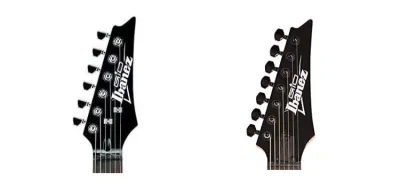

That extra low string can look like a wall. A lot of guitarists assume a 7 string plays nothing like the six they already know.
It plays more like it than you’d think. The seven sits right next to the familiar six, so most of your chords and scales carry straight over.
The new hurdles are real but small. Muting that low string, picking the right one, and reaching across a longer scale take a little time to settle.
Below I give an honest breakdown of the learning curve and how to smooth the switch, drawn from making it myself. First, just how hard is a 7 string really?
How Hard Is a 7 String Guitar to Play?
If it’s your first time with a seven string, you may be surprised how quickly you pick it up. The change is usually far easier than players anticipate.
In my own experience, I barely made any mistakes as long as I didn’t look down at the fretboard. One glance at the fretboard, with that extra string throwing off my visual reference, was enough to seriously mess me up.
That reaction tells you most of what you need to know. The technique carries over almost entirely from a 6 string.
The adjustment is mental and spatial more than it’s physical, and it fades fast with practice.
Looking to buy your first one? Take a look at these best 7 string electric guitar recommendations.
What Makes a 7 String Harder Than a 6 String?
Playing a 7 string does add a layer of difficulty, and it helps to know exactly where that difficulty comes from rather than treating the whole instrument as intimidating.
The first factor is scale length. 7 string guitars generally, though not always, have a longer scale length to support lower tunings.
This means you’ve to cover more ground when shifting positions or grabbing a chord that stretches across several frets.
The second factor is muting. The more distortion you use, the more likely strings are to ring out when you don’t want them to.
You control this by muting with your left or right hand, and an extra string simply means there’s more muting to do. For the same reason, open chords become more difficult when you play clean sounds, though that’s a rarer scenario on a seven string.
The third factor is picking accuracy. Picking the correct string is more challenging because there’s a greater chance of accidentally catching the extra string sitting next to the one you want.
It’s hard to say how significant all of this is. The difference is real and noticeable, but it’s outweighed by the additional range and possibilities a seven string provides.
Is a 7 String Guitar Hard for Beginners?
A 7 string isn’t impossible for a beginner, but it does stack extra demands on top of skills you’re still building.
All of the challenges above, muting, picking accuracy, and a longer reach, apply to a new player at the same time they’re trying to learn basic chords and fretting. That’s a lot to juggle at once.
The good news is that learning resources transfer well. While most lessons and method books cover 6 strings, the majority of those techniques apply to both instruments.
On top of that, you can take full advantage of the 7 string resources that exist, which players who only own a six can’t use.
Should You Start With a 6 or 7 String Guitar?
Personally, I’d recommend that beginners start with a 6 string. Learn the fundamentals first and build up your dexterity and finger strength on the more standard instrument.
Not to be pessimistic, but if you’re starting completely from scratch, you need to temper your expectations. Any guitar takes time.
If you plan to stick with it for three or four years and genuinely learn music that requires the extra range, you’ll eventually want a 7 string.
If I were in your position, I’d find a solid 6 string Strat or a similar instrument, line up a good guitar teacher, and go from there. You can play any 6 string part on a 7 string later, but figuring out the six is enough of a headache on its own when you’re first starting out.
Frequently Asked Questions
Is it hard to switch from 6 to 7 strings?
For most players the switch is easier than expected. Your fretting and picking technique carry over almost completely because the six familiar strings are still in the same place.
The main adjustment is recalibrating your visual reference and getting used to one more string under the pick. A short adjustment period usually clears that up.
Why do my strings ring out on a 7 string?
Unwanted ringing comes down to muting, and there’s more of it to manage with an extra string. Distortion makes the problem more obvious because it amplifies any string that vibrates when it should be silent.
Use the palm of your picking hand and the spare fingers of your fretting hand to dampen strings you aren’t playing. This is a normal part of the technique, just scaled up by one string.
Do you need a longer scale length for a 7 string?
Many 7 string guitars use a longer scale length to keep the low string tight and clear under lower tunings, but it isn’t universal. The longer scale means slightly bigger stretches between frets.
If the extra reach feels like a lot at first, give your hand time to adapt. It becomes second nature with regular practice.
Can you play 6 string songs on a 7 string?
Yes. Anything written for a 6 string can be played on a 7 string, since you simply leave the extra low string out of those parts.
That flexibility is part of the appeal. A seven string covers everything a six can do and adds extended low range on top.
Final Thoughts
A 7 string guitar isn’t nearly as hard to play as its extra string suggests. Most players adapt quickly because the core technique is identical to a 6 string, and the biggest hurdle is often just trusting your hands instead of staring at the fretboard.
The genuine challenges are accurate muting, picking the right string, and covering a slightly longer scale length. They’re real, but they’re minor compared to the extra range you gain, and they fade with consistent practice.
If you’re an established player curious about the format, jump in. If you’re a complete beginner, build your foundation on a 6 string first, then move up to a seven when the music you want to play calls for it.