
You stretch for a G chord, your pinky comes up short, and you wonder if your hands just aren’t built for this. Plenty of beginners hit that exact wall.
Here’s the thing. Angus Young and Prince both had small hands, and reach turned out to be the smallest part of the puzzle.
Most of the struggle comes from gear and habits, not finger length. Both of those you can change.
The fixes below tackle the setup, the strings, and the way you hold the neck. Let’s get into eight ways to make playing with small hands feel easier.
8 Ways to Make Playing Guitar With Small Hands Easier
1. Believe You Can Play Well
Everything stems from self-belief. If you think you can do something, you’ll act with purpose to reach your goal.
Setbacks won’t faze you, because you know you can get it right eventually.
So if you feel uncertain, find a way to convince yourself that you can play guitar with small hands. Look up other players who have already done it and see how they approached it.
Be a problem-solver and enjoy the process of learning.
2. Pick the Right Guitar
The correct equipment makes your life easier. Take a look at these guitars for small finger players, as well as the right options for small hands.
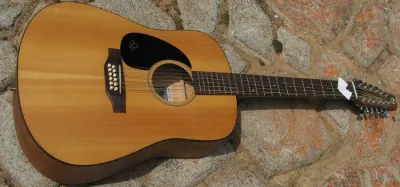
Since you’ve small hands, avoid large guitars with wide necks and long scale lengths because these are hard to use. Find an acoustic or an acoustic-electric guitar with a compact body, such as a classical guitar, parlor guitar, or concert guitar.
Pay attention to the neck, which should be as thin as possible. Neck size varies greatly from one model to another, so if you’re buying in a store, hold the guitar to see if you can reach the edge of the fretboard without straining.
You can also read online reviews to get input about playability.
3. Try an Electric Guitar
Although beginners typically start on acoustic guitars, there’s no reason you can’t pick up an electric as well. Buy a good amp to go with it and play all you want in your room.
Electric guitars are known for their compact bodies and thin necks, which make electric guitars easy to play, especially for smaller hands. Many players argue that electrics are more fun because you can shape the sound with effects like distortion, chorus, and reverb.
Borrow one from a friend to see if you like it before splurging.
4. Switch to Extra Light Strings
When you can barely reach the fretboard, heavy strings can be too much to deal with. Pressing them down takes too much effort, and your fingers will get tired right away.
You’ll also have a hard time developing the speed to shift from one open chord to another in a seamless way, including barre chords. One fix is to replace your current strings with extra light strings that are much easier to press down.
Another is to visit a luthier or guitar technician and have the instrument set up for small hands.
5. Start With Simple Chords
It’s always good to learn to walk before you run. Beginners should tackle simple chord shapes first before attempting harder ones, especially if there are anatomical challenges.
Find out the strategies players use to overcome limited reach with these chords, then apply them as you move up in complexity. Once you master the basics and how to position your hands for them, you’ll have a solid foundation.
You’ll finally stop struggling and start enjoying the guitar.
6. Play Your Favorite Songs
If you’re using a guidebook, you’ll probably encounter popular songs in the examples. These have melodies, beats, and lyrics that most people know by heart, so they make instructions easier to follow.
You can also apply what you learn by playing your favorite songs. Since these tunes are personal and special, you’ll have a great time strumming them, and you’re likely to put more effort into practice because you love what you do.
For ideas, check out these 20 super easy beginner guitar songs spanning rock and country.
7. Reposition Your Wrist on the Fretboard
In most cases, you’ll see a guitarist’s wrist right under the neck. Players with large hands can reach any spot on the fretboard from this position, but with small hands it may be hard to reach the farthest string this way.
It can help to reposition your wrist so it sits under the far side of the neck. From there, your fingers should be able to roam around the frets more readily.
It takes a while to get used to, so be patient. While you’re at it, make sure you choose a guitar with the right sized fingerboard radius for you to get a good feel on the neck.
8. Use a Capo
Small hands often come with small arms. If your guitar has a long neck, it can be tiring to constantly extend your arm to reach the first fret.
A capo clamps the strings on the fretboard to effectively move the location of your first fret. This raises the pitch but also makes chords easier to play, which is exactly what you want when you’re starting out.
As a bonus, a capo brings down the action of the strings, so you can press them with less effort.
Frequently Asked Questions
Can you play guitar with small hands?
Yes. Hand size is rarely the real barrier, but technique and gear are.
Plenty of accomplished players have small hands and simply chose instruments and chord shapes that suited them.
Focus on a thin-neck, short-scale guitar, light strings, and good wrist position, and your hand size becomes a non-issue.
What size guitar is best for small hands?
Look for a compact body and a thin, narrow neck with a shorter scale length. Parlor, concert, and classical-style acoustics are friendly options, and most electric guitars have slim necks that are easy to fret.
If you can, hold the guitar before buying to confirm you can reach across the fretboard without straining.
Are barre chords harder with small hands?
They can feel harder at first, but small hands aren’t the deciding factor. Light strings, a properly set up guitar, and a capo all make barre chords more manageable.
Start with simple open chords to build strength and accuracy, then work up to barre shapes gradually.
Should I learn on electric or acoustic with small hands?
Either works, but many small-handed beginners find electric guitars easier because of their thin necks and lighter feel. Acoustics with a compact body and narrow neck are also a good fit.
The best choice is the one you enjoy playing most, since that’s what keeps you practicing.
Final Thoughts
Everyone can play the guitar, and small hands won’t make you an exception. Many players have done it before, and you can follow in their footsteps.
Get inspired by artists who overcame physical challenges, and listen to everyday players talk about how they conquered their own limitations.
Every problem has a solution. You just have to find it.
The 8 ideas above, from picking the right guitar and lighter strings to a smarter wrist position and a capo, make the process far less frustrating and a lot more fun.
Start with the fixes that apply to you, stay patient, and keep playing. You’re sure to discover even more tricks along your journey.