You’ve got an amp head and a speaker you love, and now you want a box to put them in on your own terms. An empty 1x12 cabinet gives you that control, so you choose the driver instead of inheriting whatever a factory bolted in.
Going unloaded is also a smart way to grow a rig piece by piece. You can match the speaker to your amp and your style rather than the other way around.
The trade-off is that you have to know what to look for.
This guide explains what an unloaded 1x12 is, why you might want one, and the build details that separate a good empty cab from a poor one. Let’s start with the basics.
What Is an Unloaded 1x12 Guitar Cabinet?
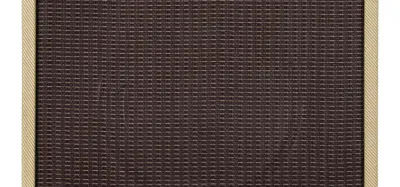
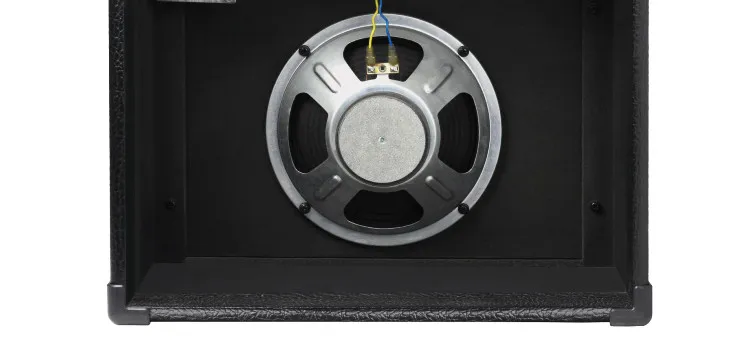
An unloaded, or empty, 1x12 cabinet is a speaker enclosure built to hold a single 12-inch speaker driver, sold without the speaker installed. The “1x12” simply means one speaker that’s twelve inches across.
Because the cabinet ships empty, you choose and mount the speaker yourself. That makes it the foundation of a custom rig rather than a finished, off-the-shelf product.
Why Build Around an Empty Cabinet?
The main appeal is control. Different speakers have very different voicings, and pairing the right driver with your amp head can completely change your tone.
An empty cabinet also lets you upgrade or swap the speaker later without buying a whole new enclosure. If your tastes change or you want to chase a specific sound, you only replace the driver inside.
Open-Back vs Closed-Back 1x12 Cabinets
Open-back and closed-back designs are the two broad categories, and the choice affects how your cab sounds and projects.
An open-back cabinet leaves the rear partially exposed. This prevents the sound from being too dead and gives the low end a more open, airy quality, with tone spreading out behind the cabinet as well as in front.
Many single-speaker combos and extension cabs use this design for that reason.
A closed-back cabinet seals the rear, pushing more sound directly forward and tightening up the low end. If you want a more focused, punchy response, a sealed enclosure leans that direction.
Either way, make sure you can remove the speaker easily in case you ever want to upgrade it.
What to Look For in a 1x12 Cabinet Unloaded
Looking to get yourself an empty 1x12 guitar speaker extension cabinet? A few features separate a quality enclosure from a mediocre one, and they all come down to construction and hardware.
The short version: pay attention to the wood the box is built from, how the ports and vents are arranged, the binding posts that connect to your amp, and the gasket that seals the speaker. Each of these is covered in detail below.
Cabinet Materials: Plywood vs Particleboard
The two main materials used for guitar cabinets are plywood and particleboard, and each has trade-offs.
Plywood isn’t perfect. It expands and contracts faster than other materials, which means the cabinet tends to move slightly as the wood reacts to changing humidity levels in the air.
Even so, many players favor birch plywood for its strength and resonant character.
Particleboard is essentially fine wood particles compressed together, which makes it denser and more stable, with less movement when humidity changes. The downside is that particleboard tends to shrink around screws, nails, and staples, which can eventually cause cracks in the material around those fasteners.
Ports, Binding Posts, and Gaskets
Beyond the wood, three pieces of hardware deserve a close look before you commit to a cabinet.
- Ports and vents - these are usually positioned behind the speaker and can be blocked off easily. Make sure you can remove the speaker without a struggle so you can access them and upgrade the driver later if you want to.
- Binding posts - these connect the cabinet to your amp head. A cabinet often includes a pair of speaker jacks, and a second set can be useful if you ever need to chain more than one cabinet at a time.
- Gasket - this is a rubber washer that seats around the edge of the speaker cutout. It helps seal the speaker to the baffle and reduces unwanted vibration and air leaks.
Frequently Asked Questions
What size speaker fits a 1x12 cabinet?
A 1x12 cabinet is built for a single 12-inch guitar speaker, so you want a driver with a nominal 12-inch diameter. Always confirm the mounting bolt pattern and the speaker’s mounting depth against the cabinet’s baffle so the driver clears the back panel or any ports.
You also need to match the speaker’s impedance and power rating to your amp head, since the cabinet itself doesn’t set those values.
Is an open-back or closed-back 1x12 better?
Neither is universally better. It depends on the sound you want.
Open-back cabinets give a more open, spacious tone with sound radiating from the rear, while closed-back cabinets deliver tighter, more directional low end.
If you play at home or want a roomy feel, open-back is a common pick. If you want focus and punch for louder stages, a sealed cabinet may suit you better.
Can I use a 1x12 cabinet as an extension cab?
Yes. Many players use a 1x12 as an extension cabinet to add another speaker to a combo amp or to spread sound across a stage.
Just make sure the total impedance your amp sees stays within the amp’s safe range once the extension cab is connected.
A second set of binding posts on the cabinet makes daisy-chaining additional cabs easier when you need more than one.
Does cabinet wood really change the tone?
The wood contributes to how the cabinet resonates and how stable it stays over time, but the speaker driver and the cabinet design have a larger impact on the sound you actually hear. Plywood is prized for its strength and lively character, while particleboard is denser and more stable.
For most players the bigger tonal decisions are the speaker choice and the open versus closed-back design, with the material acting as a supporting factor.
Final Thoughts
An empty 1x12 cabinet is one of the most flexible building blocks for a guitar rig because it puts the speaker choice entirely in your hands. By starting with a quality enclosure and adding the driver you prefer, you can dial in a tone that an all-in-one combo rarely matches.
When you shop, weigh the open-back versus closed-back design first, then look hard at the construction. Plywood and particleboard each have strengths, and the ports, binding posts, and gasket all play a part in how the finished cabinet performs and holds up.
Take your time matching the cabinet to your amp and the speaker you’ve in mind. Get those pieces right and your unloaded 1x12 becomes the heart of a rig that sounds exactly the way you want it to.