Grime has built up on the back of your neck, and that can of Pledge under the sink looks like a quick win. It shines up furniture, so why not a glossy neck?
The trouble is what it leaves behind. That invisible film can cause grief the day your guitar ever needs a repair.
A few seconds of shine now isn’t worth a headache at the luthier’s bench later. The right cleaning routine is just as fast and far kinder to your instrument.
This guide explains the real risk and how to safely tidy up both the neck and the board. Let’s start with whether Pledge belongs anywhere near one.
Is Pledge Safe for a Guitar Neck?
No. Pledge and other furniture polishes aren’t made for guitar necks because of the silicone they contain.
That silicone gets left behind in the finish and will make any future repairs and refinishing more difficult.
Once silicone soaks into the wood and finish, new lacquer or paint struggles to bond to the surface during a repair. A quick shine now can turn a routine touch-up into a frustrating job for a luthier later.
If your guitar neck needs cleaning, there are plenty of commercial products designed specifically for the job. Skipping the furniture polish protects the instrument and keeps it easy to service down the road.
What Can I Use to Clean a Guitar Neck?
You only need two things to clean a neck safely:
- Guitar cloth - This is the standard soft cloth for cleaning guitars, available at any music store or online. It’s the best choice because it can be used with a little water while still leaving a clean, dampened finish, whereas household cleaners tend to leave a greasy residue behind.
- A purpose-made guitar cleaner - There are quite a few options online or at your local music shop, all made specifically for guitars. A popular pick is the Dunlop 6516 Formula 65 Guitar Polish & Cleaner, which is designed to clean without harming the finish.
Stick with products built for instruments and you avoid the silicone problem entirely.
How to Clean the Back of a Guitar Neck
Cleaning a guitar neck uses the same simple method most players rely on. Put the cloth in your hand with just enough water to get it slightly damp, grip it firmly so the pressure is even, and wipe down all four sides of the neck.
This should take about 30 seconds per side, so it doesn’t take long at all. The important thing to remember is that the neck has to be fully dry before you do anything else, like restringing or playing.
How to Clean a Guitar Fretboard
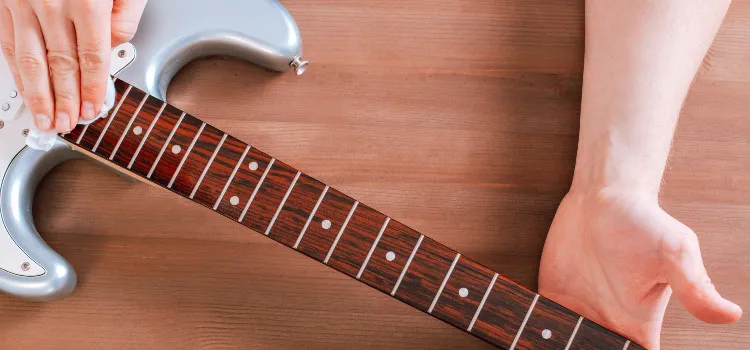
Cleaning the fretboard works almost exactly like cleaning the back of the neck, except now you’ve frets to work around. As the name implies, you’re cleaning the fingerboard, not just the wood between the frets.
Wipe along the board and make sure to clean the frets themselves, where grime and finger oils tend to build up. Keep the moisture light, and dry the fretboard before you string the guitar back up.
Frequently Asked Questions
Will Pledge damage a guitar finish?
Pledge won’t instantly ruin most guitar finishes, but the silicone it leaves behind causes long-term problems. It contaminates the surface so that future repairs, touch-ups, and refinishing jobs don’t bond properly.
Many luthiers refuse to work on instruments coated in silicone polish, or charge extra to strip it first. That’s reason enough to keep furniture polish away from your guitar.
Can I use Pledge on the guitar body instead?
It’s best to avoid Pledge on the body as well as the neck. The same silicone that causes refinishing headaches on the neck will do the same to the body finish.
A microfiber cloth and a dedicated guitar polish will clean the body just as easily without leaving anything problematic behind.
How often should I clean my guitar neck?
A quick wipe-down after each playing session keeps oils and sweat from building up on the neck and fretboard. A more thorough cleaning every string change is usually plenty for most players.
If you sweat heavily or play often, cleaning more frequently helps protect both the finish and the strings.
What household items are safe on a guitar neck?
A clean, dry microfiber cloth is the safest household item for everyday wiping. For anything more than dust and fingerprints, a cloth slightly dampened with water is fine on a finished neck.
Avoid furniture polish, all-purpose cleaners, and anything containing silicone, ammonia, or harsh solvents. When in doubt, a product made specifically for guitars is the safe choice.
Final Thoughts
The simple rule is to keep Pledge and furniture polish away from your guitar neck. The silicone they leave behind is invisible at first but creates real problems the day you ever need a repair or refinish.
Cleaning a neck the right way is quick and cheap. A soft guitar cloth, a little water, and a purpose-made cleaner will keep both the back of the neck and the fretboard looking great.
Take care of it after each session and a deeper clean at every string change, and your guitar will stay easy to play and easy to service for years.