You admire that creamy trim running down a Gibson Les Paul neck and start eyeing your own plainer guitar. Could you give it the same treatment?
Yes, in theory. The honest catch is that the fit has to land within a hair, and a fretboard hides nothing.
One wavy edge along that long run reads as a repair gone wrong, not an upgrade. That’s why this project trips up so many confident DIYers.
This guide lays out the work, the materials, and who should attempt it. Let’s begin with what binding even is.
What Is A Binding?
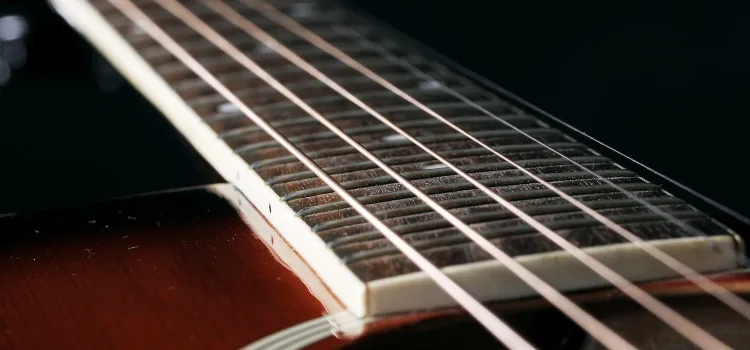
A binding is an extra strip of material that runs along the length of the neck on either side of the fretboard. It caps the exposed edge and, in the process, leaves less room for error when you string the guitar up.
Guitar Neck And Fretboard Binding Vs No Binding
There’s a vast difference between a guitar neck with binding and one without. Binding gives you that classic, original look, and it can make a guitar appear as if you spent far more than you actually did.
- Bindings provide a smoother feel - if you’ve ever felt a bound neck and fret board you’ll know it feels smoother than a non-bound neck. If you haven’t felt it before, just run your finger up and down the wood and then do the same on a bound neck. You can tell there’s a difference.
- Bindings look more “finished” - the binding on a guitar neck hides the fret ends and gives the instrument a more finished look.
One important disadvantage can happen if you don’t store the guitar properly. If the neck shrinks and causes fret sprout, the neck binding can crack at the fretboard edges.
So it’s even more important to make sure that guitars with bound necks are well taken care of.
Does Binding Affect Tone?
No, binding doesn’t affect tone. It’s an extra piece of material on the outside of the neck, and it doesn’t touch anything on the inside.
So binding doesn’t alter your tone. It’s a cosmetic and protective feature rather than a structural one: a thin strip of plastic or wood glued along the fretboard edge, sealing the end grain against moisture and chips.
Next to what your strings, pick, and top wood are doing, its acoustic contribution rounds to zero.
Does Binding Affect Playability?
No, binding doesn’t affect playability. It can leave a mark on the neck if you leave it pressed against something for too long, but it doesn’t change how the guitar plays.
If anything, a well-finished bound neck can feel slightly smoother, because the binding caps the fret ends and rounds over the edge your hand slides along. Some players notice a different texture under the thumb on fast position shifts, but that’s a matter of feel, not function.
Can You Add Binding To A Guitar Neck Yourself?
As I mentioned, it’s always better to have an experienced luthier do this for you. But if you’re set on learning how to add binding to a guitar neck yourself, it helps to study a few full walkthrough videos first so you understand the scraping, gluing, and taping steps before you commit to your own neck.
The process is slow and unforgiving. You remove or trim back the fretboard edge, dry-fit the binding strip, glue it in place, tape it tightly while it cures, then scrape and sand it flush with the fret ends.
Rushing any one of those stages is what leaves a binding job looking amateur.
Guitar Neck Binding Material
When it comes to guitar neck binding, you have a few material options:
- ABS - “Acrylonitrile butadiene styrene” is a plastic that comes in different colors. It’s the simplest and cheapest option, since you can get it at almost any hardware store. The downside is that plastic binding can warp and crack more easily than other materials.
- Wood - Wood is the most popular and traditional choice. You can use almost any type of wood, and it gives a natural look to the guitar neck. The downside is that wood is expensive, so most people go for the plastic option.
- Veneer - Veneer is an alternative to solid wood that you can use to bind a guitar neck. It’s popular because it looks beautiful and natural. The downside is that it can be difficult to attach, and you need to make sure you pick the right wood.
- Fiber - Fiberglass is another option that’s fairly popular nowadays. It’s more durable than plastic and can be used on pretty much any guitar neck. The downside is that it doesn’t look as natural and can leave fibers sticking out along the edges.
How To Remove Guitar Neck Binding
If you decide that you no longer want binding on your guitar neck, or if it has warped to the point where it’s beyond repair, the binding can be removed.
Removal generally means carefully heating or softening the adhesive, peeling or scraping the old strip away, and then cleaning the glue residue off the fretboard edge without gouging the wood. There are plenty of detailed videos that show this step by step, and watching one before you start is well worth the time.
How To Replace Guitar Neck Binding
If you’re considering replacing your guitar neck binding, the process is basically the reverse of removal: clean the edge, dry-fit the new strip, glue and tape it, then scrape it flush.
You can also take it into a guitar shop to be fitted if you’d rather not do it yourself. Ask them how much it’d cost to replace the binding with the material you’ve chosen.
Once you know the price, you can decide whether to have them do the whole job or simply buy the material and finish it at home.
Frequently Asked Questions
Is adding binding to a guitar neck expensive?
The material itself is fairly cheap, especially if you choose ABS plastic from a hardware store. The real cost is labor when you hand the work to a luthier, because binding is slow, precise work.
Wood and veneer cost more than plastic, so the final price depends on both the material you pick and how much of the job you do yourself.
Does adding binding lower a guitar’s resale value?
Binding doesn’t affect tone or playability, so a clean, professional binding job won’t hurt resale value and may even add to the visual appeal. The risk is a sloppy fit, which looks unfinished and can make buyers wary.
This is the main reason most players have the work done by an experienced luthier rather than attempting it on a valuable instrument.
Can you add binding to any guitar neck?
In principle, binding can be added to almost any guitar neck, whether the fretboard is wide or narrow. The neck simply needs its fretboard edge prepared so the binding strip sits flush.
If you’re unsure whether your particular neck is a good candidate, a luthier can assess it before any work begins.
How long does it take to bind a guitar neck?
Binding isn’t a quick job. Between dry-fitting, gluing, waiting for the adhesive to cure, and then scraping the strip flush with the fret ends, the process can stretch across a day or more.
Most of that time is curing and careful finishing, which is exactly why rushing the work tends to produce a poor result.
Final Thoughts
Can you add binding to a guitar neck? Yes, you can.
But it’s better to leave the job to an experienced luthier, or to one of the many online guitar shops that offer this service, because the fit has to be precise to the millimeter.
If the binding is too far gone or warped beyond repair, removing it yourself is straightforward, and replacing it’s also fairly simple once you understand the steps. Just remember that binding changes the look and feel of the neck, not its tone or playability.
So that’s all there’s to know about how to add binding to a guitar neck or replace it. Take your time, watch a few walkthroughs first, and when in doubt, hand a treasured guitar to a professional.