Buy a guitar and it’s natural to wonder how long it’ll really hold together. The neck takes the brunt of the string tension, so it’s the part most people worry about.
Here’s the reassuring part. A neck is built to go the distance, and with sensible care it tends to outlast nearly everything else on the instrument.
This guide breaks down the lifespan of each part of the neck and what wears them down. We also share habits that keep one playing well for years.
It’s true for acoustics and electrics alike. Let’s get to how long a guitar neck actually lasts.
How Long Do Guitar Necks Last?
A guitar neck should last the entire life of the guitar. Generally, guitars will last for decades - 20, 30, 40 years and more - and the neck lasts right along with the rest of the instrument.
The exact time span depends on how well you take care of the guitar and how it’s stored when you aren’t playing it.
This applies to both acoustic guitars and electric guitars. A neck doesn’t have a fixed expiration date so much as a set of parts that each age at their own pace, which is where it helps to look closer.
Average Lifespan of Each Guitar Neck Component
A guitar neck is made up of a number of different parts, and each one has its own typical lifespan. Here’s roughly how long you can expect each of these to last.
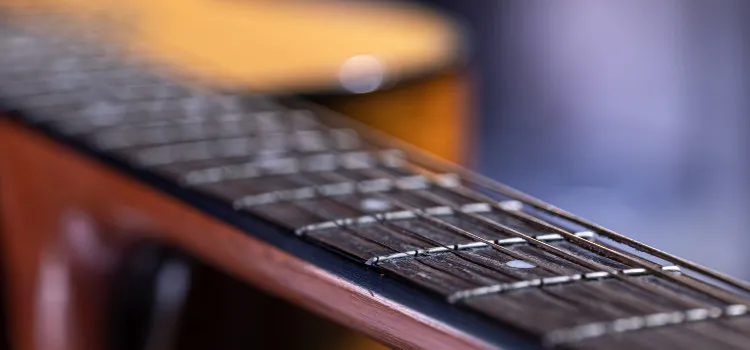
Fretboard
A fretboard can last around 25 years before you might need to replace it. That said, the fretboard can deteriorate faster under extreme weather conditions, so the real number can be much sooner than 25 years.
Fretboard wood deterioration is very common in places that see big temperature swings.
When a fretboard starts to go bad, you’ll usually notice cracking on the surface. Sometimes you may also see the wood shrinking away from the frets.
Frets
How long your frets last depends on a couple of different things. The first is how often you play - the more you play, the faster the frets wear down.
The material the frets are made of is also a huge factor. Frets made of stainless steel will last a lot longer than nickel frets.
Either way, you should get 10 or more years out of a set of frets, and many players go far longer than that before a refret.
Truss Rod
A truss rod should last for the entire lifespan of the guitar neck. It’s a metal rod buried in the neck, so it rarely fails on its own.
If you do notice cracks or visible deterioration around the truss rod, it’s most likely time to have the rod, or the neck, looked at by a tech.
Nut
The nut’s lifespan depends on the material it’s made out of. Plastic nuts wear down faster than a bone nut, but both options will still last many years before the slots wear deep enough to cause buzzing or tuning trouble.
What Makes a Guitar Neck Wear Out Faster?
Most neck problems don’t come from playing - they come from the environment and from neglect. Wild humidity and temperature swings are the biggest culprits, because wood expands and contracts as it gains and loses moisture.
Do that enough times and you get fret sprout, shrinking fretboards, and in bad cases cracking or warping.
Storage matters just as much. A guitar left leaning in a hot car, next to a radiator, or in a damp basement ages far faster than one kept in a stable room or a case.
Heavy, aggressive playing and harsh string cleaners can speed up fret and fretboard wear too, but for the vast majority of players, climate is what decides how a neck holds up over the decades.
How to Make Your Guitar Neck Last Longer
The good news is that keeping a neck healthy is mostly about a few easy habits:
- Control humidity - aim to keep the guitar somewhere around 40 to 50 percent relative humidity, using a case humidifier in dry climates if needed.
- Avoid temperature extremes - never leave a guitar in a hot car, an attic, or right next to a heat source.
- Store it in a case - a closed case buffers the instrument against quick swings in temperature and humidity.
- Condition the fretboard - lightly clean and oil an unfinished fretboard now and then to keep the wood from drying out.
- Get periodic setups - a truss rod tweak and the occasional fret level keep small issues from becoming neck-ending ones.
Do those things and the neck will almost always last as long as you want to keep the guitar.
Frequently Asked Questions
Can a guitar neck be replaced?
Yes. On most bolt-on guitars the neck unscrews from the body, so a worn or damaged neck can be swapped for a new one that matches the body’s specs.
Glued-in set necks are a much bigger job and usually call for a luthier, but even then a neck is rarely the part that ends a guitar’s life.
Do electric and acoustic guitar necks last the same amount of time?
Broadly, yes. Both acoustic and electric necks are wood with a truss rod and frets, so they age in similar ways and can easily last decades.
The main difference is construction style - many acoustics and Gibson-style electrics use set necks, while most Fender-style electrics use bolt-on necks that are simpler to replace if something ever does go wrong.
How do I know when my guitar neck is wearing out?
Watch for warning signs like fret wear with grooves under the strings, buzzing that a setup can’t fix, cracking or shrinking in the fretboard, or a neck that’ll no longer hold straight even after a truss rod adjustment. Catching these early often means a simple repair rather than a replacement.
Does a warped neck mean the guitar is done?
Usually not. A mild bow or twist can often be corrected with a truss rod adjustment or a professional fret level and setup.
Only severe, lasting warping that resists adjustment points toward replacing the neck, and on a bolt-on guitar even that’s a manageable fix.
Final Thoughts
So, how long do guitar necks last? It comes down to a couple of factors: how well you take care of the guitar and how often you play it.
With reasonable care, the neck should last the entire life of the instrument, which for most guitars means many decades.
The exact number of years varies from one player to the next, but “many years” is a safe estimate, and an extremely high-end guitar may last even longer. There are exceptions to every rule, but if you control humidity, avoid temperature extremes, and keep up with the occasional setup, your guitar neck is far more likely to outlast your interest in the guitar than the other way around.