You spent real money on a tube amp because of how it roars wide open. Then real life shows up, with thin apartment walls or a sleeping kid down the hall.
So you face the obvious worry. Does turning the dial down kill the sound you paid for?
Quiet playing keeps your sparkle and headroom intact, so the clean side holds up fine. Pushing the power section into gritty distortion is the part that fights you at low levels.
Here’s the better news. Dependable tricks exist for chasing that pushed sound without rattling the windows, starting with the basic question of whether a tube amp can run quietly at all.
Can You Run a Tube Amp Quietly?
Tube amps are power hungry, and there are a lot of misconceptions about how they behave at low volume. Most people assume a tube amp only sounds good wide open, or that it has to be played at full blast to be worth owning.
That isn’t the case. Tube amps are versatile and work at high volume as well as low volume.
The trade-off is the natural overdrive: if you want that classic saturated tone most tube amps are known for, you usually need higher volume to push the power tubes.
So the real goal is finding ways to get the overdrive you want without relying on high volume levels. That comes down to your gear choices and a couple of tools designed for exactly this problem.
How Can You Get the Tone You Want on a Tube Amp?
The first step is deciding what tone you’re actually chasing. Once you’ve that sound in your head, it’s much easier to find ways to reach it at lower volume.
Tube amps give you a lot of options, so there’s plenty of room to dial in both tone and volume.
A few examples make this clearer.
Humbucking pickups are a classic choice and produce a tighter, warmer sound. They offer better clarity than single-coils and have a distinctive voice many players love.
Single-coils work on tube amps too, and there are countless combinations of both with a tube amp. At lower volume, humbuckers tend to create a more aggressive overdrive than single-coils.
The same logic applies to the amp’s volume. Higher volume gives you a more aggressive, louder sound, while lower volume produces a warmer one.
Tube amps bias their tubes through resistor networks, which means the tubes naturally produce more overdrive as you push them harder. Players who want overdriven sounds at low levels, or who are recording in a studio, have to work around that relationship.
Do Tube Amps Have to Be Loud?
No. Tube amps are fun precisely because they give you so many options across different volumes.
The most important thing is finding the tone and volume combination that fits your needs, your room, and your style.
There’s no rule that says you must play your amp wide open. Sometimes playing quietly is the better call to get the tone you’re after, especially once you factor in your surroundings and your audience.
The key is accepting that a quiet tube amp leans clean and warm, and then using the right tools when you want saturation on top of that.
How to Overdrive a Tube Amp at Low Volume
If natural power-tube overdrive needs volume you can’t use, you’ve two practical paths: add the gain in front of the amp, or take the power out behind it. Here’s how each one works.
Overdrive Pedals
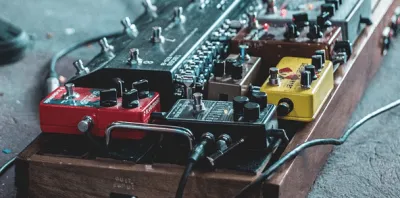
A great overdrive tone is easiest to get with the amp turned up, but you don’t always have that option. The most accessible workaround is an overdrive or distortion pedal in front of a clean tube amp.
The pedal supplies the saturation, so you no longer depend on cranking the power tubes to get there.
You can stack multiple pedals to shape your sound, though that means hauling more gear around. The alternative is leaning on the amp’s own effects or a single drive pedal so you get one reliable tone for everything, without setting up a different pedal for every sound or carrying extra boxes.
Reactive Load Box
This option costs more than an overdrive pedal, but a reactive load box is a great solution. It lets you set the amp’s controls right at the sweet spot for tone while keeping the actual volume in the room low.
A reactive load box such as the Universal Audio OX Amp Top Box sits between your amp and speaker. It absorbs much of the amp’s power so you can run the amp hard, where it sounds best, while listening at a quiet level.
The result is a high-quality, overdriven tone at low volume, which is exactly what tube amps struggle to deliver on their own.
*Want some good options for the best guitar amps for low volumes? Take a look.
Small Tube Amps for Low-Volume Playing
Smaller, low-wattage tube amps are another strong route. A compact amp like the Orange Micro Terror is a great option and delivers a wide range of tones at lower volume, including usable overdrive without filling the room.
You can get great tone at low volume from small tube amps because you’ve so many variables to play with. Choose different tube types and different speakers, then shape your own sound by adding pedals to build the custom tone you’re looking for.
A small amp simply reaches its sweet spot at a more reasonable volume than a large one.
Frequently Asked Questions
Why do tube amps sound better at higher volume?
Tube amps produce their signature overdrive when the power tubes are pushed hard, and that only happens as you raise the volume. At low levels the power section stays clean, so you get a warmer but less saturated tone.
That’s why players use pedals or a reactive load box to reach the same gain without the same volume.
Will playing a tube amp quietly damage it?
No. Running a tube amp at low volume doesn’t harm it, and it’s perfectly normal for practice and recording.
The only thing you lose is the natural power-tube overdrive that comes from playing loud, which is why quiet playing tends to sound cleaner.
What’s the best wattage for low-volume tube amps?
Lower-wattage tube amps reach their sweet spot at quieter levels, so they’re easier to use at home. A small amp in the low single-digit to roughly 20-watt range hits natural overdrive at a more manageable volume than a high-wattage head.
Higher-wattage amps stay clean longer and need more volume before they break up.
Can you get distortion from a tube amp at bedroom volume?
Yes, but usually not from the power tubes alone. At bedroom volume the most reliable way to get distortion is an overdrive or distortion pedal in front of the amp, or a reactive load box that lets you crank the amp internally while keeping the room quiet.
Smaller, low-wattage amps also break up sooner, which helps at quiet levels.
Final Thoughts
You can absolutely use a guitar tube amp at low volume. It’ll sound clean and warm, and it’s a normal way to play for practice, recording, and quiet rooms.
The catch is that the natural, cranked overdrive most tube amps are famous for really does want higher volume.
When you need that saturation without the loudness, you’ve good options. Put an overdrive pedal in front of a clean amp, run a reactive load box like the Universal Audio OX, or reach for a smaller, lower-wattage amp that hits its sweet spot sooner.
Decide on the tone you want first, then pick the tool that gets you there at the volume your situation allows. With the right setup you can enjoy real tube tone, overdrive and all, without ever turning your amp up to full blast.