Your practice amp can’t keep up anymore. Once you start rehearsing with a drummer and a bass player, a small combo just gets buried, and this is the moment $500 starts to make sense.
This budget is a real sweet spot in 2026. Modeling powerhouses like the Marshall CODE pack hundreds of tones into one box, while analog combos from Orange and Fender chase the kind of character players fall for.
We tested nine and ranked them on tone, wattage, effects, and real gig volume. Whether you want a do-it-all modeler, a clean pedal platform, or a metal machine, there’s a fit here.
The chart below lines them all up first.
Quick Comparison Chart
| # | Product | Our Rating | ||
|---|---|---|---|---|
| 1 |  |
Boss Katana-100 MkII | ★★★★★ | Check Price |
| 2 |  |
Fender Champion 100 | ★★★★★ | Check Price |
| 3 |  |
Marshall CODE 100C | ★★★★☆ | Check Price |
| 4 |  |
Orange Crush 60 | ★★★★☆ | Check Price |
| 5 |  |
Line 6 Spider V 240 HC | ★★★★☆ | Check Price |
| 6 |  |
Yamaha THR10 | ★★★★☆ | Check Price |
| 7 |  |
Roland JC-22 | ★★★★☆ | Check Price |
| 8 | 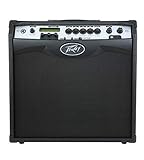 |
Peavey Vypyr VIP 3 | ★★★★☆ | Check Price |
| 9 |  |
Fishman Loudbox Mini | ★★★★☆ | Check Price |
Band Volume Arrives at $500
This is the bracket where amps stop apologizing: 100 watts from the Katana and Champion, 240 from the Line 6 Spider V, all with the headroom to clear a live drummer.
Two specialists earn their slots, the Roland JC-22 shrinking the legendary JC clean into 30 stereo watts, and the Fishman Loudbox Mini serving acoustic players the others ignore.
1. Boss Katana-100 MkII

Boss Katana-100 MkII
A 100-watt 1x12 combo with five amp voicings, built-in effects, and a line/headphone output for any setting.
Pros
- Five amp characters from clean to high-gain Brown
- Switchable 100/50/0.5W power for any room
- Deep onboard effects with editable controls
- Line and headphone out for quiet practice
Cons
- No built-in tuner
- Cables not included
BOSS has been building gear for decades, and its Katana line earned an army of loyal fans for one reason: it just works. This 100-watt combo offers five amp characters spanning Clean, Crunch, Lead, Brown, and Acoustic, each with voiced variations that let you dial in nearly any genre.
Independent controls for reverb, delay, modulation, and boost give you a full pedalboard inside the cabinet, and the switchable 100/50/0.5-watt power means it’s just as usable at the desk as it’s on stage. You can store presets for one-touch recall and even run it as a powered cab for a preamp.
Check out our full Boss Katana 100 MKII review for a deeper dive.
2. Fender Champion 100

Fender Champion 100
A 100-watt two-channel combo with dual 12-inch speakers loud enough to bury your drummer at any gig.
Pros
- Two 12-inch speakers throw serious volume
- Footswitchable clean and mean channels
- Many amp voicings plus reverb, chorus, and delay
- Aux input and headphone out for practice
Cons
- Gain channel could be improved
- Some rivals offer deeper editing
No amp roundup is complete without an entry from Fender, and the Champion 100 is their value champion in this price range. The biggest draw is the pair of 12-inch special-design speakers, which throw enough volume to bury your drummer when it matters.
All the controls sit up front and stay approachable for beginners, yet you still get footswitchable clean and mean channels plus reverb, chorus, delay, and Vibratone. An aux input lets you jam along with backing tracks, while the headphone output mutes the speakers for late-night practice.
It’s versatile enough to cover jazz, blues, and rock without breaking a sweat.
3. Marshall CODE 100C
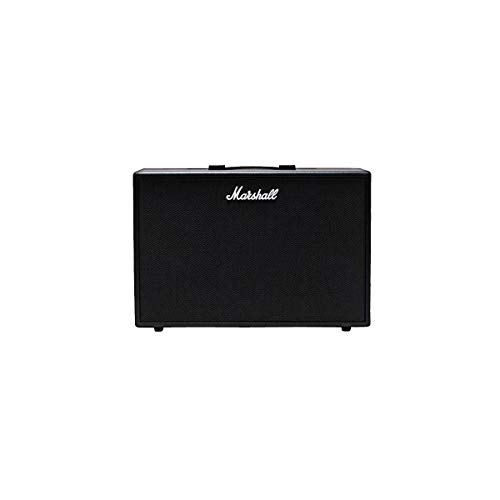
Marshall CODE 100C
A 100-watt 2x12 digital combo loaded with 14 preamp models, 24 studio effects, and Bluetooth control.
Pros
- Classic Marshall models from Plexi to JCM800
- 24 studio-quality effects and 100 presets
- Bluetooth and USB editing from your phone
- Footswitch included in the box
Cons
- Cab modeling could be more natural
- Menu diving takes some learning
This Marshall digital modeling combo is sleek, stylish, and seriously deep. Inside the 100-watt cabinet are two 12-inch speakers and 14 preamp models, including the JTM45, Plexi, JCM800, and Bluesbreaker, so the legendary Marshall lineage is well represented.
Four power-amp models and eight cab simulations let you mix and match voicings, and 24 studio-quality effects cover chorus, phaser, flanger, and more. With 100 presets, Bluetooth, and USB connectivity, you can edit everything from your phone through the Marshall Gateway app.
A footswitch comes included, making this one of the best-value modelers under $500.
4. Orange Crush 60
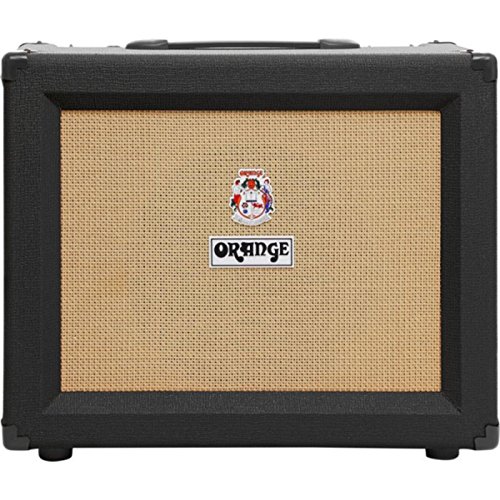
Orange Crush 60
A 60-watt 1x12 analog combo with two channels and digital reverb voiced after the Rockerverb range.
Pros
- Signature analog Orange dirty channel
- Clean channel with two-band EQ
- Natural-sounding spring, hall, or plate reverb
- Based on the prestigious Rockerverb range
Cons
- Limited EQ controls
- Bold looks can be divisive
The iconic Orange brand brings its signature attitude to this category with the Crush 60. This all-analog, solid-state combo features two channels based on the prestigious Rockerverb range, so the dirty channel delivers that thick, characterful Orange grind players love.
The clean channel runs a two-stage, two-band EQ for a simple but musical foundation, and an inbuilt digital reverb adds natural-sounding spring, hall, or plate ambience. If you want real analog tone rather than menu diving, this 60-watt 1x12 is a refreshing change of pace, and the bold styling makes it impossible to miss on stage.
5. Line 6 Spider V 240 HC
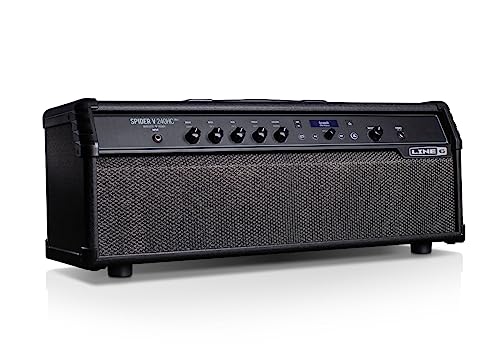
Line 6 Spider V 240 HC
A 240-watt stereo modeling amp with 200-plus amps and effects plus a built-in wireless receiver.
Pros
- Over 200 amps, cabs, and effects to explore
- Tuner, metronome, and jam-along drum loops
- 60-second looper for practice and ideas
- Wireless ready with Line 6 Relay transmitters
Cons
- Top end can lack power and volume
- So many options can overwhelm beginners
This is a serious piece of equipment from Line 6. The Spider V 240 HC is a 240-watt stereo modeling amp that can fill an outdoor gig or sit quietly for practice and recording.
With more than 200 amps, cabs, and effects on tap, it gives you nearly unlimited tonal options, plus a new Classic Speaker mode for a more organic feel and a library of artist and iconic-song presets. A built-in tuner, metronome, jam-along drum loops, and a 60-second looper make it a complete practice rig.
It even has a built-in wireless receiver that works with Line 6 Relay transmitters, so you can ditch the cable.
6. Yamaha THR10

Yamaha THR10
A lightweight desktop modeling amp with five amp models, VCM effects, and Cubase recording software.
Pros
- Five classic amp models plus bass and acoustic modes
- VCM effects deliver realistic tube-like tone
- Runs on AC power or batteries anywhere
- True hi-fi stereo from the Yamaha AV division
Cons
- Strictly for off-stage use
- No way to remap the channels
The Yamaha THR10 is the desktop amp that started the lifestyle-amp craze, and it’s still one of the best practice tools around. Its 1950s-inspired styling and compact metal case look great on any desk, but the real magic is inside.
Five classic amp models join bass, acoustic, and flat modes, all driven by Yamaha’s signature VCM technology for realistic tube-like response. It runs on AC power or batteries for true portability, delivers genuine hi-fi stereo sound from Yamaha’s award-winning AV division, and ships with Cubase AI recording software so you can track ideas straight into your computer.
It isn’t built for the stage, but for practice and recording it’s hard to beat.
7. Roland JC-22

Roland JC-22
An ultra-compact 30-watt stereo combo with dual 6.5-inch speakers and the signature Jazz Chorus clean tone.
Pros
- Unmistakable JC clean tone in a gig-ready box
- Stereo input for modelers and stereo pedals
- Lush Dimensional Space Chorus effect
- Stereo effects loop and footswitch control
Cons
- 30 watts limits volume for loud gigs
- Bright voicing needs careful EQ
Roland’s Jazz Chorus amps are a studio and stage legend, and the JC-22 squeezes that magic into an ultra-compact combo. Dual 6.5-inch speakers deliver the unmistakable JC clean tone in a gig-ready box that fits anywhere, and the stereo input lets you unlock wide, true stereo sound with modelers and stereo pedals.
The signature Dimensional Space Chorus fills the room with lush, expansive shimmer, while a refined built-in reverb keeps things modern. A stereo effects loop and footswitch control make it a fantastic clean platform for pedals, which is why we rate it among the best clean guitar amplifiers.
Just know that 30 watts caps its volume for louder gigs.
8. Peavey Vypyr VIP 3

Peavey Vypyr VIP 3
A 100-watt modeling combo with TransTube technology and variable power down to a single watt.
Pros
- TransTube circuits nail aggressive high-gain tones
- PowerSponge scales 100 watts down to one
- Custom-voiced 12-inch modeling speaker
- Semi-closed back adds low-end punch
Cons
- Stock speaker could be better
- Not ideal for pristine clean players
The Peavey Vypyr VIP 3 brings 100 watts of high-gain firepower to the metal crowd. Patented TransTube technology uses analog circuitry and smart processing to nail aggressive, saturated tones that mimic cranked tube amps, and a custom-voiced 12-inch modeling speaker keeps everything tight.
The PowerSponge feature scales output all the way from 100 watts down to a single watt, so you can get cranked-amp feel at bedroom volume. A semi-closed back adds low-end thump for chugging riffs.
The stock speaker leaves a little on the table and it isn’t the pick for pristine cleans, but for metal players on a budget it punches well above its price.
9. Fishman Loudbox Mini

Fishman Loudbox Mini
Fishman's lightest amp yet, packing 60 watts of clean acoustic power with reverb, chorus, and a DI output.
Pros
- 60 watts of clean acoustic headroom
- Two channels with Fishman's legendary preamp
- Digital reverb and chorus on the instrument channel
- Balanced XLR DI output for going direct
Cons
- Built for acoustic, not electric guitar
- Limited feature set beyond the basics
If you play acoustic guitar, the Fishman Loudbox Mini is the standout here. It’s Fishman’s lightest and most portable amp yet, packing 60 watts of clean acoustic power into a box you can carry one-handed to a gig.
Two channels feature Fishman’s legendary preamp and tone-control designs, with digital reverb and chorus on the instrument channel and reverb on the microphone channel. An aux input lets you play along with tracks, and a balanced XLR DI output makes it easy to send a clean signal to the PA.
It’s purpose-built for acoustic players rather than electric, but in that role it’s a portable performance monster.
Final Thoughts
The Boss Katana-100 MkII is our top pick and the best guitar amp under $500 for most players. Its five amp voicings cover everything from glassy cleans to saturated Brown gain, the onboard effects rival a small pedalboard, and the switchable 100/50/0.5-watt power makes it equally at home on stage and at the desk.
If you only buy one amp in this range, make it the Katana.
For pure value, the Fender Champion 100 is tough to beat, throwing two 12-inch speakers and footswitchable channels at you for a friendly price. Modeling fans should also give the Marshall CODE 100C a hard look for its deep library of classic Marshall tones and phone-based editing.
And if you want real analog character instead of menus, the Orange Crush 60 delivers that signature grind in spades.
The rest of the list covers specific needs. Grab the Yamaha THR10 for desktop practice and recording, the Roland JC-22 for the cleanest clean tone and a pedal platform, the Peavey Vypyr VIP 3 for metal, or the Fishman Loudbox Mini if you’re amplifying an acoustic.
Whatever your style, there’s a proven, gig-ready amp here that makes every dollar count. For more options across every budget, see our guide to the best guitar amp overall.