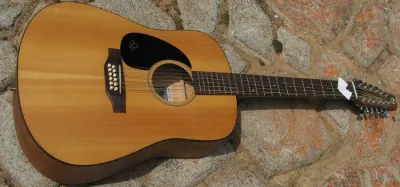

Sometimes you can name a guitar at a glance, long before any logo comes into focus. The headstock pulls off that trick, and its shape is set by the maker, the model, and the era it came from.
Look at a ’50s Gibson Les Paul next to a Fender Stratocaster and the difference jumps out. That same logic carries across acoustic and electric models alike.
This guide covers the main shapes, whether they change anything beyond looks, and how a headstock gets its profile. For more, see how to repair a broken headstock and the split between set neck and bolt-on builds.
Let’s start with the shapes themselves.
Headstock Shapes on Guitars
Most production guitars are built around one of three headstock shapes. Each one is tied closely to certain brands and playing styles, even though the differences are mostly visual.
Pointy Headstocks
When most players picture a “pointy” headstock, they think of hard-rock and metal guitars from brands like Ibanez, Kramer, and ESP. Shredders and rock players often prefer this style because of how it looks and balances on the instrument.
The amount of “pointiness” varies from manufacturer to manufacturer, but in general these designs feature a sharp point running straight back with little or no tapering. The aggressive silhouette is a big part of the appeal for the genres these guitars are built for.
Rounded Headstocks
A rounded headstock has a more circular appearance that tapers at the bottom and sides. Most people picture a Fender Stratocaster here, though this general style also shows up on a lot of lower-end guitars.
Rounded designs are popular partly because they look clean and partly because the smooth shape makes the tuners easy to reach. You’ll find rounded headstocks paired with both vintage-style and modern tuner layouts, which is one reason the design has stayed common for decades.
Square Headstocks
While the exact shape of square headstocks can vary, these designs use a squared-off profile where the machine heads are usually mounted with three tuning pegs on each side. This three-a-side layout is most associated with Gibson-style instruments.
Pointy and rounded headstocks are far more common, and most guitars are based on one or the other. There’s nothing wrong with a brand committing to a single signature shape.
Many guitar manufacturers have their own distinctive designs, and Gibson in particular has several recognizable variations across models like the Les Paul Standard and the SG.
Does Headstock Shape Matter?
For practical purposes, headstock shape is mostly a personal choice. You should pick the shape that looks best to you, feels good in your hand, and matches the kind of guitar you want to play.
Some shapes are slightly more convenient than others. A more open, rounded design can make the tuners a little easier to reach, while a long pointy headstock can feel less balanced on a strap.
None of this changes the fundamentals of how the guitar plays, so it comes down to taste and the look you’re after.
How Do You Shape a Headstock?
There are many different methods for shaping and finishing a guitar headstock, and the only real way to get good at it is practice. If you’re building or repairing one, a useful trick is to hold a pencil against the headstock and see how far it extends past the face as it meets the neck.
Headstocks are typically traced from a template, cut close to the line with a saw or band saw, and then refined with files and sanding until the profile is clean and symmetrical. Taking your time with the final shaping is what separates a tidy headstock from a rough one, so go slow and check your work from multiple angles.
Frequently Asked Questions
Why are guitar headstock shapes so different between brands?
Headstock shape is one of the easiest ways for a brand to make its guitars instantly recognizable. Companies like Fender, Gibson, and Ibanez each developed signature outlines that became part of their identity over decades.
There are also legal and historical reasons. Some headstock shapes are trademarked, so other makers create their own variations rather than copy a protected design.
Does headstock shape affect tuning stability?
The shape itself has very little effect on tuning stability. What matters far more is how the strings break over the nut, the quality of the tuners, and how the strings are wound.
A well-cut nut and a straight string path keep tuning steady regardless of whether the headstock is pointy, rounded, or square.
What’s a headless guitar?
A headless guitar removes the headstock entirely, anchoring the strings at the end of the neck instead of at traditional tuners. Tuning is handled by hardware at the bridge.
These designs reduce weight, improve balance, and make the instrument easier to travel with, which is why they have a dedicated following among modern players.
Can you change the shape of a guitar headstock?
Yes, but it should be approached carefully. Luthiers can reshape a headstock by removing wood, though there’s a limit to how much material can come off before strength or tuner spacing is affected.
Because the headstock holds string tension, any reshaping needs to leave enough wood to stay structurally sound. For a damaged headstock, see our guide on how to repair a broken guitar headstock.
Final Thoughts
There are many varieties of guitar headstocks, but nearly all of them are based on one of three shapes: pointy, rounded, or square. The differences are driven by brand identity, model, and era far more than by sound.
Pointy designs are tied to hard-rock and metal guitars, rounded shapes dominate Fender-style and budget instruments, and square three-a-side designs are the Gibson signature. Each one looks distinct, but the shape has little real impact on how the guitar performs.
In the end, headstock shape comes down to preference. Choose the look that appeals to you, make sure the tuners are easy to reach, and let the rest of the guitar decide how it sounds and plays.