You’ve probably heard players call a distortion pedal a preamp, or use the words as if they mean the same thing. They sound alike because both can make a clean amp dirty.
Under the hood, though, they do different work. One clips your signal to add grit, while the other boosts and shapes a clean tone before it hits the power amp.
Knowing the difference changes how you build a rig. It tells you when one box is enough and when you actually want both.
This guide explains what each one does, why they get mixed up, and how they team up to create the tones you hear on records. Let’s start with the core question: is a distortion pedal a preamp?
Is a Distortion Pedal a Preamp?
No, a distortion pedal isn’t a preamp. A distortion pedal is an effect unit that alters the sound of a guitar, converting a clean tone into one with high levels of saturation and grit.
A preamp is the stage that takes your guitar’s clean signal, boosts it to a usable level, and shapes its tone before it hits the power amp. The two devices sit at different points in your rig and serve different purposes, even though they both influence how aggressive your sound is.
What a Preamp Actually Does
The preamp takes an electric guitar’s weak signal and boosts it to line level so the rest of your amp can work with it. This is the first amplification stage in your signal chain, and it’s where a lot of your core tone is shaped.
Along with raising the signal level, the preamp handles your tone controls and overall voicing. It sets the foundation that everything after it, including the power amp and any distortion pedal you add, will build on.
A clean preamp produces a relatively low-volume, low-distortion signal. That clean foundation is exactly what lets other effects do their job without muddying the result.
What a Distortion Pedal Actually Does
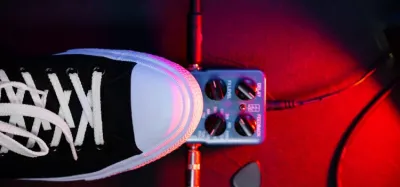
A distortion pedal is designed to clip your signal hard, emphasizing certain frequencies and adding saturation and sustain. If you’re wondering whether you even need one, see are distortion pedals necessary? for a fuller breakdown.
Where the preamp produces a clean, low-distortion signal, the distortion pedal takes that signal and makes it much louder and far more aggressive. It pushes the gain well past the point where a clean preamp would stop, which is what creates that thick, sustaining rock and metal tone.
The combination of a clean foundation and heavy clipping is what makes up the electric guitar sound we know today. The pedal is the source of the grit, not the source of the initial signal boost.
Distortion Pedal vs Preamp: The Key Differences
The quickest way to keep the two straight is to look at the job each one is built to do. A preamp prepares and shapes a clean signal, while a distortion pedal adds an aggressive effect on top of it.
| Feature | Preamp | Distortion Pedal |
|---|---|---|
| Primary job | Boost and shape the clean signal | Add grit, saturation, and sustain |
| Position in chain | First amplification stage | Effect placed before the amp |
| Default sound | Clean, low distortion | Heavily clipped and dirty |
| Tone controls | Yes, core voicing happens here | Limited, usually gain, tone, and level |
| Can it run alone? | Yes, into a power amp | No, it needs an amp to amplify it |
The takeaway is that a preamp is part of the amplification path, while a distortion pedal is an effect that colors the signal moving through that path.
Can a Preamp Be Used Alone?
Yes, a preamp can be used on its own to create a different sound. One common example is running a tube preamp with a Fender Stratocaster, which many players prefer for its warmth and natural character.
Some guitarists like the sound a clean tube preamp provides without any pedal stacked on top. Most, however, choose to use both a distortion pedal and a preamp together so they can switch between clean and heavy tones.
The choice comes down to the sound you’re after.
Why Guitarists Use Both Together
The distortion pedal and the preamp work as a team to produce the electric guitar sound most players want. The preamp delivers a clean, controlled foundation, and the distortion pedal turns that foundation into something loud and saturated when you need it.
Knowing how one sounds without the other helps you make informed decisions when building or upgrading your rig. If you can hear what the preamp contributes versus what the pedal contributes, you can dial in your tone with far more control and avoid blaming the wrong device when something sounds off.
Frequently Asked Questions
Can a distortion pedal replace a preamp?
Not really. A distortion pedal adds an effect but doesn’t provide the clean gain staging and tone shaping a preamp is built for.
Some high-gain pedals are voiced to sound amp-like, but they still rely on an amp or preamp stage to bring the signal up to a usable level.
Is overdrive the same as a preamp?
No. Overdrive is a softer, more dynamic form of clipping than distortion, but it’s still an effect, not a preamp.
A preamp’s main role is to boost and shape your clean signal, while overdrive adds harmonic grit on top of that signal.
Do I plug a distortion pedal into the front or the effects loop?
Most players run a distortion pedal into the front of the amp, before the preamp stage. That lets the preamp and power amp react to the pedal naturally.
The effects loop sits after the preamp and is generally used for time-based effects like delay and reverb rather than distortion.
Does a distortion pedal need a preamp to work?
A distortion pedal needs an amplification stage to be heard, and in a typical guitar amp that stage includes a preamp. The pedal itself doesn’t raise your signal to line level, so it always depends on a preamp or amp downstream to make the sound usable.
Final Thoughts
A distortion pedal isn’t a preamp. The preamp boosts and shapes your clean signal as the first amplification stage, while the distortion pedal is an effect that clips that signal to add grit and sustain.
It’s no accident that the terms distortion and preamp come up together, since they sit close to each other in the chain and both affect how aggressive your tone is. Once you understand the separate role each one plays, it becomes much easier to choose gear and dial in a sound that works for you.
The bottom line is that these two devices complement each other. Used together, they produce the electric guitar tones that players have relied on for decades.