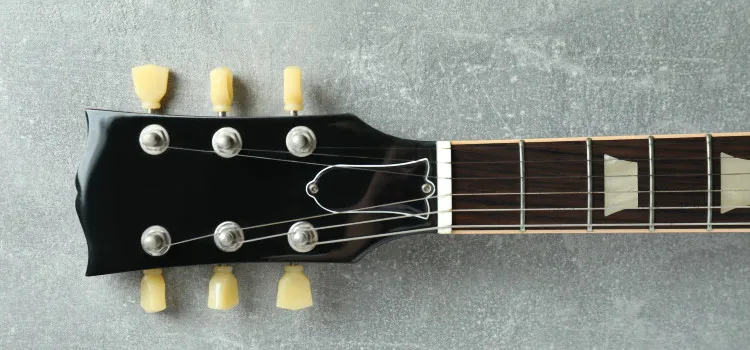
The nut is one of the smallest parts on your guitar, that little slotted strip up by the headstock. Tiny as it is, it guides every string and quietly shapes your tuning, comfort, and tone.
So is yours worn out, or does it have years left in it? Most players never think about the nut until buzzing or sticky tuning forces the question.
This guide covers how long a nut tends to last and what shortens its life. We also show how to inspect yours and replace it if needed.
The honest answer surprises a lot of people. Here’s how long a guitar nut really lasts.
How Long Does a Guitar Nut Last?
A guitar nut should last for many years - sometimes for the entire lifespan of the guitar. In some cases, a guitar nut will last for at least a decade or two.
The main factors that contribute to the lifespan of a guitar nut are the material it’s made out of, how often the guitar is played, and how it’s stored.
This applies to both acoustic guitars and electric guitars.
Does a Guitar Nut Affect Tone?
Yes, depending on the type of material the nut is made out of. A bone nut or Tusq, for example, has a brighter and superior tone when compared to a plastic nut.
We actually have another article on different guitar nut materials and what each does for our guitar tone.
How to Check the Nut on Your Guitar
Check to see if it’s cracked or broken in any way. Look for any signs of wear and tear.
This includes discoloration, blisters, cracks, crevices, and even loose string slots. Check to see if your nut is level or slightly above the fretboard when the strings are pressed down onto the nut.
You should also check the height of the strings on the fretboard to make sure that they’re a good distance from the frets. I like to use a guitar string for this - if the string fits under the first fret, you should be good.
Signs of a Bad Guitar Nut
A bad nut will have loose string slots. If you can lift up the string without too much effort, then this is usually a sign that the nut needs to be replaced.
The nut shouldn’t be cracked or broken because that can cause tuning issues. This is also considered an indicator that it’s time to replace your guitar nut.
The height of your strings on both sides of the fretboard should also be even.
If your guitar seems to have poor tuning stability, it also may be a sign of a bad nut.
When to Replace Your Guitar’s Nut
The best time to replace a nut is when you notice the signs mentioned above. You should replace your guitar nut if it’s cracked, broken, or when the string slots become loose.
Changing the nut will make sounds much cleaner when playing.
Is It Worth Replacing a Guitar Nut?
Yes. A new guitar nut is very cheap for the benefits it provides.
A new nut will improve the tone of your guitar, making it much clearer when playing. When installed properly, it’ll also provide you with more comfort when fretting the strings.
A new nut will also provide a better fit on the neck of your guitar and will increase the life expectancy of your guitar while also making it more comfortable to play.
How Much Does It Cost to Replace a Guitar Nut?
Guitar nuts are cheap. Expect to pay between $10 and $15 assuming you’re going to replace it yourself, which is a simple job that most people can do.
How to Replace a Guitar Nut
Replacing a guitar nut is actually quite easy, especially if you start with a preshaped nut for electric guitars like these GraphTech Tusq XL nuts available on Amazon.
- Measure the spacing between the strings with a ruler.
I like this small luthier tool that includes a ruler among other measuring applications for your guitar. 2. Take off the strings. 3. Measure the width of the nut. 4. With the two measurements on nut width and string spacing that you just took, you should now know the right size of nut you need for your guitar. 5. Remove the guitar nut that you’re going to replace.
Sometimes it’ll just slide out effortlessly. Other times, you may need to work it out of the slot with other tools.
However you get it out, just be careful not to damage the guitar neck or fretboard. 6. Make sure all of the glue is removed from the slot. 7. Drop the new nut in the slot. 8. Install the two E strings and check the height of the strings. 9. If it’s too high, you’ll need to sand the nut down from the bottom using 220 and 320 grit sandpaper.
Take only a little at a time to make sure not to overdo it. 10. Recheck the nut height. 11. Check for any overhang on the nut.
Sometimes it’ll be a bit too long and you’ll have to sand off some of the length from the ends. 12. Add a couple of small drops of glue into the slot and set the nut back into it.
Install the rest of the strings and just add enough tension to hold the nut in place while the glue dries. 13. After 30 minutes you should be good to go.
Get the guitar in tune and play.
Common Nut Replacement Mistakes
Nut Slot Too Narrow
Did you accidentally take too much length off your nut? Unfortunately, once you remove material, you can’t put it back, so you’ll need to start over with a new nut.
Guitar Nut Filed Too Much
If I accidentally sand too much off the bottom of the nut, I’d just get a new one and start over again. However, if you don’t want to do that, you can use a small shim under the nut to raise it up a bit and get it at the right height.
Frequently Asked Questions
Do guitar nuts wear out over time?
Yes, but slowly. The string slots can deepen or widen with years of playing, and softer materials like plastic wear faster than bone or Tusq.
For most players, a quality nut lasts many years before any of that wear becomes a problem.
Can a bad nut cause tuning problems?
Absolutely. Loose or worn string slots let the strings move around, and a cracked nut can pinch the strings so they don’t return to pitch after bending.
If your guitar won’t stay in tune even with fresh strings and good tuners, the nut is a prime suspect.
Can I replace a guitar nut myself?
Yes. Replacing a nut is one of the more beginner-friendly repairs, especially if you use a preshaped, pre-slotted nut.
The main skills are measuring carefully and sanding slowly so you don’t remove too much material at once.
Does the nut matter on both acoustic and electric guitars?
It does. Both acoustic and electric guitars rely on the nut to set string height and spacing at the headstock end, and on both the material affects open-string tone and tuning stability.
The replacement process is essentially the same for either type.
Final Thoughts
Ultimately, it’s up to you when the time comes to replace your guitar’s nut. A well-made nut can easily last the lifetime of the instrument, so most players will only swap it if something has gone wrong or they want a tone and stability upgrade.
If you’re changing the nut, make sure you don’t make any mistakes in its sizing. Also ensure that you mark the old nut for reference when replacing it.
I like to mark both sides of the string slots with white-out or tape because I tend to forget how things go in order.
Take your time, measure twice, and sand a little at a time. Do that and a nut replacement is a cheap, satisfying upgrade that keeps your guitar playing and sounding its best.