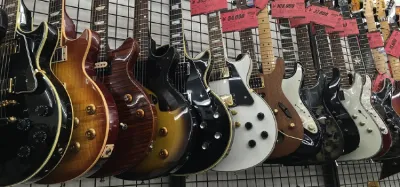
You’ve used a capo on your acoustic for years, then you pick up an electric and pause. Does the same clamp even belong?
It does, and players from folk to hard rock reach for one. A capo doesn’t know or care that your strings now sit over magnetic pickups.
The payoff is the same as on any guitar. You keep your easy open-chord shapes while the whole thing shifts into a higher key.
This guide covers where to place it, which type fits a slim electric neck, and how to keep your notes clean. Let’s start with whether the clamp earns a spot on your electric at all.
Can You Use a Capo on an Electric Guitar?
Yes, you can use a capo on an electric guitar. A capo doesn’t care whether the strings run over magnetic pickups or a sound hole, it simply presses the strings down against a fret for you.
Electric guitar necks are often slimmer and flatter than acoustic necks, but standard capos are built to handle both. Once it’s clamped on, your electric plays and sounds just like it normally would, only shifted up in pitch.
For a deeper look at the tool itself, see our breakdown of what a guitar capo does.
What Does a Capo Do on an Electric Guitar?
A capo is designed to help you change key without learning new chord shapes. When you clamp it across a fret, it acts like a movable nut, so every string above it rings out at a higher pitch.
This is useful when a song sits too low for your voice, when you want a brighter, jangly tone higher up the neck, or when you’re playing along with another guitarist and want to use open strings in a different key. The chords you fret feel identical, but the music comes out transposed.
Where Can You Place a Capo on the Neck?
You can place a capo on any fret you want. Clamp it on the second fret and your open chords move up a whole step, clamp it on the fifth and they jump up further still.
Lower positions, around frets one through five, are the most common because the string tension stays comfortable and the tone stays full. Higher up the neck the frets get closer together and the sound thins out, but it can be a great way to find tight, chimey voicings.
Experiment with the position to match the key you need.
Types of Capos for Electric Guitars
There are many different types of capos, and most of them work fine on an electric. The main styles you’ll run into are:
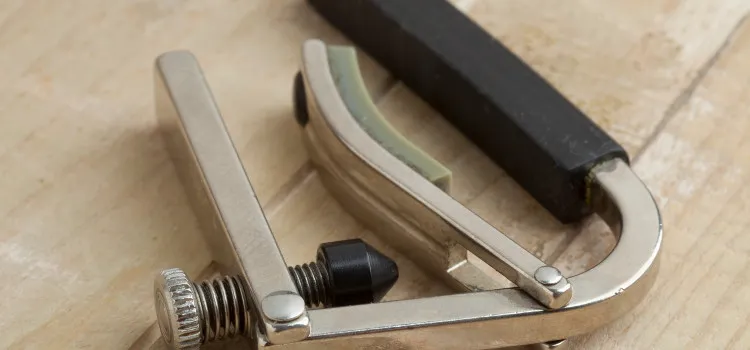
- Trigger or quick-change capos - Spring-loaded clamps you squeeze on and off with one hand. They’re the fastest to move and the most popular for stage use.
- Toggle or lever capos - These let you dial in precise tension, which helps prevent buzzing and slightly sharp strings on flatter electric necks.
- Screw-adjust capos - You tighten them by hand for a custom fit, trading speed for a clean, even clamp.
If you want one that clamps and stays put on the neck between uses, check the design before buying, since not every capo is built to park behind the nut. A well-regarded all-rounder is the Kyser Quick-Change capo, which is easy to use and sounds great.
You can also compare two popular models in our Shubb capo vs G7th guide.
How Much Does an Electric Guitar Capo Cost?
You can find a capo for around $10 to $20, which is a very small price to pay for a tool that makes your playing easier on your fingers and more enjoyable. Spending a little more usually gets you better build quality, more consistent tension, and a longer lifespan.
You don’t need anything fancy to get started. A simple, well-made clamp will cover almost everything a beginner or hobby player wants to do.
New players can browse our picks for the best beginner capo to find an affordable, reliable option.
Tips for Using a Capo on an Electric Guitar
A capo is one of the easiest accessories to use, but a few habits keep your notes clean and buzz-free:
- Place it just behind the fret, not on top of it. Sitting too far back causes buzzing, while sitting on the fret can mute or deaden the strings.
- Use only as much pressure as you need. Over-clamping bends the strings sharp, especially on the thin neck of an electric. Toggle and screw capos help you control this.
- Retune after clamping. Adding a capo can pull the strings slightly out of tune, so check your tuning once it’s on.
- Keep it level. A crooked capo presses harder on one side and leaves the other side buzzing.
These small adjustments make a noticeable difference in how cleanly your chords ring out.
Frequently Asked Questions
Will a capo damage my electric guitar?
No, a properly used capo won’t damage your electric guitar. It only presses the strings down the way your finger does, so it puts no harmful stress on the neck or fretboard.
Just avoid leaving an overly tight capo clamped on for long periods, and remove it when you store the guitar. A clean, padded capo also protects the finish on the back of the neck.
Do electric and acoustic guitars use the same capo?
In most cases, yes. Standard capos are made to fit both electric and acoustic necks, so the same one usually moves between guitars without trouble.
The main difference is neck shape. Electric necks tend to be flatter and slimmer, so a capo with adjustable tension can give you a cleaner result than a fixed-tension model designed mainly for curved acoustic fretboards.
Does a capo change the tuning of an electric guitar?
A capo doesn’t retune your strings to new notes the way the tuning pegs do, but it does raise the pitch of every open string equally. So your guitar stays in standard tuning relative to itself, just higher overall.
Clamping a capo on can pull the strings slightly sharp, so it’s smart to recheck your tuning after attaching it.
Can you bend strings with a capo on?
Yes, you can still bend strings with a capo on, which is part of what makes it handy for electric players. The capo simply becomes your new open-string point, and everything above it behaves normally.
You may notice the bends feel a touch stiffer higher up the neck because the frets are closer together, but lead lines, vibrato, and bends all still work.
Final Thoughts
A capo is a cheap, simple tool that opens up new keys and tones on your electric guitar without forcing you to learn a single new chord shape. It clamps on in seconds, works on any fret, and lets you keep playing the shapes you already know.
For around $10 to $20, it’s one of the best small upgrades you can make to your playing. Pick a well-built model, clamp it just behind the fret, and retune once it’s on.
With those basics covered, your electric guitar capo will sound great and make playing more enjoyable.