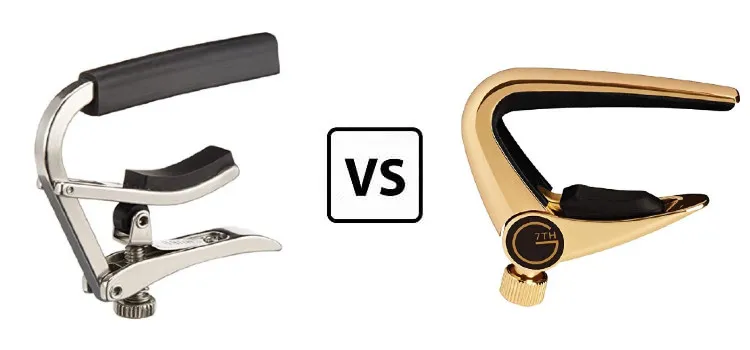
Ask a roomful of players which capo to buy, and two names come up again and again. The Shubb and the G7th Performance both have loyal fans for good reason.
They’ll both keep your strings in tune and out of the way. Where they part company is how they actually grab the neck.
One wants a quick hand adjustment first, the other snaps on in one motion. That single design choice ripples into speed, feel, and how often you reach for it.
Below we weigh what each capo does well and where it slips, then match one to the way you play. First, a closer look at the Shubb.
Quick Comparison
| Category | Shubb | G7th | Winner |
|---|---|---|---|
| Clamp design | Roller-and-lever screw | Spring-loaded squeeze | Depends |
| Speed | A moment slower to move | One-handed in seconds | G7th |
| Tension control | Dial-in precision | Adaptive and automatic | Depends |
| Weight | Slightly lighter | A touch heavier | Shubb |
| Price | Notably cheaper | The premium pick | Shubb |
| Neck fit | Wide range of profiles | Molds to the fingerboard | G7th |
| Overall | Value and precision | Speed and convenience | Depends |
The Shubb Capo: What Is It?
The Shubb is more than just a capo. Designed by engineers with input from hundreds of musicians, the Shubb Capo is built to deliver high resonance and the lowest possible noise.
Rather than relying on spring tension, the Shubb uses a roller-and-lever screw design. You set the tension once with a thumbscrew, then snap the lever closed to clamp the capo onto the neck.
That closing action gives a clean, repeatable hold every time. The ergonomic design makes it easy to use, and the capo will fit just about any guitar.
Advantages of the Shubb Capo
The Shubb has been a staple in gig bags and on stages for decades, and for good reason. Here’s where it shines.
Rock-Solid Tuning
Because you dial in the exact tension with the thumbscrew, the Shubb applies just enough pressure to fret the strings cleanly without bending them sharp. This consistent, adjustable clamping force is one of the biggest reasons players trust it for keeping their guitar in tune.
Lighter and More Affordable
The Shubb is slightly lighter in weight than the G7th, and it typically costs quite a bit less. If you want a proven, professional-grade capo without spending a premium, the Shubb is hard to beat on value.
Fits Any Guitar
The Shubb’s design accommodates a wide range of neck profiles, so it works well across acoustic, electric, and classical guitars. Once you find your preferred tension setting, the capo behaves the same way every time you use it.
Drawbacks of the Shubb Capo
No capo is perfect for every situation. Here are the trade-offs to keep in mind with the Shubb.
Slower to Move
The lever-and-screw mechanism takes a moment longer to attach and remove than a spring capo. For mid-song key changes where speed matters, the Shubb isn’t the quickest option.
Manual Tension Setting
The thumbscrew that gives the Shubb its precise tuning also means you may need to readjust the tension when switching between guitars with different neck depths. It’s a minor task, but it’s an extra step the G7th handles automatically.
The G7th Performance Capo: What Is It?
The G7th Performance Capo is one of the newer capos on the market, and it has quickly made a name for itself. It uses a spring-loaded clamp that you squeeze into place with one hand, letting you attach or move the capo in a single motion.
G7th designed the capo with performance as the priority. Its ergonomic shape makes it easy to operate with your fingers, and the company has put extensive research into how the capo grips the strings.
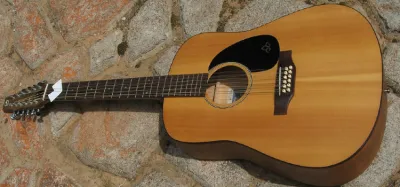
They also make excellent 12 string acoustic guitar capos for players who need wider coverage.
Advantages of the G7th Performance Capo
The G7th brings modern engineering to a classic accessory. Here’s what sets it apart.
Fast, One-Handed Use
The squeeze-to-clamp mechanism is the G7th’s headline feature. You can attach, move, or remove it with one hand in seconds, which is a real advantage during live performances and quick key changes.
Adaptive Radius Technology
The G7th’s clamping system molds to the curve of your fingerboard, applying even pressure across all the strings. This helps prevent buzzing and the sharp notes that can plague poorly fitted capos.
Plays in Any Position
The G7th is designed to work cleanly anywhere on the neck, from the first fret to high up the fingerboard. Combined with its even string pressure, that flexibility makes it a dependable choice for players who move the capo around a lot.
Drawbacks of the G7th Performance Capo
The G7th’s modern design comes with a couple of trade-offs worth weighing.
Higher Price
The price difference between the two capos is quite large, and the G7th sits at the premium end. If budget is a concern, the extra cost is the most obvious downside.
Slightly Heavier
The G7th is a touch heavier than the Shubb. It isn’t a dealbreaker for most players, but those who prefer the lightest possible gear may notice it.
How the Shubb and G7th Capos Compare
There are a lot of similarities between these two capos. Both are designed with tone and performance in mind, and either one will give you good sound, so you aren’t sacrificing quality with either choice.
Where they differ is in the mechanism and the experience. The Shubb’s screw-and-lever design gives you precise, repeatable tension and a slightly lighter, more affordable package, at the cost of being a little slower to attach.
The G7th’s spring clamp is faster and more convenient for one-handed use and adapts automatically to your fingerboard, but it costs more and weighs a bit more.
For tone, the two are very close. The decision really comes down to whether you value the Shubb’s adjustable precision and value pricing, or the G7th’s speed and convenience.
Which One Should You Choose?
This comes down to what you need out of a capo and the style of music you play. Budget matters too, since the price gap between the two is significant.
If you want a lower-priced, lightweight capo with proven, dial-in tension control, the Shubb is the better option. If you frequently change keys mid-song or play live and value the speed of a one-handed spring clamp, the G7th earns its higher price.
Both are designed really well and make a great addition to any guitar rig.
Related reading - Can you use a capo on an electric guitar?
Frequently Asked Questions
Does a Shubb capo damage your guitar neck?
No. The Shubb uses a rubber-padded clamp and an adjustable thumbscrew, so you control exactly how much pressure it applies.
Set the tension just firm enough to fret the strings cleanly and it won’t harm your neck or finish.
Is the G7th capo worth the extra money?
For players who change keys mid-song or perform live, the G7th’s one-handed operation and adaptive clamping can be well worth the premium. If you mostly leave the capo in one spot or you’re on a tighter budget, the more affordable Shubb gives you comparable tone for less.
Can you use these capos on a 12-string guitar?
The standard versions are built for six-string guitars, but G7th makes dedicated models sized for wider necks. If you play a 12-string, check out our guide to the best 12 string guitar capos to find the right fit.
Do Shubb and G7th capos affect your tuning?
Any capo can pull strings slightly sharp if it clamps too hard. The Shubb’s adjustable tension lets you set the perfect amount of pressure, while the G7th’s adaptive system spreads pressure evenly across the strings.
Both are designed to keep your guitar in tune when used correctly.
Final Thoughts
The Shubb capo and the G7th Performance capo are both excellent choices that approach the same job from different angles. The Shubb’s screw-and-lever clamp offers precise, repeatable tension in a lighter, more affordable package, while the G7th’s spring mechanism delivers fast, one-handed convenience and even string pressure at a higher price.
For most players, the deciding factors are budget and how often you move the capo. Choose the Shubb if you want proven value and adjustable precision, and choose the G7th if speed and live-performance convenience are your priorities.
Whichever you pick, make sure you weigh tone, ease of use, weight, and price for your own playing. Both capos are built to last and will be a reliable part of your guitar setup for years to come.