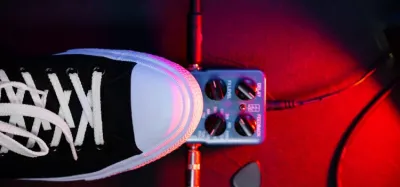
A wah pedal gives your guitar a vocal, talking quality. You’ve heard it on the “Voodoo Child” intro and on funk rhythm parts the world over.
The pedal sweeps a filter across your signal, and the treadle decides which frequencies get pushed forward. Rock it back and forth and the tone seems to speak.
Here’s the catch. The right wah really depends on what you play, and some players just want a single classic voice while others want multiple voices, a built-in boost, or a switchless design that saves a step.
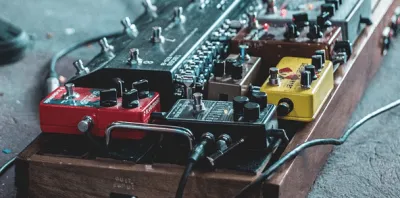
Most live early in the signal chain, right after the tuner and before your overdrive, so the filter shapes a clean signal first. We ranked ten wahs on tone, build quality, range, and value, starting with the chart below.
Quick Comparison Chart
| # | Product | Our Rating | ||
|---|---|---|---|---|
| 1 |  |
Dunlop Original Cry Baby Standard (GCB95) | ★★★★★ | Check Price |
| 2 |  |
Vox V847-A Wah | ★★★★★ | Check Price |
| 3 |  |
Dunlop Cry Baby Mini Wah (CBM95) | ★★★★☆ | Check Price |
| 4 |  |
Dunlop Dimebag Cry Baby From Hell Wah | ★★★★☆ | Check Price |
| 5 | 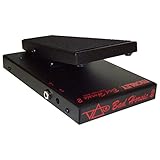 |
Morley Steve Vai Bad Horsie 2 Contour Wah | ★★★★☆ | Check Price |
| 6 |  |
Fulltone Clyde Standard Wah | ★★★★☆ | Check Price |
| 7 |  |
Dunlop 105Q Cry Baby Bass Wah | ★★★★☆ | Check Price |
| 8 |  |
Hotone Soul Press Wah | ★★★★☆ | Check Price |
| 9 |  |
Mooer @Wah Digital Auto Wah | ★★★★☆ | Check Price |
| 10 |  |
Keeler Designs Stretch Wah | ★★★★☆ | Check Price |
Two Dynasties and the Rebels
Dunlop and Vox split wah’s family tree, the Cry Baby’s Fasel-loaded growl against the V847’s 1960s chime. Dimebag’s signature stretches the formula with six sweep ranges and a 16dB boost.
The Morley Bad Horsie deletes the switch entirely, engaging the moment your foot moves, and the Hotone Soul Press triples as volume and expression pedal on small boards.
1. Dunlop Original Cry Baby Standard (GCB95)

Dunlop Original Cry Baby Standard (GCB95)
The benchmark wah with an iconic red Fasel inductor and assertive modern voice in a road-tough die-cast housing.
Pros
- Classic, expressive wah tone loved for decades
- Heavy-duty die-cast housing built to gig
- Hot Potz pot tested to one million cycles
- Pronounced sweep that cuts through a mix
Cons
- No true bypass can color tone when off
- Single fixed voicing with no tweakable controls
The Dunlop GCB95 is the original Cry Baby and the modern touchstone every other wah is measured against. Tuned for an assertive, modern voice with a pronounced sweep, it runs on the famous red Fasel inductor that gives it that lush, expressive cry.
The heavy-duty die-cast housing and a Hot Potz potentiometer tested to a million cycles mean you can gig with this thing for decades.
It’s intentionally simple, with no true bypass and no extra tone controls, so it can color your tone slightly when bypassed and you don’t get any tweakability. But that simplicity is part of the appeal.
With a tube amp and a touch of overdrive, it delivers that authentic Hendrix and Clapton mood straight out of the box, which is exactly why it remains the benchmark.
2. Vox V847-A Wah

Vox V847-A Wah
A 1960s-style reissue that channels the original Vox wah voice heard on countless classic rock and blues records.
Pros
- Authentic vintage Vox wah voicing
- Smooth, expressive sweep for rock and blues
- Runs on a 9V supply, no battery needed
- Affordable entry point into a quality wah
Cons
- Battery access is awkward to reach
- Simple design with no tone-shaping controls
The Vox V847-A is a 1960s-style reissue that channels the original Vox wah sound, the very tone that defined the effect in the first place. It’s designed to emulate the smooth, expressive sweep heard from legends like Eric Clapton and Jimi Hendrix, and it handles rock, blues, and funk with ease.
A durable all-black coated finish keeps it looking sharp on any pedalboard.
It runs on a standard 9-volt power supply so you can skip the battery hassle, and the compact, lightweight enclosure tucks neatly into a crowded rig. The only real gripes are that battery access is a bit awkward and the design is bare-bones with no tone-shaping knobs.
For the money, though, it’s one of the best ways to get a genuine vintage wah voice, and a great pick for anyone chasing blues rock tones.
3. Dunlop Cry Baby Mini Wah (CBM95)

Dunlop Cry Baby Mini Wah (CBM95)
Half the size of a standard Cry Baby with a full sweep and three switchable voices for any style.
Pros
- Saves pedalboard space without losing expression
- Low, Vintage, and GCB95 voices in one pedal
- Iconic red Fasel inductor for lush tone
- Sturdy U.S.A. build that takes abuse
Cons
- Voice switch is internal, not foot-accessible
- Small footprint can feel cramped underfoot
If you love the Cry Baby sound but your pedalboard is running out of real estate, the CBM95 Mini is the answer. It packs a full sweep range into a housing roughly half the size of a standard wah, so you save space without losing any expressive power.
An internal switch lets you choose between Low, Vintage, and GCB95 voices, giving you a versatile range of tones in one small box.
Like its bigger siblings, it uses the iconic red Fasel inductor for a rich, vocal sweep and is proudly made in the U.S.A. with a build that shrugs off abuse. The voice switch is internal rather than foot-accessible, and the tiny footprint can feel a little cramped underfoot during fast passages, but for travel and tight stages this is a hard pedal to beat.
4. Dunlop Dimebag Cry Baby From Hell Wah

Dunlop Dimebag Cry Baby From Hell Wah
A hot-rodded 535Q with a six-position range selector, variable Q, and a switchable boost up to +16dB.
Pros
- Hugely versatile with six vintage-based voices
- Broader sweep for deep lows and cutting highs
- Foot-switchable boost for searing lead tones
- Co-designed with Dimebag Darrell for the stage
Cons
- More controls mean a steeper learning curve
- Aggressive voicing is overkill for subtle playing
The Dimebag Cry Baby From Hell is a hot-rodded version of the 535Q, developed hand in hand with Dimebag Darrell for maximum control on stage. A six-position Range selector lets you choose from six different voices, each based on one of Dunlop’s best-sounding vintage wahs, while a variable Q control shapes the response from a vocal wail to a smooth, buttery tilt.
A separate control even lets you set the toe-down frequency.
What pushes it over the top for heavy players is the broader-than-standard sweep and a switchable boost adjustable up to +16dB, perfect for stepping out front with searing lead tones and singing sustain. All those options mean a steeper learning curve, and the aggressive voicing is more than you need for subtle playing, but for metal and hard rock this is one of the most customizable wahs you can buy.
5. Morley Steve Vai Bad Horsie 2 Contour Wah
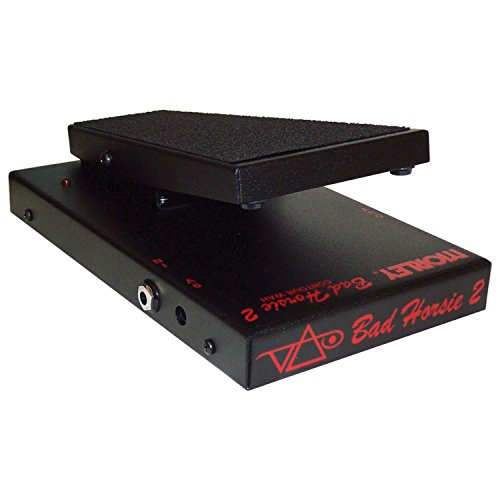
Morley Steve Vai Bad Horsie 2 Contour Wah
A switchless wah that engages the moment you step on it, with two modes and a clean buffer circuit.
Pros
- Step on to engage, step off to bypass
- Bad Horsie and Contour modes for two flavors
- Buffer circuit keeps your tone pure in bypass
- Contour mode adds frequency and level control
Cons
- No mechanical switch feel some players prefer
- Larger footprint than a mini wah
The Morley Bad Horsie 2 ditches the traditional footswitch entirely. Its switchless design means you simply step on the treadle to engage wah mode and step off to return to bypass, which is fast, intuitive, and one less thing to break.
Two foot-selectable modes give you options: the aggressive Bad Horsie voice echoing Steve Vai’s signature tone, and a Contour mode with two knobs to dial in the frequency and level of the wah.
A Clear Tone buffer circuit keeps your guitar signal pure and maintains your level in both bypass and wah modes, so nothing gets lost. There’s also an easy-access battery compartment, LED indication, and a two-year warranty.
Players who prefer the feel of a mechanical switch may miss it, and the footprint is bigger than a mini wah, but for switchless convenience this is a proven classic.
6. Fulltone Clyde Standard Wah

Fulltone Clyde Standard Wah
A boutique wah with a tuned-core inductor and broad sweep, favored by the Rolling Stones and Joe Satriani.
Pros
- Boutique build with a wide, expressive sweep
- Internal resonance trimmer to fine-tune gain
- Warm, clean tone praised by pro players
- Pairs well with other gain and effects pedals
Cons
- Premium price over standard wah pedals
- Uses a carbon-zinc battery, not alkaline
The Fulltone Clyde Standard is a boutique take on the wah that has earned a devoted following, with users including the Rolling Stones, Joe Satriani, The Black Crowes, and Ian Moore. At its heart is a tuned-core, hand-made inductor that uses a similar approach to the 1960 Vox units, delivering warm, clean tones across a notably broad sweep range.
That wide sweep gives you far more expressive customization than pedals with a narrower throw.
Fulltone also added an internal Resonance Control, a durable trimmer that lets you adjust gain and bass without any tools. It pairs beautifully with other guitar pedals and effects, holding its clarity even into heavy gain.
The premium price is a step up from standard wahs, and it quirkily prefers a carbon-zinc battery over alkaline, but the build quality and tone justify the boutique status.
7. Dunlop 105Q Cry Baby Bass Wah

Dunlop 105Q Cry Baby Bass Wah
The first wah designed for bass, with a custom EQ that keeps your low end intact during sweeps.
Pros
- Wah focused on mids and highs, low end stays strong
- Volume and Q controls shape the response
- Auto-return design engages instantly
- Built like a tank for the road
Cons
- Voiced for bass, not ideal for guitar
- Single dedicated purpose limits versatility
Bass players have long been underserved by wah pedals, and the Dunlop 105Q was the first one designed specifically for them. It uses a custom EQ and a proprietary pot tuned for low-end response, focusing the wah effect on the mids and highs so your low frequencies stay strong and your groove never drops out.
The voicing was inspired by a legendary ’70s envelope filter used by iconic rock and funk bassists.
Volume and Q controls let you shape the wah response to fit your tone and playing style, while an auto-return design engages the effect the instant you step in and disengages when you step off. It’s built like a tank and road-tested through generations.
The catch is simply that it’s voiced for bass, so guitarists should look elsewhere, but for low-end players it’s the obvious choice.
8. Hotone Soul Press Wah

Hotone Soul Press Wah
A compact 3-in-1 pedal combining wah, volume, and expression with true bypass and a lossless active volume mode.
Pros
- Three pedals in one tiny enclosure
- Wah voiced after the original Cry Baby
- Active volume mode preserves your tone
- Adjustable bottom value for fine control
Cons
- Mode switch is hard to reach with your foot
- Jack-of-all-trades, master of none
The Hotone Soul Press is a clever three-in-one that combines wah, volume, and expression into one extremely compact enclosure. The wah voice is based on the original Cry Baby, so you get a familiar, usable tone, and an active volume mode keeps your signal lossless when you use it as a volume pedal.
An adjustable control range, or bottom value, lets you fine-tune how the sweep behaves.
True bypass and cool LED lighting round out a pedal that’s genuinely useful for players who want to save space and money. The main drawback is that the mode-selection switch is awkward to reach with your foot during a performance, and as a do-everything pedal it doesn’t quite match a dedicated wah for pure tone.
Still, for beginners and small boards it offers excellent value. It also doubles as a handy volume pedal.
9. Mooer @Wah Digital Auto Wah

Mooer @Wah Digital Auto Wah
A micro digital auto-wah with multiple filter modes, true bypass, and touch- or time-based operation.
Pros
- No foot rocking needed, responds automatically
- Touch and auto modes for dynamic or timed sweeps
- Several filter voices in a tiny full-metal shell
- True bypass footswitch keeps signal clean
Cons
- Too small to fit a 9V battery, needs adapter
- Digital voice lacks a real treadle feel
The Mooer @Wah is a micro-sized digital auto-wah that takes your foot out of the equation. Instead of rocking a treadle, it offers multiple filter modes and two operational styles: a Touch mode that responds to your playing dynamics and an Auto mode that sweeps on a time-based cycle.
That makes it a fun, hands-free way to add funky filter movement and experimental textures to your sound.
Despite its tiny full-metal shell, it includes a true bypass footswitch and an LED indicator, and it packs several filter voices into a pedal that barely takes up any board space. Because it’s so small it can’t fit a 9V battery, so you’ll need an adapter, and a digital auto-wah will never replicate the feel of a real treadle.
But for experimenting on a budget, it’s a neat and affordable option.
10. Keeler Designs Stretch Wah

Keeler Designs Stretch Wah
A hand-built boutique wah with silent switching, true bypass, and a distinctive throaty voice you can dial in.
Pros
- Distinctive throaty, vocal wah voicing
- Silent switching with bright LED indicator
- Quality components and true bypass
- Plays well with fuzz, distortion, and overdrive
Cons
- Limited-run availability and harder to find
- Boutique pricing with minimal controls
Rounding out the list is the Keeler Designs Stretch, a hand-built boutique wah for players chasing something a little different. It has a distinctive throaty, vocal voice that can color your sound when you want character, or stay relatively transparent when you don’t.
Silent foot switches and a bright LED indicator make it easy to live with, and you can clearly see whether it’s engaged even outdoors in daylight.
Built with quality components and heavy-duty true bypass, it gets along well with fuzz, distortion, and overdrive while keeping the punch and clarity of your tone intact. The downsides are practical rather than sonic: it’s a limited-run pedal that can be harder to track down, and the boutique price comes with a fairly minimal control set.
For tone chasers who want a hand-made wah with personality, though, it earns its place.
Final Thoughts
When it comes down to it, the Dunlop Original Cry Baby Standard (GCB95) is still the wah pedal we recommend to most players. It’s the benchmark for a reason: that lush Fasel-driven sweep, the bulletproof U.S.A. build, and a price that punches well below what you get in return.
If you only ever buy one wah, this is the safe and satisfying choice that has defined the sound for generations.
That said, the right wah really depends on your style. Chasing a vintage voice on a budget?
The Vox V847-A nails it. Need to save space?
The Cry Baby Mini gives you three voices in a tiny box. Playing metal and want total control with a built-in boost?
The Dimebag Cry Baby From Hell is built for exactly that. Bassists should grab the 105Q, and tone tinkerers will love the boutique Fulltone Clyde or the hand-built Keeler Stretch.
Whichever you choose, remember that a wah is as much about technique as gear. The same pedal can sound completely different depending on how you rock the treadle and sync it with your picking.
Start with a quality pedal from this list, experiment with its placement in your chain, and you’ll be carving out your own signature “wah” in no time.