You want to record your own songs at home, and plugging straight into your computer sounds thin and lifeless. An audio interface fixes that, turning your guitar and mic signals into clean digital audio your DAW can actually use.
A few specs decide how good it feels to use. A Hi-Z input keeps your guitar tone full, low latency lets you hear yourself with no annoying delay, and the bundled software gets you recording on day one.
The options are a slog to sort. We’ve done it for you, rating eight on preamp tone, monitoring, connectivity, and software, with the Focusrite Scarlett Solo as the easy starting point.
The chart below lines them all up so you can compare them fast.
Quick Comparison Chart
| # | Product | Our Rating | ||
|---|---|---|---|---|
| 1 |  |
Focusrite Scarlett Solo (2nd Gen) | ★★★★★ | Check Price |
| 2 |  |
PreSonus Studio 24c | ★★★★★ | Check Price |
| 3 | 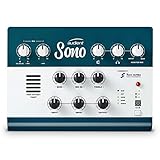 |
Audient Sono Guitar Recording Interface | ★★★★☆ | Check Price |
| 4 |  |
PreSonus AudioBox USB 96 | ★★★★☆ | Check Price |
| 5 |  |
M-Audio M-Track 2X2 | ★★★★☆ | Check Price |
| 6 |  |
Apogee Duet 2 | ★★★★☆ | Check Price |
| 7 |  |
IK Multimedia iRig USB | ★★★★☆ | Check Price |
| 8 |  |
Apogee JAM 96k | ★★★★☆ | Check Price |
One Input or a Real Tube Stage
The Audient Sono is the only interface here with a real 12AX7 tube preamp and cabinet emulation built in, which makes it half an amp as much as an interface. Everything else competes on converters and preamps, led by the Focusrite Scarlett Solo.
Mobile recordists get two pocket picks, the iRig USB with its direct-monitoring switch and the Apogee JAM 96k, both built to plug a guitar straight into a phone.
1. Focusrite Scarlett Solo (2nd Gen)

Focusrite Scarlett Solo (2nd Gen)
Compact USB interface with one Scarlett mic preamp, a Hi-Z guitar input, and 48V phantom power for clean recordings.
Pros
- Award-winning Scarlett preamp with low noise and plenty of gain
- Dedicated Hi-Z input takes a guitar straight in
- Compact, lightweight, and tough enough to take anywhere
- Ships with Red Plug-In Suite and Time and Tone bundle
Cons
- Only one combo input limits simultaneous tracking
- Single headphone output for solo monitoring
Our favorite all-around pick is the Focusrite Scarlett Solo, the interface that introduced a whole generation to home recording. It pairs one specially designed Scarlett mic preamp, with superb sound and 48V phantom power, alongside a dedicated Hi-Z input so an electric guitar cable plugs straight in and sounds clean and full.
It’s compact, lightweight, and tough enough to travel, and the bundled Pro Tools First, Red Plug-In Suite, and Softube Time and Tone collection mean you can start recording the day it arrives.
2. PreSonus Studio 24c

PreSonus Studio 24c
Two-channel USB-C interface with XMAX-L preamps, 192 kHz converters, MIDI I/O, and balanced TRS monitor outputs.
Pros
- Two XMAX-L mic/instrument preamps for stereo tracking
- Records up to 192 kHz for studio-grade resolution
- Balanced TRS outputs connect proper studio monitors
- Mixer knob delivers low-latency direct monitoring
Cons
- High-power headphone amp can run hot on some cans
- Studio One Artist license needs online activation
The PreSonus Studio 24c is the best value here, packing two XMAX-L mic and instrument preamps into a modern USB-C chassis. It records up to 192 kHz for studio-grade resolution, includes MIDI In/Out, and adds balanced TRS outputs so you can connect a real pair of studio monitors instead of relying on the amp in the room.
A simple mixer knob handles low-latency direct monitoring, and the included Studio One DAW gives you a full recording platform from day one.
3. Audient Sono Guitar Recording Interface

Audient Sono Guitar Recording Interface
Guitar-focused 10-in/4-out interface with a 12AX7 tube preamp, two-note cabinet emulation, and a dedicated re-amp output.
Pros
- Real 12AX7 tube preamp shapes warm guitar tone
- Two-note cabinet emulation sounds sharp and accurate
- Dedicated re-amp output for routing tracks back out
- Two studio mic preamps for vocals and acoustic
Cons
- Larger desktop footprint than simple two-channel boxes
- Not bus-powered, so it needs a dedicated supply
The Audient Sono is the most guitar-focused box on this list, built around a real 12AX7 tube preamp and two-note cabinet emulation that sounds sharp and accurate. With 10 inputs and 4 outputs it goes well beyond a basic interface, and the dedicated re-amp output lets you route a recorded DI back out through your guitar pedals or an amp.
The two studio mic preamps make it just as capable for vocals and acoustic capture as it’s for electric tone.
4. PreSonus AudioBox USB 96
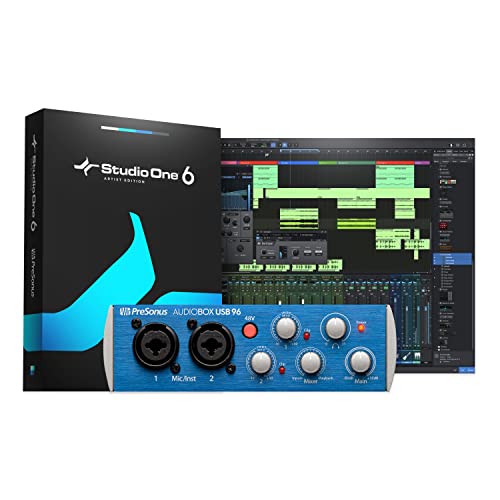
PreSonus AudioBox USB 96
Value-packed two-channel USB interface with Class-A preamps, high-headroom instrument inputs, MIDI, and zero-latency monitoring.
Pros
- Two Class-A mic preamps make a great sound easy
- High-headroom instrument inputs handle guitar and bass
- Mixer control blends inputs for zero-latency monitoring
- Bundle includes Studio One Artist and Ableton Live Lite
Cons
- Tops out at 24-bit/96 kHz rather than 192 kHz
- Plastic case feels less rugged than metal rivals
The PreSonus AudioBox USB 96 is the budget champion, delivering two Class-A mic preamps and high-headroom instrument inputs at an entry-level price. It records at 24-bit/96 kHz, includes MIDI I/O, and its mixer control blends inputs and playback for zero-latency monitoring.
The real kicker is the software, with over $1000 worth of recording tools including Studio One Artist, Ableton Live Lite, and the Studio Magic plug-in suite bundled in.
5. M-Audio M-Track 2X2

M-Audio M-Track 2X2
Rugged two-channel USB interface with 24-bit/192 kHz Crystal preamps, a Hi-Z input, and both USB and USB-C cables.
Pros
- Crystal preamps deliver transparent 192 kHz sound
- Combo XLR plus ¼-inch Hi-Z input for any source
- USB/Direct balance knob gives zero-latency monitoring
- Rugged metal chassis with a large central volume control
Cons
- Bundled software is lighter than PreSonus offerings
- Only two inputs for simultaneous tracking
The M-Audio M-Track 2X2 brings transparent Crystal preamps and 24-bit/192 kHz recording in a rugged metal chassis. A combo XLR plus ¼-inch Hi-Z input handles any common source, and a USB/Direct balance knob gives you zero-latency monitoring while you track.
M-Audio includes both standard USB and USB-C cables in the box, so it connects to older and newer computers without an adapter hunt.
6. Apogee Duet 2

Apogee Duet 2
Premium two-channel USB interface with high-end Apogee converters recording up to 192 kHz on Mac and iOS.
Pros
- Class-leading Apogee AD/DA conversion at 192 kHz
- Software control of input selection and monitoring
- Compact, well-built aluminum chassis
- Direct digital connection to iPad and iOS devices
Cons
- Mac and iOS only, with no Windows support
- No MIDI input and lightning cable sold separately
The Apogee Duet 2 is the premium option for Mac users who care most about conversion quality. Its high-end AD/DA converters record up to 192 kHz, and software control of input selection and low-latency monitoring keeps the compact aluminum unit clutter-free on a desk.
The trade-offs are real, though: it’s Mac and iOS only, has no MIDI input, and the lightning cable is sold separately, so it makes the most sense in an Apple-based studio.
7. IK Multimedia iRig USB

IK Multimedia iRig USB
Pocket-sized USB-C guitar interface with a Hi-Z input, direct monitoring, and clean 24-bit recording for iPhone, iPad, Mac, and PC.
Pros
- Plug-and-play on iPhone, iPad, Mac, and PC
- Zero-latency direct monitoring switch
- Dedicated amp out feeds your signal to a real amp
- Ships with AmpliTube and TONEX starter software
Cons
- Single input only handles one instrument
- Best value comes from AmpliTube software ecosystem
The IK Multimedia iRig USB is the pick for mobile recording, a pocket-sized interface that plugs into an iPhone, iPad, Mac, or PC over USB-C. It features a high-quality Hi-Z input and a zero-latency direct monitoring switch, so you can hear yourself clearly while tracking or use a phone as a mic-free tuner and recorder.
It records at a clean 24-bit/48 kHz, and the bundled AmpliTube and TONEX starter software means you can play through amp sims the moment it arrives.
8. Apogee JAM 96k

Apogee JAM 96k
Single-input guitar interface with a clean instrument preamp and 96 kHz recording for iPhone, iPad, and Mac.
Pros
- Up to 96 kHz/24-bit with punchy, clean-amp tone
- Preamp tuned for electric guitar, bass, and acoustic
- Bus-powered with no batteries or external supply
- Backed by a 3-year Apogee Assure service plan
Cons
- Single input limits you to one source at a time
- Proprietary lightning cable and plastic housing
The Apogee JAM 96k is a single-input guitar dongle with a preamp tuned specifically for electric guitar, bass, and acoustic instruments with a pickup. It records up to 96 kHz/24-bit with a punchy, clean-amp tone, draws power from your iPhone, iPad, or Mac without batteries, and is backed by a 3-year Apogee Assure service plan.
The limitations are the single input and the plastic housing with a proprietary lightning cable, so it suits players who only ever track one instrument at a time.
Video Reviews
More demos worth a watch:
Final Thoughts
For most guitarists building a home studio, the Focusrite Scarlett Solo is the easiest pick. Its award-winning preamp, dedicated Hi-Z input, and generous software bundle cover everything a player needs to start recording cleanly, and it’s small and rugged enough to travel without worry.
If you want stereo tracking and room to grow, the PreSonus Studio 24c is the smarter buy. USB-C connectivity, 192 kHz converters, MIDI, and balanced monitor outputs make it a future-proof hub, and the included Studio One DAW gives you a complete platform without spending another dollar.
Players chasing tube warmth and re-amping should look hard at the Audient Sono, while anyone on a tight budget gets remarkable value from the AudioBox USB 96 and its $1000 software stack. Whichever you choose, pair it with solid monitoring and a bit of patience, then start recording your own electric guitar tracks.
For more on capturing amp tone, read our guide on micing a guitar amp.