
An 8 string drops you to a low F# or B, and that bottom string punishes a weak amp. Palm-mute through the wrong rig and your riffs collapse into flub.
The amp’s job is to keep that low octave defined and aggressive while the higher strings still cut. You want a high-gain channel that stays clear under heavy distortion, enough tube power to hold up in a band, and EQ like resonance and presence to shape the bottom.
The EVH 5150 III hits all three. We stuck to tube heads, since they tame extended-range chugging better than most budget solid-state combos.
If you’re still choosing the instrument itself, see our 8 string guitar picks and our 6 string vs 8 string breakdown. The chart below lines all five up so you can compare them fast.
Quick Comparison Chart
| # | Product | Our Rating | ||
|---|---|---|---|---|
| 1 | 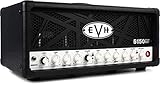 |
EVH 5150 III 50-Watt Tube Head | ★★★★★ | Check Price |
| 2 |  |
Peavey 6505 Plus Metal Guitar Amp | ★★★★★ | Check Price |
| 3 |  |
Orange AD30HTC 30-Watt Twin-Channel Head | ★★★★☆ | Check Price |
| 4 | 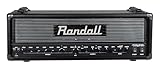 |
Randall THRASHER Guitar Amplifier Head | ★★★★☆ | Check Price |
| 5 |  |
Randall RG Series RG1503H Head | ★★★★☆ | Check Price |
Wattage as a Weapon
This list runs hot: 120 watts from the Peavey 6505 Plus and Randall Thrasher, 150 from the RG1503H, all aimed at keeping a palm-muted low F# defined at band volume.
The Orange AD30HTC is the contrarian pick at 30 tube watts with full per-channel EQ, proof that clarity, not just headroom, holds the bottom octave together.
1. EVH 5150 III 50-Watt Tube Head

EVH 5150 III 50-Watt Tube Head
Three-channel 50-watt tube head with selectable impedance, effects loop, line out, and included footswitch for extended-range metal.
Pros
- Three voiced channels from clean to high gain
- Selectable impedance matches any cabinet
- Effects loop and line out for recording
- Footswitch included for live channel changes
Cons
- Higher price than entry-level heads
- 50 watts is loud for bedroom use
The EVH 5150 III is the most versatile head on this list, with three voiced channels that move from sparkling cleans to overdrive to a brutal high-gain channel. That top channel is where an 8 string comes alive, delivering a tight, saturated distortion that keeps your low B defined instead of muddy.
Selectable impedance lets it match almost any cabinet, while the effects loop and line out make it just as comfortable in the studio as on stage. The included footswitch handles channel changes mid-song, so you can jump from a clean verse to a crushing chorus without missing a beat.
2. Peavey 6505 Plus Metal Guitar Amp

Peavey 6505 Plus Metal Guitar Amp
120-watt tube head with six 12AX7 and four 6L6GC tubes, three-band EQ, and resonance per channel.
Pros
- Massive 120 watts of all-tube power
- Six 12AX7 preamp tubes for thick gain
- Three-band EQ on each channel
- Resonance and presence dial in low B
Cons
- No built-in effects or reverb
- Heavy and loud for small rooms
The Peavey 6505 Plus is a modern metal institution, and at 120 watts of all-tube power it has the headroom to stay clear no matter how low you tune. Six 12AX7 preamp tubes feed four 6L6GC power tubes for a thick, saturated gain that has defined extreme metal tone for decades.
Each channel gets its own three-band EQ plus resonance and presence controls, which is exactly what you need to carve out a tight low end for an 8 string. It skips built-in effects entirely, but that single-minded focus on raw tone is the whole point.
3. Orange AD30HTC 30-Watt Twin-Channel Head

Orange AD30HTC 30-Watt Twin-Channel Head
Twin-channel 30-watt tube head with independent gain, volume, bass, middle, and treble controls per channel.
Pros
- Two channels with independent gain and volume
- Full bass, middle, and treble per channel
- Rich, characterful tube tone
- Rugged steel chassis built to last
Cons
- Less high-gain than dedicated metal heads
- 30 watts limits clean headroom
The Orange AD30HTC trades all-out metal aggression for rich, characterful tube tone, making it the most musical option here. Its two channels each carry independent gain, volume, bass, middle, and treble controls, so you can set up a clean and a dirty sound and switch between them.
At 30 watts it has less clean headroom than the bigger heads, and it isn’t voiced as aggressively as a dedicated metal amp. But the rugged steel chassis and lively, dynamic tone make it a great pick for players who want their 8 string to sound warm and alive rather than purely brutal.
4. Randall THRASHER Guitar Amplifier Head

Randall THRASHER Guitar Amplifier Head
Two-channel 120-watt all-tube head with variable boost, four modes, and full EQ on both channels.
Pros
- Two channels with four switchable modes
- Variable boost adds aggression on demand
- Full equalizer on both channels
- Heavy-duty metal grills and dual handles
Cons
- Aggressive voicing is metal-focused
- 120 watts is overkill for home practice
The Randall THRASHER is built for one thing: heavy, aggressive tone with plenty of power in reserve. Two channels with four switchable modes and a variable boost give you a wide range of gain, from tight rhythm crunch to an unstoppable wall of distortion when you kick in the boost.
A full equalizer on both channels lets you dial in the low end an 8 string demands, and the series/parallel effects loop keeps your time-based effects clean. The heavy-duty metal grills and dual top handles make clear this 120-watt head is meant to be gigged hard.
5. Randall RG Series RG1503H Head

Randall RG Series RG1503H Head
Two-channel 150-watt head with bass boost, midi scoop, presence EQ, and onboard spring reverb.
Pros
- Huge 150 watts at 4 ohms
- Two preamp channels for clean and dirt
- Bass boost and mid scoop for heavy tones
- Onboard spring reverb included
Cons
- Massive power is hard to use at home
- Only two channels for the price
The Randall RG1503H brings the most raw power on this list, pushing 150 watts at 4 ohms across two preamp channels. The EQ section is built for heavy playing, with a bass boost and a mid scoop that quickly dial in a scooped metal tone for your low strings.
It also adds onboard spring reverb, a feature missing from most of the metal heads here, which gives your cleans some depth. The trade-off is that 150 watts is genuinely hard to use at home, and you only get two channels, so it makes the most sense for players who need serious stage volume.
Final Thoughts
The EVH 5150 III earns our top spot by being the most complete amp for an 8 string. Its three channels cover every sound you need, the high-gain channel stays tight and articulate where it matters most, and the effects loop and line out make it a genuine studio-to-stage workhorse.
If your world is pure metal, the Peavey 6505 Plus is the obvious call. Its 120 watts of all-tube power and per-channel resonance controls make low-tuned riffs sound massive and defined, and the legend behind that tone is well earned.
For players chasing warmth and character over outright aggression, the Orange AD30HTC is the most musical option in the group.
Whichever way you lean, prioritize an amp with a tight, responsive high-gain channel and EQ that lets you shape the low end, because that’s what separates a clear, punishing 8 string tone from a muddy mess. Once you have your amp sorted, our 8 string guitar guide will help you complete the rig.