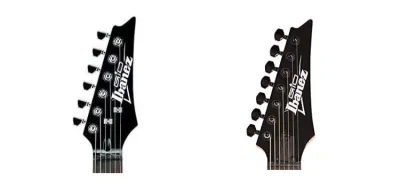
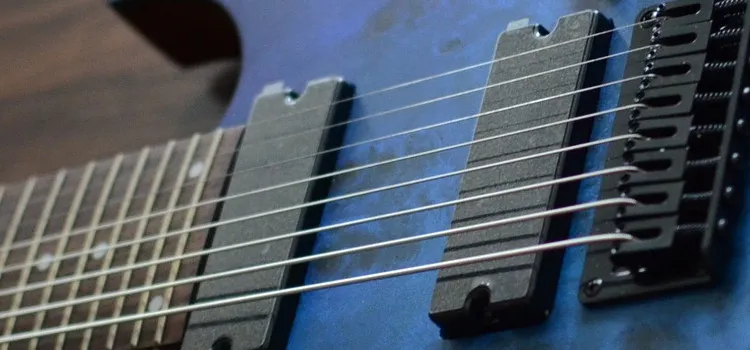
Those two extra low strings on an 8 string promise heavier riffs and bigger chords. Then you grip the neck and feel how much wider it really is.
That trade sits at the heart of this matchup. The eight reaches deeper, but it asks for a longer scale and more strength from your fretting hand.
A six stays lighter and bends to more styles, which keeps it the easier pick for most players. Neither is simply better than the other.
This article lays out what each guitar does well so the right choice is clear. We’ll start with the familiar 6 string.
Quick Comparison
| Category | 6 String | 8 String | Winner |
|---|---|---|---|
| Ease of play | Easier to fret and learn | Demands strength and reach | 6 String |
| Tuning | Familiar EADGBE | F#BEADGBE | 6 String |
| Low-end range | Stops at the low E | Low B plus an even lower F# | 8 String |
| Chord voicings | Standard voicings | Bigger, deeper chords | 8 String |
| Body and scale | Standard and comfortable | Longer scale, larger body | 6 String |
| Genre coverage | Almost everything | Djent, metal, extended range | 6 String |
| Overall | The default for most players | Specialists chasing low range | 6 String |
6 String Guitars: What Are They?
A 6 string guitar is the standard instrument most players learn on. It uses the familiar EADGBE tuning, with the low E as its deepest note, and it’s the format you’ll find behind the vast majority of songs across nearly every genre.
Because the 6 string is the default, it has the widest support of any guitar type. Lessons, tab, chord charts, and song tutorials are almost always written for six strings first, which makes it the easiest layout to learn and find resources for.
The Advantages of a 6 String Guitar
The six string format is popular for good reasons. Here are the main advantages it has over an 8 string.
Easier to Play
With two fewer strings and a shorter, more standard scale length, a 6 string is generally easier to fret and faster to learn. It demands less finger strength and a smaller reach, which makes it comfortable for players of every hand size.
Familiar Standard Tuning
Standard 6 string tuning is EADGBE. This is the tuning that nearly all chord charts, tab, and lessons are built around, so what you learn transfers directly to most of the music you’ll want to play.
Suits the Most Music
From folk and pop to rock and blues, the six string covers the overwhelming majority of styles. If you want one guitar that can do a little of everything, the 6 string is the safe, versatile choice.
The Disadvantages of a 6 String Guitar
A 6 string does have limits compared to its eight string cousin, mostly around low-end range.
Limited Low-End Range
A 6 string has two fewer bass strings than an 8 string, so its low notes simply aren’t as deep. If you want to chug or play very low riffs, the standard low E can feel like it runs out of room.
Fewer Extended Chords
Without those extra low strings, you’ve fewer notes to build chords from. Some of the bigger, deeper chord voicings and progressions that an 8 string makes possible are out of reach on a six string.
8 String Guitars: What Are They?
An 8 string guitar adds two extra bass strings below the standard set, extending the instrument’s low range. Standard 8 string tuning is F#BEADGBE, which keeps the familiar EADGBE on top and adds a low B and an even lower F# beneath it.
Because a scale is the distance from the nut to the bridge, and a longer scale produces deeper, tighter low notes, 8 string guitars are often built with longer scale lengths to support those added bass strings. Not all of them use extra-long scales, so if you buy an 8 string it’s worth checking the scale length before deciding whether it’ll fit you.
The Advantages of an 8 String Guitar
Those two extra strings open up a number of things a 6 string can’t do.
Bigger, Deeper Sound
The added low strings let you create a much bigger, deeper sound. The extended low end is the headline reason players reach for an 8 string in the first place.
More Chords and Progressions
With more strings to work with, you gain the ability to play extra chords and richer progressions rather than just simple melody lines. That means deeper chord voicings and expanded chordal possibilities.
Wider Musical Range
The combination of extra range and extra strings gives you more options for playing more types of music. You can still play creative melodies and the familiar voicings from a 6 string, but with extra low territory layered underneath.
The Disadvantages of an 8 String Guitar
The trade-off for that extra range is that an 8 string asks more of the player.
Harder to Play
An 8 string takes a lot more finger strength and reach. The only real disadvantage compared to a 6 string is that it simply isn’t as easy to play, so if you can get comfortable with it you can make the most of the added sound and range it offers.
Longer Scale and Larger Body
The longer scale length and bigger body that come with most 8 strings can feel tiring, and they tend to be too large for many small-framed players. Without the hand size or strength to back it up, an 8 string can be hard going.
If you’re shopping for one, check out these best 8 string guitar recommendations. We also have an article answering the question of whether you should get a 7 or 8 string guitar.
How 6 and 8 String Guitars Compare
So we’ve covered the pros and cons of each. Here’s how they stack up against one another.
For playability and versatility, the 6 string wins. Its standard EADGBE tuning, shorter scale, and lighter feel make it the easier instrument to learn and the better match for the widest range of music.
For low-end range and tonal depth, the 8 string pulls ahead. The extra low B and F# strings unlock deeper chords, heavier riffs, and progressions that a six string can’t reach.
| Feature | 6 String | 8 String |
|---|---|---|
| Standard tuning | EADGBE | F#BEADGBE |
| Number of strings | 6 | 8 |
| Scale length | Standard | Often longer |
| Low-end range | Standard low E | Extended low F# |
| Ease of play | Easier | More demanding |
The right choice comes down to what you want from the instrument. Pick a 6 string if you value playability and broad style coverage, and pick an 8 string if you specifically want deeper sound with more options for chord progressions.
Frequently Asked Questions
What’s standard tuning on an 8 string guitar?
Standard tuning on an 8 string is F#BEADGBE. It keeps the same EADGBE you’d find on a 6 string and adds a low B and an even lower F# below it.
This means everything you already know on the top six strings carries over, while the two extra strings extend your range downward.
Is an 8 string guitar harder to play than a 6 string?
Yes. An 8 string requires more finger strength and a longer reach because of the extra strings and the typically longer scale length and larger body.
It isn’t a deal-breaker, but it’s the main reason a 6 string is usually the easier instrument, especially for players with smaller hands.
Should a beginner start on a 6 or 8 string guitar?
Most beginners are better off starting on a 6 string. The standard EADGBE tuning lines up with nearly all lessons, tab, and chord charts, and the shorter scale is easier on developing hands.
Once the fundamentals are solid, moving to an 8 string for its extended range becomes much more manageable.
Can you play 6 string songs on an 8 string guitar?
Yes. An 8 string keeps the standard six strings on top, so the chords and melodies you’d play on a 6 string still work the same way.
The two extra low strings simply give you additional range to use when you want it, without taking anything away from the familiar voicings.
Final Thoughts
Both types of guitars are good for different reasons, and neither one is strictly better than the other. A 6 string offers easier playability, familiar tuning, and the widest support across genres, which is why it remains the default for most players.
The only real reason to choose an 8 string over a 6 string is if you specifically want a deeper sound with more options for chord progressions. If you have the hand size and strength to handle the longer scale, the extra low range can be well worth it.
Think about the music you want to play and how the instrument feels in your hands. Choose the format that matches your goals, and either guitar can take your playing a long way.