Hang around guitar players long enough and someone will call their instrument an axe. It’s one of those words you absorb without ever asking where it came from.
I asked. After a lot of digging, I’ll be straight with you: no one can prove it for sure.
What I did find were a few competing explanations, some more convincing than others. This article lays each one out so you can judge them yourself.
Let’s start with the word itself.
The Word Axe
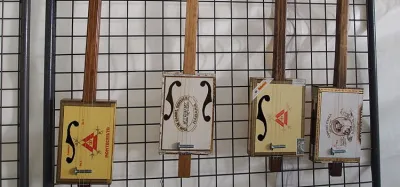
One of the first things I noticed is that, in addition to guitars, “axe” gets used for other stringed instruments such as the banjo and mandolin. Once I thought about it, I realized that nearly every instrument has some kind of nickname.
The violin is a fiddle, the cello is sometimes called a bass fiddle, the double bass is a string bass, the oboe is a reed pipe, and so on.
So “axe” is part of a much larger habit musicians have of giving their instruments informal, everyday names. That tells us the term is slang, but it doesn’t yet tell us where the slang came from.
The Axe Guitar Company
It also helps to point out that the “axe” in “axe guitar” isn’t capitalized, so the word is really a description rather than a brand name. There’s an Axe Guitar Company that uses the word to label its guitars, but for that specific purpose they’re essentially the only ones who use it as a proper name.
The Oxford English Dictionary doesn’t list “axe” as a term coined by any single company or instrument maker. That points us away from a corporate origin and back toward player slang that grew organically.
Finding a Connection Between Axes and Guitars
I decided to look into the etymology, the history of the word itself, to see whether I could find any real connection between axes and guitars. Most people assume a guitar is called an axe because some guitars are built with an axe-like shape.
But I couldn’t find any older English usage that clearly used “axe” to mean anything other than an actual chopping tool.
I did find the word “axen” in Middle English, which meant “to make a noise like axes.” That could hint that the guitar is called an axe because of the sound it makes, but if that were the reason, you’d expect every loud stringed instrument to get the same name.
Another possible origin is that “axe” comes from the French word “acier,” meaning steel. That could’ve described the early guitars with steel strings, which would’ve been a notable feature when steel strings were newer.
Things like this are so interesting that I keep turning them over even when I’m not actively researching. Unfortunately, none of these threads has gotten me all the way to a definitive answer.
The Unanswered Questions
Why is “axe” used to describe a stringed instrument specifically, and not just any musical instrument? And why would it be called an axe if it isn’t shaped like one?
Is it about the sound the guitar makes, or the materials used to build it? I can’t find solid evidence that a guitar is genuinely anything like an axe.
So why is the guitar called an axe, anyway? Is there a clean explanation, or is this simply slang that stuck without anyone recording its first use?
Why Does It Matter?
Even without a firm answer, the question is fascinating to sit with. It clearly makes other players curious too, which is exactly why I wanted to write it up here.
And if you don’t personally find it interesting, that’s fine. Feel free to share this article with anyone who might be curious.
Maybe one day someone will track down the real origin and settle it for good.
Frequently Asked Questions
Do other instruments get called axes too?
Yes. Although the term is most associated with guitars, players also use “axe” for the banjo, mandolin, and even saxophones in some circles.
It functions as general musician slang for “my instrument” rather than a word reserved for guitars alone.
That broad usage is part of why the origin is hard to pin down, since the slang spread across several instrument families.
Did the axe nickname come from jazz musicians?
This is one of the most common theories. The word “axe” became popular slang among jazz and big-band players in the early-to-mid twentieth century, and from there it spread to rock and other styles.
It’s a plausible route for how the term reached guitarists, but it still doesn’t explain the very first time someone called an instrument an axe.
Is a guitar called an axe because of its shape?
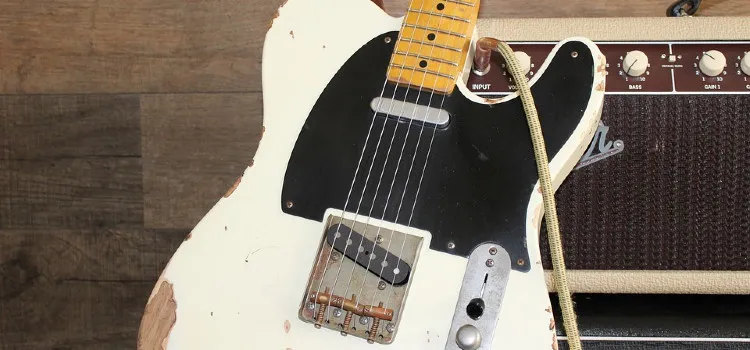
Many people assume so, especially looking at sharp, angular electric guitar bodies. The trouble is that the slang predates a lot of those aggressive designs, and acoustic instruments get called axes too.
The shape connection is appealing and easy to picture, but the historical evidence for it’s thin.
Is it only electric guitars that are called axes?
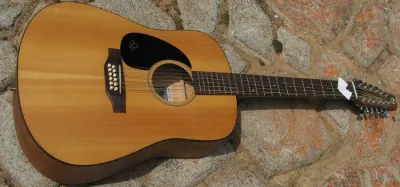
No. While the nickname feels especially at home with loud electric guitars, acoustic guitars, banjos, and other stringed instruments all get called axes by their players.
The term is about the role the instrument plays for a musician, not about whether it plugs into an amp.
Final Thoughts
The short version is that “axe” is affectionate musician slang for a guitar and several other instruments, but no single source proves exactly where it started. The leading explanations point to jazz-era slang, an old word meaning a sound “like axes,” or the steel in early guitar strings.
For now, the most honest answer is that we don’t know for certain, and that’s part of what makes the question so fun. If you ever come across a documented first use, I’d love to hear it, and in the meantime the nickname remains one of the more charming mysteries in guitar culture.