A flanger is one of those effects you’ve definitely heard, even if you couldn’t name it. Think of the sweeping whoosh on classic rock records that sounds like a jet passing overhead.
All three swirl your tone. So telling a flanger apart from chorus and phaser trips up even players who own all three.
This guide explains how a flanger works and what it sounds like in your hands. We also sort out how it differs from those cousins and what to weigh when buying a flanger pedal.
First, let’s pin down what the flanger effect really is.
What Is the Flanger Guitar Effect?
The flanger effect, also called flanging, works by combining two identical signals with one delayed very slightly, usually less than 20 milliseconds. Sweeping that delay over a gradually changing period produces a comb-filter effect, where peaks and notches move across the frequency spectrum like the teeth of a comb.
By varying the time delay, the pedal creates a continuous sweeping up-and-down motion in your tone. That motion is what gives flanging its signature movement and energy.
Flanging is one of several modulation effects, alongside phasing, chorus, vibrato, and tremolo. It’s been around since the late 1940s and 1950s and started appearing on commercial recordings by the late 1950s.
There are many flanger pedals on the market ranging in price, size, and features. They all replicate the original tape-based method, which used two identical recordings on two reel-to-reel tape machines.
What Does a Flanger Pedal Sound Like?
To the listener, the flanger guitar effect sounds thicker and more spread out than a single dry note. The most common way to describe it’s a “whoosh” or a “drainpipe” sound that sweeps through your tone.
It’s excellent for creating spacey, futuristic, or ethereal textures. Subtle settings add a gentle shimmer and width, while extreme settings produce the dramatic jet-plane sweep most people associate with the effect.
A good flanger is a bold, attention-grabbing effect, and not every player uses it with grace. But it’s a fun and genuinely cool tool to experiment with, whether you’re new to modulation or already hooked on it.
How Is Flanging Different From Chorus and Phaser?
Flanger, chorus, and phaser are all modulation effects, so they’re easy to confuse. The difference comes down to how each one manipulates your signal.
A chorus effect pedal uses a longer delay than a flanger, which produces a wider, more “multiple instruments” shimmer rather than a sweeping comb filter. A phaser pedal uses no delay at all and instead shifts the phase of the signal, giving a smoother, more vocal sweep.
In short: flanging uses a very short delay swept over time, chorus uses a longer delay, and phasing uses phase-shifting with no delay. Each lands in a different sonic space, which is why many players keep more than one on their board.
A Brief History of the Flanger Effect
The original flanging trick was done entirely with tape. An engineer would run two identical recordings on two reel-to-reel machines, then press a finger lightly on the “flange,” or rim, of one tape reel to slow it down slightly before letting it fall back into sync.
Many credit Les Paul with discovering the effect, while the name “flanging” is often attributed to John Lennon at Abbey Road studio. Whoever coined it, the effect went on to have a huge influence on recorded music.
An early example can be heard on “The Big Hurt,” a 1959 single by Toni Fisher. The Small Faces used it on their 1967 hit “Itchycoo Park,” and the effect was famously employed by Jimi Hendrix, the Beatles, and countless others.
That popularity is exactly why the effect was eventually built into pedals to make it easy to reproduce on stage.
What to Look For in a Flanger Pedal
Flangers are popular effects used with all kinds of popular electric guitars. Regardless of genre, a flanging pedal lets you modify your sound in complex and subtle ways.
You can find them at dedicated music shops and online marketplaces, but the key is choosing the right one for you.
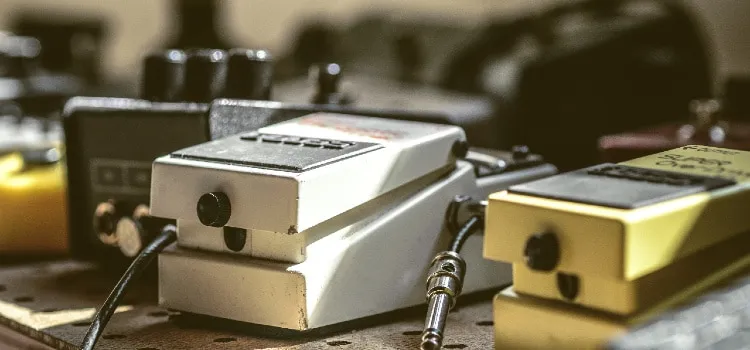
Dozens of pedals are devoted to flanging, and the effect is also built into many multi-effects units. Picking the “best” one is partly personal preference, but a few considerations will steer you toward the right pedal.
Personally, I really like the TC Electronics stereo chorus flanger.
Consider Reliable Flanger Brands
The effects pedal market is flooded with brands, so concentrate on the ones with a proven track record of quality. Established names have earned their reputation, and that consistency matters when you’re relying on a pedal night after night.
Be cautious with unknown brands that haven’t built any credibility. Buying from one often means paying for an inferior pedal.
Compile a short list of well-regarded brands and shop from there.
Comfort and Sound Conditioning
You want a pedal that’s comfortable and convenient to use while you play, with controls that are easy to dial in on the fly. Just as important is how the pedal conditions your sound.
While most pedals can drastically alter your tone, some brands add more subtle elements that create a smoother, more pleasing result. Those refinements can be the difference between a good sound and a truly great one, so look for a flanger that shapes your tone the way you want.
Recommendations and Pricing
You want a high-quality pedal that fits your budget, so compare prices across brands before you commit. Reviews and recommendations from other guitarists are invaluable here, since players are usually happy to share their experience with a particular flanger.
A couple of classic, widely recommended starting points are:
- Boss BF-3
- MXR Phase 90
Weigh those recommendations against the factors above and your price range, then commit to the pedal that best matches your needs.
Frequently Asked Questions
What’s a flanger pedal used for?
A flanger is used to add movement, width, and a sweeping “whoosh” to your guitar tone. Players reach for it to create spacey, futuristic, or psychedelic textures, or simply to thicken a part and make it stand out.
It works on clean and distorted sounds alike, which is why you hear it across rock, funk, metal, and ambient music.
Is a flanger the same as a chorus pedal?
No. Both are modulation effects, but a chorus uses a longer delay to create a shimmering, doubled sound, while a flanger uses a very short delay swept over time to create a comb-filter sweep.
A flanger generally sounds more dramatic and metallic, whereas a chorus sounds lusher and more subtle.
Where should a flanger go in my signal chain?
Modulation effects like flangers typically sit after distortion and overdrive but before delay and reverb. Placing it after your gain stage keeps the sweep clear and defined rather than muddy.
That said, there are no hard rules. Experiment with placement, since running a flanger before distortion can produce wilder, more unpredictable textures.
Do I need a flanger pedal as a beginner?
A flanger isn’t essential gear, but it’s a fun and inspiring effect that can easily become part of your repertoire. If you enjoy spacey or experimental sounds, it’s a rewarding pedal to learn on.
If you’re just starting out, you might prioritize core pedals like overdrive first, then add a flanger once you want to expand your sonic palette.
Final Thoughts
A flanger pedal mixes your guitar signal with a slightly delayed copy of itself and sweeps that delay to produce a thick, moving, jet-like whoosh. It’s one of the most distinctive modulation effects, and with the right settings it can be subtle or wildly dramatic.
Choosing the right flanger comes down to sticking with reliable brands, finding controls that feel comfortable, and balancing sound quality against your budget. Lean on reviews and recommendations from other players to narrow your options.
Whether you’re new to modulation or already an addict, a flanger can open up a whole new world of textures. Get inspired by listening to some of the great flanging recordings out there, then have fun making the sound your own.
Happy flanging.