You nail a fast tapping run, but a faint extra note keeps bleeding through underneath it. That stray ring comes from open strings buzzing along on their own, and a fret wrap is the small band players use to shut them up.
It slips over the neck and gently presses the strings still. Long before they sold these, guitarists tied on a sock or a hair scrunchie to get the same result.
Plenty of working players keep one clipped to their headstock for good reason. We’ll cover what a fret wrap does, where it helps, and how to size one for your guitar or bass.
Some of those uses might surprise you. Let’s start with a quick overview.
Fret Wraps Overview
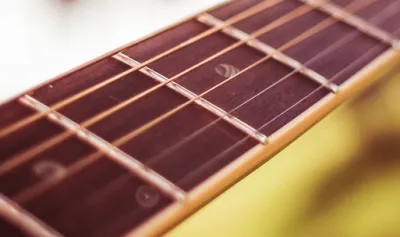
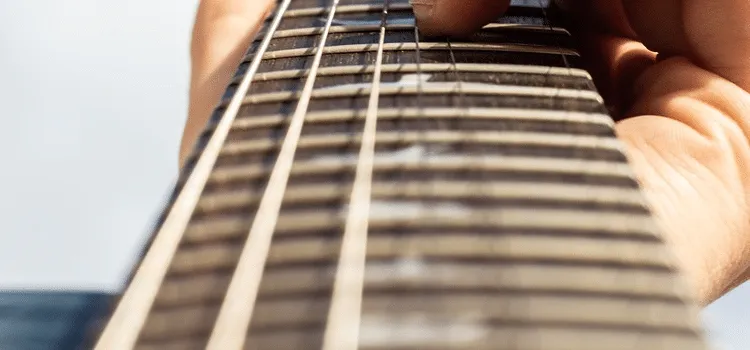
A fret is a raised element on the guitar’s neck. On most modern Western instruments, frets are made of metal strips set into the fingerboard.
On many historical and non-European stringed instruments, frets are made of a string tied around the neck instead.
Frets divide the neck into fixed segments at intervals tied to a musical structure. On guitars, each fret represents one semitone in the standard Western system, where one octave is split into twelve semitones.
To “fret” a note means to press the string down behind a fret, and “fretting” refers to that placement system.
A fret wrap, by contrast, isn’t part of the neck at all. It’s a small adjustable band that you slide around the strings and neck to dampen them, killing the sympathetic resonance and stray noise that can muddy your playing.
History of Guitar Fret Wraps
For years, players used hair scrunchies or a wrapped sock to dampen the strings and prevent sympathetic resonance and other unwanted string noise. It worked, but it looked awkward.
Because fret wraps are noninvasive and look clean, they quickly gained popularity. The best part is that a fret wrap can cover every string evenly, and you can adjust the tightness across the strings, which makes it more reliable and consistent than the old sock-and-scrunchie methods.
Fret wraps are usually secured around the nut of the bass or guitar. Some players have found that moving the wrap further down the neck produces a cleaner tone, especially for sweeping and two-hand tapping.
The tradeoff is that this leaves the nut uncovered, which can expose those open strings to overtones again, often due to imperfect technique.
Benefits of Using Guitar Fret Wraps
Cleans Up Tapping and Sweep Picking
There’s no substitute for good practice with the bass and guitar to get your technique down, but using a fret wrap while you play is one of the smartest, cheapest investments a musician can make. It won’t help you master the guitar faster, but it can help you sound like a better player by reducing unwanted noise.
For skilled guitarists, it makes the tone sound more pristine, and a clean tone is something every guitarist wants.
To get the most out of these techniques, moving the fret wrap up onto the fingerboard silences the strings more than keeping it down at the nut. That said, having one on is also good for rhythm playing because it still lets you access low notes, and you can slide it back up the fretboard wood when needed.
Better Recordings
Recording is a bit like taking pictures, but with audio, and you want everything to sound its best. During recording there’s always a chance of catching those annoying overtones, no matter how clean your technique is.
Because a fret wrap dampens and mutes the strings, it helps you capture a cleaner take by reducing the extra noise that can mess up audio quality.
Even if you aren’t tracking a high-quality album, there’s real value in making demos or recording covers you plan to share.
Clarity in Live Performances
Live shows are noisy no matter what you do, and sometimes it comes down to the sound tech at the venue whether you get a great mix. Like with recording, though, a fret wrap gives you more control over your own sound on stage.
It won’t save a trainwreck of a performance, and you still need to practice, but it can help a lot with specific parts that are hard to silence cleanly. Your audience may not notice the difference, but you’ll, and that can add peace of mind and boost your confidence while you play.
Stylish and Convenient
A fret wrap is both stylish and convenient. It’s easy to adjust and looks cool on the instrument.
Fret wraps come in various shapes and sizes, and you can pick something simple like white or black, or choose from multiple designs for a more custom look.
Cheap But Useful
Compared to other gear, fret wraps offer great value for the money. Many companies make a well-built product that does a lot for very little.
A good fret wrap is solid and shouldn’t fall apart unless you yank extremely hard on the Velcro flap. If one does break for any reason, it’s usually easy to replace and typically costs about the same as a pack of strings.
You can also go for a multi-pack option. One popular choice is a Gruv Gear FretWraps 3-pack.
These are adjustable straps that work well at preventing sympathetic resonance and other string noise, and they work on all types of guitars, including those with Floyd Rose tremolos. A multi-pack is handy if you own two or more guitars and don’t want to keep moving a single wrap between them.
If you aren’t into fancy patterns, plain color and wood-themed wraps are available too. The choice is yours.
Choosing the Right Fret Wrap Size
Perhaps the most important thing to know about guitar fret wraps is that they come in small, medium, large, and extra-large.
- Small is ideal for four-string basses, acoustic guitars, and six-string electric guitars.
- Medium is best for six-string classical guitars.
- Large is recommended for six-string basses and seven- to eight-string guitars.
- Extra-large is ideal for seven- to twelve-string basses, extended-range guitars, and double basses.
Once you know which size fits your instrument, you can find a wrap online in all sorts of styles and designs. The key is matching the size to your guitar and picking the color or pattern that suits your taste.
Frequently Asked Questions
Do DIY fret wraps work as well as real ones?
Not quite. A purpose-made fret wrap is shaped to cover the entire set of strings evenly, which is why they come in different sizes and apply consistent pressure without crushing the strings.
A sock or scrunchie can mimic the basic idea, but it won’t mute as evenly or stay adjustable the way a real wrap does.
For occasional practice at home, a DIY option can get you by. For recording or playing live, a proper fret wrap is the more reliable choice.
Where should you place a fret wrap on the neck?
Most players start with the wrap right at the nut, which mutes the open strings. If you want even cleaner results for tapping or sweep picking, slide it up onto the fingerboard, since that silences the strings more effectively.
The tradeoff is that moving it off the nut can leave open strings exposed to overtones. Experiment with placement to find the spot that balances clean tone with the access you need for low notes.
Do fret wraps work on basses and extended-range guitars?
Yes. Fret wraps are made for both guitar and bass, and the sizing covers everything from four-string basses up to twelve-string basses and extended-range guitars.
The key is choosing the right size so the wrap fits snugly across all the strings.
Larger instruments with more strings simply need a larger wrap to cover the full width of the neck evenly.
Are fret wraps worth it for beginners?
A fret wrap won’t teach you technique, so it isn’t a shortcut to playing better. What it can do is reduce unwanted string noise while you practice, which makes your playing sound cleaner and can be encouraging early on.
Because they’re cheap and easy to use, they’re a low-risk accessory for beginners who want a tidier sound, especially when working on tapping or recording practice clips.
Final Thoughts
Fret wraps are one of the simplest and most affordable ways to clean up your sound on guitar or bass. By evenly muting the strings, they tame sympathetic resonance and stray noise that can muddy tapping, sweep picking, recordings, and live performances.
They’re easy to adjust, look good on the instrument, and come in sizes to fit everything from a six-string electric to a twelve-string bass. None of this replaces solid practice, but a fret wrap gives you more control over your tone for the price of a pack of strings.
If you’re chasing a cleaner sound, match the right size to your instrument, pick a style you like, and slide it on. It’s a small change that can make a real difference in how polished your playing comes across.