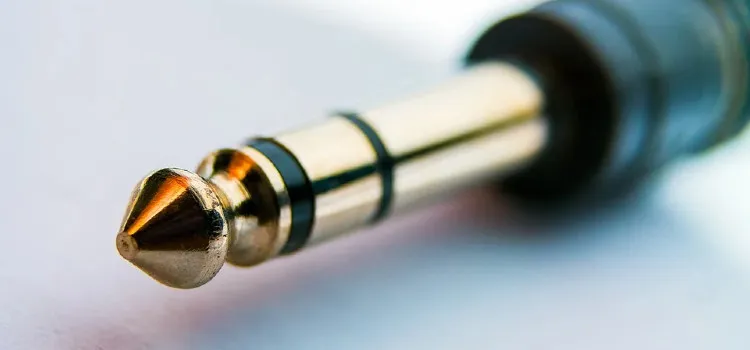
You unbox a new amp, grab a cable, and stop to wonder if the plug will actually seat. It’s a fair worry, but guitar jacks turn out to be one of the most consistent things in all of gear.
Almost everything with strings and a speaker uses the same connector. That’s why a cable from a 1980s combo still drops into a modern pedal without a fuss.
We’ll trace how that size became the norm and clear up the difference between mono TS and stereo TRS plugs. The smaller headphone-style jack on some amps gets covered too.
The aim is simple. After this, picking the right cable takes about thirty seconds, so let’s start with the standard size itself.
What Is the Standard Guitar Amp Jack Size?
The standard size of a guitar amp jack is 1/4 inch, which equals 6.3mm. This measurement refers to the diameter of the metal connector, and it’s the same on both the amp’s input jack and the plug on the end of your instrument cable.
Because the size is standardized, the jack on your guitar, the input on your amp, and the in and out jacks on your pedals all share the same 1/4 inch format. Plug a standard instrument cable into any of them and it fits.
That consistency is exactly why you can mix and match gear from different brands without worrying about connector sizes.
Why 1/4 Inch Became the Standard
The 1/4 inch phone jack is one of the oldest connectors still in everyday use. It dates back to manual telephone switchboards in the 1800s, long before electric guitars existed, which is why it’s sometimes still called a phone jack.
When electric guitars and amplifiers took off in the mid-20th century, manufacturers reached for a connector that was already rugged, widely available, and easy to handle. The 1/4 inch jack fit the bill.
It’s large enough to be durable on stage, simple to plug and unplug, and it makes a solid electrical connection. Once the early amp builders adopted it, it stuck, and it has remained the default for guitar gear ever since.
TS vs TRS Guitar Jacks
Not all 1/4 inch jacks are wired the same way, even though they’re the same physical size. The two common types are TS and TRS, and the difference comes down to how many conductors the plug has.
A TS plug stands for Tip and Sleeve. It has a single insulating band near the tip and carries one mono signal, which is exactly what a standard electric guitar sends to a standard amp input.
This is the connector on a normal instrument cable.
A TRS plug stands for Tip, Ring, and Sleeve. It has two insulating bands and carries an extra conductor, which lets it handle stereo signals or balanced mono.
Some amps use TRS jacks for stereo inputs, headphone outputs, or footswitch connections. The size is still 1/4 inch, so a TRS plug physically fits a TS jack, but you only want to match the cable type to the job the jack is doing.
1/4 Inch vs 1/8 Inch (3.5mm) Jacks
You’ll sometimes run into a smaller 1/8 inch jack, also called 3.5mm, on guitar gear. This is the same size as a typical pair of headphones or a phone earbud connector, and it isn’t the standard for instrument signals.
On guitar equipment, 1/8 inch jacks usually show up as a headphone output on a small practice amp or as an aux input for playing along with backing tracks from a phone. For the main guitar signal path, though, 1/4 inch is still king.
If you need to connect a 1/8 inch source to a 1/4 inch jack, or the other way around, you can use a simple adapter rather than a special cable.
Choosing the Right Cable for Your Amp Jack
Since the jack is 1/4 inch, you want a 1/4 inch instrument cable with a TS plug on each end to connect a standard guitar to a standard amp. This is the most common guitar cable there’s, so you’ll have no trouble finding one.
A few things matter beyond the connector size. Look for a properly shielded cable to keep noise down, especially if you play with high gain, and choose a length that suits your setup without going excessively long.
For a deeper rundown on what makes a good lead, see our picks for the best guitar cables for tone and durability and our explainer on whether guitar cables are shielded. If you’re connecting an amp head to a cabinet instead of a guitar to an amp, note that a speaker cable is a different, unshielded type even though it shares the same 1/4 inch plug.
Common Guitar Amp Jack Problems
The 1/4 inch jack is reliable, but it’s also a moving mechanical part, so it can wear out over time. The most common symptom is the signal cutting out or crackling when you wiggle the cable, which usually points to a loose or dirty jack rather than a bad amp.
A few quick checks solve most issues. Try a different cable first to rule out a faulty lead, then clean the jack with a contact cleaner if the connection feels scratchy.
If the jack itself is loose inside the chassis, the retaining nut may simply need tightening, and a worn internal jack can be re-soldered or replaced inexpensively. Keeping your jacks and connections clean is also part of getting a consistent sound overall, which ties into dialing in your guitar amp settings without fighting noise.
Frequently Asked Questions
Is a guitar amp jack 1/4 inch or 6.3mm?
It’s both. 1/4 inch and 6.3mm are simply two ways of stating the same measurement, one in imperial units and one in metric.
The connector diameter is the same either way.
You’ll see the imperial 1/4 inch label more often in the US and the 6.3mm label more often in countries that use the metric system, but any cable described with either number will fit a standard guitar amp jack.
Are guitar jacks and bass jacks the same size?
Yes. Bass guitars, electric guitars, and their amps all use the same 1/4 inch jacks and the same instrument cables.
There’s no separate bass-specific connector size.
That means you can use the same cable for a guitar or a bass, and plug a bass into a 1/4 inch input without any adapter. The signal differences between the two instruments are handled by the gear, not the connector.
Can I plug a 1/8 inch cable into a 1/4 inch amp jack?
Not directly, because the plugs are different diameters. A 1/8 inch (3.5mm) plug is too small to make a solid connection in a 1/4 inch jack on its own.
You can bridge the two with an inexpensive adapter that converts between the sizes. This is handy when you want to feed a phone or laptop headphone output into a 1/4 inch input, or run a 1/4 inch source into a 1/8 inch jack.
Why does my guitar cut out when I move the jack?
A signal that cuts out or crackles when you move the cable almost always points to a loose connection at the jack, a worn jack, or a faulty cable. The plug and jack are mechanical contacts, so they can loosen or get dirty with use.
Start by swapping in a known-good cable to isolate the problem. If it persists, clean the jack with contact cleaner, tighten the jack’s retaining nut if it’s loose, and replace or re-solder the internal jack if it’s worn out.
Final Thoughts
The headline is simple: the standard guitar amp jack size is 1/4 inch, or 6.3mm, and that same size runs through your guitar, your amp, and your pedals. It’s one of the few truly universal standards in the guitar world, which is why gear from different decades and brands plugs together so easily.
Beyond the size, the details that matter are choosing TS for a normal mono guitar connection, reserving TRS for stereo or footswitch duties, and keeping your jacks clean so the signal stays solid. Get a good instrument cable, match it to the job, and your 1/4 inch connections will give you years of trouble-free playing.