
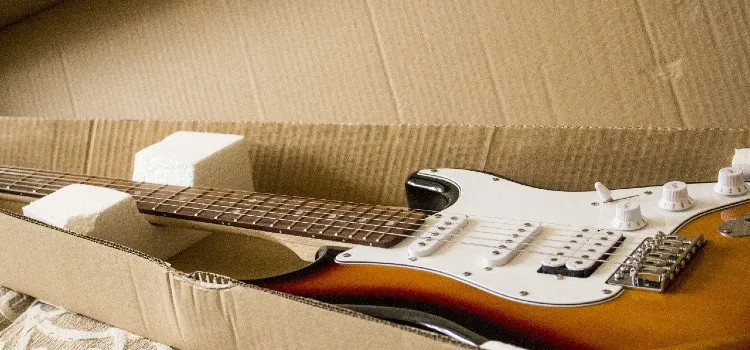
You sold a guitar online, or you’re mailing one to a friend across the country, and the shipping quote made you wince. A big instrument in an awkward box is exactly what couriers love to charge a premium for.
Here’s the encouraging part. Most of that cost comes down to choices you control, not some fixed fee you’re stuck paying.
Cheap and safe aren’t opposites here, either. Smart packing is what lets you spend less without lying awake worrying about the case clearing customs intact.
This guide breaks down the real costs and the spots where you can trim them. Let’s start with what shipping a guitar actually runs.
How Much Does It Cost to Ship a Guitar?
Generally, shipping a guitar in a hard case will cost around $100 to $150. Shipping in a lighter gig bag runs closer to $80 because the package weighs less.
If you’re sending the guitar within the same state, you can often get it done for around $40. Shipping across the country or internationally pushes the price to $150 or more.
These are ballpark figures. The final cost depends on a handful of factors covered in the next section, so always get a quote before you commit.
What Affects the Shipping Cost
There’s no single fixed price for shipping a guitar. A few variables determine what you actually pay.
Distance. The farther the guitar travels, the more it costs. In-state shipping might be $40, while a cross-country or international shipment can be $150 or more.
Courier service. The carrier you choose matters. If you don’t have a box or aren’t comfortable packing the guitar yourself, the courier can do it for you, but expect to add roughly $20 to $80 for that convenience.
Value and insurance. Insuring an expensive guitar is smart, but coverage isn’t free. Carriers charge extra to insure higher-value items, so factor that into your total.
Weight and size. Electric guitars are usually heavier than acoustics, which raises the cost. The case matters too: a guitar in a gig bag weighs around 9 to 12 pounds, while a guitar in a hardshell case can hit 20 to 25 pounds.
How to Pack a Guitar for Shipping
It’s disappointing to receive a damaged instrument. Couriers try to handle every package with guitar care and attention, but accidents happen.
The trick is to pack your guitar well with plenty of padding. Follow these steps.
Prepare the guitar. Loosen and detune the strings to reduce tension on the neck during transit. Then wrap the headstock in bubble wrap to protect the tuners.
Secure the loose parts. Your guitar moves a lot in transit. Place cables, tremolo arms, capos, Allen keys, and any other loose items in a secure pocket so they can’t scratch the finish.
Pad the fretboard and strings with strips of newspaper or a piece of cloth.
Use the right case. A gig bag is lighter and easier to carry, but it won’t prevent scratches or absorb impacts. Shipping carriers don’t handle packages gently, so a hardshell case should be your top priority.
It costs more, but replacing a guitar damaged in transit costs far more.
Pack the case in a box. Place the cased guitar in a sturdy box and fill empty spaces with crumpled newspaper for extra cushioning. Attach the shipping label, and you’re ready to send it.
The Cheapest Way to Ship a Guitar
Shipping a guitar can dent your savings, but there are simple ways to cut the cost without cutting corners on safety.
Get a free box from a local guitar store. Call or visit your local guitar shop and ask for an empty guitar box. Most stores receive instruments in these boxes constantly and are happy to hand one over, especially to a repeat customer.
Ask for bubble wrap while you’re there, then pack the guitar yourself. It’s free and surprisingly satisfying to do.
Compare courier rates yourself. After packing, shop around for the carrier with the most competitive rate rather than walking into the first store you see. If you know someone who works at a shipping store or warehouse, ask them to point you toward the best option.
Packing the guitar yourself and booking your own shipping avoids the markup a store charges to do both for you.
Other Tips to Ship Safely and Save Money
A few extra precautions protect both your guitar and your budget.
Check the carrier’s rules. Every courier has its own policies on size, weight, and packaging. Read them before you book so there are no surprises at the counter.
If one carrier’s rules don’t work for you, another likely will.
Require a signature on delivery. A signature requirement adds a small fee, but it confirms the guitar reached the right person and reduces the chance of a lost or stolen package. For anything valuable, it’s worth the cost.
Consider a courier that specializes in instruments. Any carrier can move a guitar, but a specialty instrument shipper follows handling practices built around fragile gear. If you’re sending a high-value instrument, that experience can be worth the premium.
Avoid unreliable bargain services. A quote that seems too good to be true usually is. Stick with carriers known for reliability and good handling.
Paying a little more up front beats paying for a damaged guitar later.
Frequently Asked Questions
What’s the cheapest carrier for shipping a guitar?
There’s no single cheapest carrier, since rates change by distance, weight, and package size. The cheapest result comes from getting quotes from a few carriers for your exact box rather than defaulting to one.
A guitar in a gig bag is also cheaper to send than one in a hardshell case because it weighs less, but the lighter packaging offers far less protection.
Can I ship a guitar without a case?
You can, but it’s risky. A gig bag or careful box-and-padding job can work for short, inexpensive shipments, though it leaves the instrument far more vulnerable to impacts.
A hardshell case inside a sturdy box is the safest choice for anything you care about.
Should I loosen the strings before shipping?
Yes. Detuning the strings reduces tension on the neck so that temperature swings and rough handling are less likely to cause damage.
Wrap the headstock in bubble wrap after loosening the strings to protect the tuners.
Is shipping insurance worth it for a guitar?
For an inexpensive instrument, insurance may not be worth the added cost. For a valuable or sentimental guitar, it almost always is.
Pair insurance with a signature requirement so you’re covered and can confirm safe delivery.
Final Thoughts
The cheapest way to ship a guitar is to do the work yourself: get a free box from a local store, pack the instrument carefully in a hardshell case, and compare courier rates before you book. That approach skips the markup of paying someone else to pack and ship for you.
Whatever you spend, don’t gamble on packaging or on a carrier you don’t trust. A few dollars saved isn’t worth a cracked headstock or a scratched finish.
Pack it well, insure what matters, and require a signature.
When in doubt, ask fellow players or your local shop for a carrier referral. A little research up front means your guitar arrives in the same shape it left.