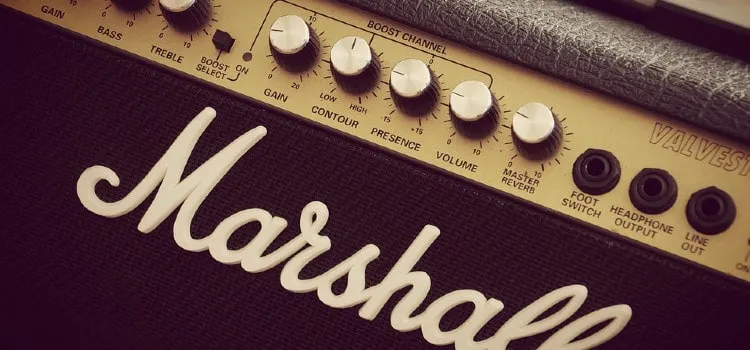
The test for a metal amp is one fast palm-muted run. Does the gain stay tight and articulate, or does it collapse into mush?
The old divide is tube versus solid-state. Tube heads like the Peavey 6505 and Marshall JCM800 give that saturated low end and feel players chase, while modern hybrids like the Hughes and Kettner Black Spirit 200 pack consistent high gain into a lighter, more loaded box.
Power matters less than you’d think. A 20-watt head with an attenuator gigs and practices, while a 120-watt monster hands you headroom you may never use.
For shaping your sound after the amp, see our guide on getting a metal guitar tone. Here we cover the full range, from budget hybrids to boutique tube heads, ranked on gain, features, build, and value.
Quick Comparison Chart
| # | Product | Our Rating | ||
|---|---|---|---|---|
| 1 |  |
Peavey 6505 Mini Head | ★★★★★ | Check Price |
| 2 |  |
Peavey Invective 120 Head | ★★★★★ | Check Price |
| 3 |  |
PRS MT15 Mark Tremonti Head | ★★★★☆ | Check Price |
| 4 |  |
Blackstar HT Stage 100 MkII Head | ★★★★☆ | Check Price |
| 5 |  |
Hughes & Kettner Black Spirit 200 Head | ★★★★☆ | Check Price |
| 6 |  |
Marshall JCM800 2203X Head | ★★★★☆ | Check Price |
| 7 |  |
Rivera Knucklehead Tre Reverb Head | ★★★★☆ | Check Price |
| 8 |  |
Orange Micro Dark Head | ★★★★☆ | Check Price |
Tube Fury and One Solid-State Rebel
Peavey bookends the modern metal sound: the 6505 Mini scales the legend down to 20, 5, or 1 watt, and the Invective 120 modernizes it with master resonance and presence controls.
The Hughes & Kettner Black Spirit 200 is the solid-state rebel with four analog channels, and the Orange Micro Dark squeezes a valve preamp into the budget slot.
1. Peavey 6505 Mini Head

Peavey 6505 Mini Head
20-watt all-tube metal head with two footswitchable channels, 3-band EQ, MSDI output, and 20/5/1-watt attenuator.
Pros
- Legendary 6505 high-gain rhythm tone
- Footswitchable crunch and reverb on board
- Buffered effects loop for your pedals
- Attenuates to 5W or 1W for home use
Cons
- Only 20 watts for the biggest stages
- Stock cleans stay fairly dark
The 6505 is, for many players, the definitive metal amp, and this 20-watt mini version distills that legendary high-gain voice into a lunchbox-sized head. You get two footswitchable channels with 3-band EQ, footswitchable crunch on the rhythm channel, and a footswitchable buffered effects loop that plays nicely with a pedalboard.
The attenuator switch drops output to 20, 5, or 1 watt, so the same brutal tone that fills a stage also works at bedroom volume, and the MSDI XLR output makes silent recording painless.
2. Peavey Invective 120 Head
Peavey Invective 120 Head
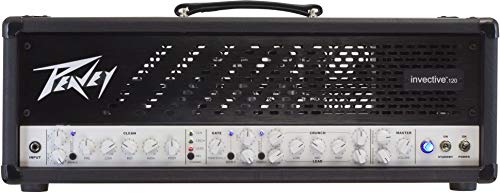
120-watt tube head with master resonance and presence, shared 3-band EQ, and tight, articulate modern high-gain voicing.
Pros
- Massive, articulate djent-ready distortion
- Master resonance dials in low-end thump
- Master presence shapes cut and clarity
- Plenty of headroom for any venue
Cons
- Heavy and not very portable
- Premium price for a 120W head
Designed with input from Periphery’s Misha Mansoor, the Invective 120 is a 120-watt tube head built for tight, articulate modern metal. The master resonance control lets you dial in exactly how much low-end thump sits under your chugs, while the master presence sharpens cut and definition for leads that slice through a dense mix.
With a shared low/mid/high EQ across the lead and crunch channels and a single high-gain input, it’s a focused, no-nonsense machine for djent and progressive metal, with more headroom than you’ll ever need.
3. PRS MT15 Mark Tremonti Head

PRS MT15 Mark Tremonti Head
Switchable 15/7-watt two-channel lunchbox head with 6L6 power tubes and Mark Tremonti's high-gain signature voicing.
Pros
- Signature Tremonti high-gain lead tone
- Switchable 15W or 7W for any room
- Compact lunchbox head, only 14 inches
- Includes footswitch and amp cover
Cons
- 15 watts caps stage headroom
- Single-button footswitch is basic
The MT15 is Mark Tremonti’s signature lunchbox head, and it’s the smart pick for players who want a genuine high-gain tube tone for under a grand. It runs switchable 15 or 7 watts through a pair of 6L6 power tubes, so you can push the power section into saturation in a smaller room, and two channels cover clean and aggressive lead duties.
At just 14 inches wide and shipping with a footswitch and amp cover, it’s grab-and-go gig ready. We’ve a full review of the PRS MT15 if you want the deeper dive.
4. Blackstar HT Stage 100 MkII Head

Blackstar HT Stage 100 MkII Head
100-watt three-channel all-tube head with Infinite Shape Feature, two voice switches, effects loop, and USB output.
Pros
- Three channels cover clean to high gain
- Two voice switches add tonal range
- ISF morphs between US and UK voicing
- USB and emulated out for direct recording
Cons
- Can be noisy at high gain settings
- Heavy 100W head to transport
If versatility is your priority, the HT Stage 100 MkII is one of the most flexible all-tube heads on this list. Three channels span sparkling cleans to saturated high gain, and each gets a voice switch, so the clean channel toggles between British Class A and US dynamic flavors while the overdrive channels swap classic and modern modes.
Blackstar’s Infinite Shape Feature continuously morphs the EQ voicing between US and UK character, and the USB and emulated outputs make it a capable direct-recording rig straight out of the box.
5. Hughes & Kettner Black Spirit 200 Head

Hughes & Kettner Black Spirit 200 Head
200-watt four-channel analog head with Spirit Tone Generator, emulated DI output, Bluetooth, and feather-light build.
Pros
- Covers decades of amp tones in one box
- Four channels from clean to brutal
- Emulated DI for silent recording
- Incredibly light and gig-friendly
Cons
- Premium price for a solid-state head
- Deep feature set takes time to learn
The Black Spirit 200 proves solid-state can hang with the tube crowd. Its four analog channels and Spirit Tone Generator recreate decades of classic amp voicings, from pristine cleans to genuinely brutal high gain, all in a head that weighs under eight pounds.
The emulated DI output is excellent for silent stages and recording, and built-in Bluetooth lets you stream backing tracks straight through the amp. It’s a premium piece, but for a gigging metal player who hates lugging heavy tube heads, that flexibility is hard to beat.
6. Marshall JCM800 2203X Head

Marshall JCM800 2203X Head
100-watt single-channel tube head with 3-band EQ and a series effects loop, the classic hard rock and metal voice.
Pros
- Legendary JCM800 rhythm aggression
- Series loop with true bypass switching
- Loud enough for any stage
- Takes boost pedals extremely well
Cons
- Single channel means no clean tone
- Needs a boost for modern metal gain
The JCM800 2203X is one of the most iconic amps ever made, and it powered the rhythm tone on a huge swath of hard rock and early metal records. This 100-watt single-channel tube head delivers that unmistakable Marshall crunch and aggression, and the series effects loop with true bypass switching keeps your time-based effects clean.
There’s no separate clean channel and modern metal players will want a boost pedal out front to tighten and push the gain, but as a foundational rock and metal voice it remains untouchable, and it takes overdrives beautifully.
7. Rivera Knucklehead Tre Reverb Head

Rivera Knucklehead Tre Reverb Head
Boutique 120-watt high-gain tube head built for extreme sustain, thick chug, and remarkable note definition.
Pros
- Huge sustain and thick chugging low end
- Boutique build quality feels like a tank
- Intuitive controls dial in fast
- Onboard reverb adds depth for leads
Cons
- Very heavy to haul around
- Boutique pricing and limited availability
The Knucklehead Tre Reverb is a boutique 120-watt tube head engineered for extreme high gain. It serves up enormous sustain, a thick low end, and the kind of chugging definition that metal rhythm players obsess over, with intuitive controls that dial in fast across different guitars and rigs.
The build quality is tank-like and the onboard reverb adds welcome depth to lead lines. The trade-offs are real, though: at roughly 60 pounds it’s a beast to move, and boutique pricing and availability put it out of reach for a lot of players.
8. Orange Micro Dark Head

Orange Micro Dark Head
20-watt hybrid head with a high-gain valve preamp, Shape control, buffered effects loop, and CabSim headphone out.
Pros
- Surprising high-gain grind for the price
- Shape control sweeps the midrange
- CabSim headphone out for silent practice
- Tiny, light, and fully buffered FX loop
Cons
- Only 20 watts and a single channel
- No built-in reverb or clean channel
The Micro Dark is the budget hero of this roundup, a tiny 20-watt hybrid head with a genuine high-gain valve preamp at its core. The Shape control sweeps a huge range of midrange voicings, letting you scoop for heavy rhythm or push the mids for cut, and the fully buffered effects loop means your pedals stay clean.
Best of all, the CabSim-loaded headphone output gives you a usable miked-cab tone for silent practice. It’s single-channel with no reverb, but for the money the grind on tap is genuinely impressive.
Final Thoughts
For the best all-around metal amp, the Peavey 6505 Mini Head is our top pick. It carries the exact high-gain voice that defined the genre, and the 20/5/1-watt attenuator plus MSDI output make it equally at home on a club stage, in a home studio, or in a bedroom.
Pound for pound, nothing else here delivers that much iconic metal tone in such a usable package.
If your style leans modern and tight, step up to the Peavey Invective 120 for its articulate djent-ready gain and master resonance control, or grab the PRS MT15 if you want a real tube head for under a thousand dollars. Players who hate hauling heavy gear should look hard at the Hughes & Kettner Black Spirit 200, which packs four channels and silent-recording outputs into an eight-pound chassis.
On a tighter budget, the Orange Micro Dark punches well above its price with a surprisingly vicious valve preamp and a headphone output that makes silent practice easy. Whichever you choose, dialing in the right gain structure is half the battle.
For more, check out our roundup of the best guitar pickups for metal to nail your tone at the source.