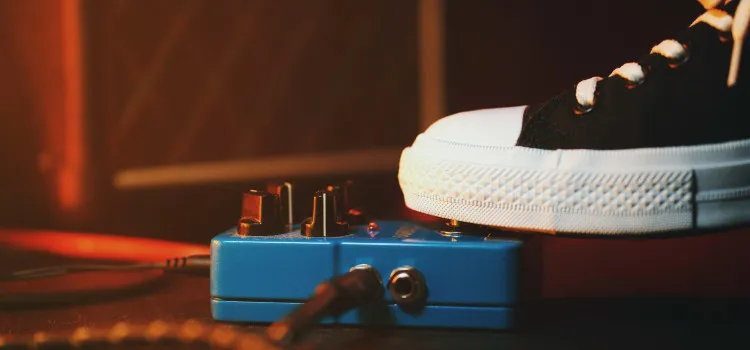
You just added a compressor pedal to your board, and now you’re not sure where in the line it should go. That choice changes more than you’d think.
A compressor smooths out your loud and quiet notes. Where you place it decides which sounds get smoothed and which ones hit it afterward.
Most players settle on one of two spots: right up front, or dead last. This guide explains how each position behaves and how to find the one that suits your rig.
Let’s start with the order most guitarists reach for first.
Where Does the Compressor Pedal Go in Your Chain?
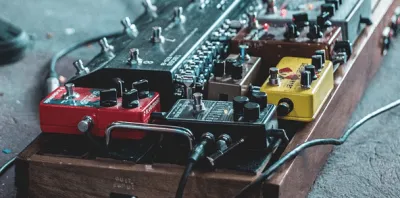
As a general rule, gain-type effects like compressors and overdrives go before time-based effects like delays and flangers. A second long-standing rule is to place the compressor before any overdrive, distortion, or fuzz pedal.
Put those two rules together and you get the most common arrangement: the compressor sits at or near the front of the chain, feeding a stronger, more even signal into everything that follows. It isn’t the only valid order, but it’s the one most guitarists reach for first.
Why Put the Compressor First
Placing the compressor first gives every effect downstream a cleaner, more consistent signal to work with. Your picking dynamics are evened out before they hit your gain stages, so overdrive and distortion respond more predictably instead of jumping around with your attack.
This is exactly why most guitarists put the compressor first. A strong, controlled signal at the front of the chain tends to make the rest of the board behave better.
When to Put the Compressor Last
Some guitarists run the compressor last to boost their signal right before it reaches their amplifier’s preamp. This can be a useful way to push the front end of the amp a little harder.
The disadvantage is that any hum or hiss introduced by other effects, such as delay and reverb, gets amplified by the output gain of the compressor. You can sometimes fix this by placing a noise gate in front of the compressor, but the noise reduction will affect your tone quality.
It’s a real trade-off, not a free lunch.
Compressor Before or After Overdrive and Distortion
The conventional move is compressor before overdrive, distortion, and fuzz. Compressing first hands those dirt pedals a steady signal, so the gain stays even and your sustain feels smooth rather than spiky.
Running a compressor after distortion is less common because the gain pedals already squash a lot of your dynamics on their own. If you do try it, listen for added noise, since a compressor placed later will lift whatever hiss the dirt pedals generate.
Where Compression Fits With Wah, Delay, and Reverb
Time-based effects like delay and flanger belong after gain effects, so the compressor should land in front of them. That keeps your repeats and modulation clean instead of compressing an already-processed wash of sound.
Wah and envelope filters are a matter of taste. Some guitarists prefer the sound of putting their wah or envelope filter in front of the compressor to broaden the frequency range it can affect.
Try it both ways and keep whichever feels more responsive under your foot.
A Best-of-Both-Worlds Setup
If you want the front-of-chain benefits without giving up a hot signal into the amp, there’s a tidy compromise. Place your compressor first, then use a separate signal booster right before your amplifier.
That way the compressor evens out your dynamics at the start of the chain, while the booster handles the job of driving your preamp, all without amplifying the noise that a compressor-last setup tends to bring out. Experimentation with your live sound is always encouraged, but it’s best to start with the compressor.
Frequently Asked Questions
Should the compressor go before or after the tuner?
Most players keep a tuner at the very front of the chain, before the compressor, so it reads a clean unprocessed signal. Putting the compressor after the tuner means your dynamics are evened out before they hit the rest of your effects.
If your tuner has a true-bypass output, its position has little effect on tone, so prioritize whatever order makes your board easiest to use.
Does compressor placement matter in the effects loop?
Yes. Running a compressor in your amp’s effects loop places it after the preamp, so it compresses an already-driven signal rather than your raw guitar.
That behaves very differently from a compressor at the front of the chain.
Most guitarists keep the compressor up front with the other gain effects. The loop is better suited to time-based effects like delay and reverb.
Will a compressor add noise to my signal?
A compressor can raise the noise floor because it boosts quiet parts of your signal, including any hum or hiss already present. This is most noticeable when the compressor sits last in the chain after delay and reverb.
A noise gate placed in front of the compressor helps, but heavy noise reduction can affect your tone quality, so use the lightest setting that does the job.
Is there a single correct place for a compressor pedal?
There’s no single correct spot, only a reliable starting point. Compressor first works for most rigs, but the best position depends on your other pedals, your amp, and the sound you want.
Use the rules here as a foundation, then move the compressor around and trust your ears.
Final Thoughts
The location of your compressor pedal is worth thinking about because it changes how every other effect responds. Most guitarists put it first so it can feed a stronger, more even signal into their gain stages, delays, and modulation.
Putting the compressor last can boost your signal into the amp, but it also amplifies hum and hiss, which is why a compressor-first setup paired with a separate booster is often the cleaner solution. Either way, treat these as starting points rather than hard rules.
Experimentation with your live sound is always encouraged, but it’s best to start with the compressor first and adjust from there until the whole chain sounds the way you want.