You spot basswood on a guitar’s spec sheet and instinctively read it as a corner cut. The wood has carried a cheap-filler reputation for years.
A lot of that comes from old habit, not from how the wood actually performs. It’s light and soft, simple to carve, and it turns up on plenty of serious instruments.
So the doubt is worth a second look. The real question is how it stacks up next to pricier woods for electric guitar bodies like mahogany and alder.
Below I cover what basswood is, why luthiers reach for it, and where it lands against those alternatives. Let’s tackle the main question head-on.
Is Basswood Good for Guitar Bodies?
Yes. Basswood comes from a light but workable tree, and it makes for a great guitar body with a warm, even tone.
Some builders use basswood on its own, while others pair it with other woods to fill out a fuller, richer sound.
Its strength is balance. Basswood doesn’t push the highs or the lows too hard, which gives it a neutral voice that takes well to pickups, effects, and high-gain playing.
What Is Basswood?
The basswood tree belongs to the linden family and grows across the northern hemisphere, including throughout the United States. It has long been prized for musical instruments because the timber is consistent and free of strong grain that can color the tone.
Basswood has been used in woodwind instruments for generations, and today it shows up in pianos, drums, and string instruments like mandolins and ukuleles in addition to guitars. Its even density and clean grain make it a dependable choice across all of them.
Why Luthiers Use Basswood for Guitars
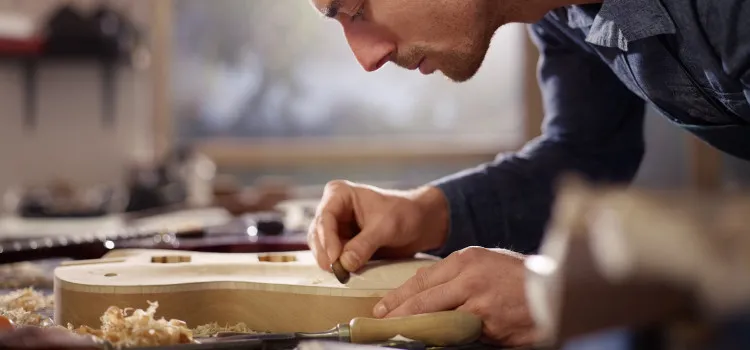
Basswood’s popularity comes down to its light color and how easy it’s to work. The wood is soft and uniform, which lets luthiers shape it, route cavities, and drill it cleanly without fighting hard grain.
That workability also makes it well suited to thin-walled, carved, and contoured body designs. Builders can carve away material to reduce weight and tune the body without the wood splintering or tearing the way a harder species might.
Is Basswood Hard or Soft?
Basswood is a soft wood. It isn’t as hard as mahogany or maple in terms of mechanical strength, but it’s still dense enough to make a stable, durable body, especially once it’s finished and reinforced where needed.
It also holds up well to changes in humidity and heat, which adds to its longevity. The trade-off for that softness is that the surface can dent and ding more easily than harder woods, so a basswood body benefits from a solid finish.
What Wood Is Basswood Similar To?
In appearance, basswood is a pale, light-colored wood that can take on a faint reddish tint under certain lighting. The grain is often subtle and slightly streaky, with a mix of yellow, tan, and brown tones once it’s finished.
Tonally, basswood sits in similar territory to other balanced, mid-focused woods. It doesn’t have the bright snap of maple or the deep low end of mahogany, which is exactly why so many builders reach for it when they want a neutral starting point.
How Basswood Compares to Other Tonewoods
Tonewood comparisons are never strictly better or worse - they’re about what voice you want and how the body works with the rest of the guitar. Here’s how basswood lines up against three woods it’s most often measured against.
Basswood vs. Mahogany
Basswood is much lighter than mahogany and has a less dense, more uniform grain. Mahogany pushes a warmer, thicker low end and more pronounced midrange, while basswood stays flatter and more balanced across the frequency range.
If you want weight and a rich, woody bottom end, mahogany wins. If you want a lighter body with a neutral tone that responds well to high gain, basswood is the better fit.
For a closer look at that heavier end of the spectrum, see maple vs mahogany guitar body.
Basswood vs. Alder
Alder is a popular alternative to basswood, and many players prefer it. It’s a bit heavier and harder, holds up to temperature swings well, and delivers a strong, slightly brighter tone with excellent clarity across styles.
Basswood is lighter and warmer, with a softer top end. Neither is strictly better, but alder’s added definition and durability give it the edge for players who want one body that handles a wide range of music.
Basswood vs. Spruce
Spruce is generally favored over basswood for its sustain and projection, which is why it dominates acoustic guitar tops. It’s stiff and resonant, helping the body ring longer and louder.
Basswood is softer and more damped by comparison, giving a rounder, shorter-decaying tone. For solid-body electrics that difference matters far less, but for acoustic projection, spruce is the stronger performer.
Frequently Asked Questions
Are basswood guitars heavy?
No, basswood is a lightweight wood, which is one of its main selling points. A basswood body keeps the overall guitar comfortable to play standing or sitting for long sessions.
Despite the low weight, it still produces a good amount of volume and respectable sustain, so you don’t sacrifice output for the lighter feel.
Do basswood bodies dent easily?
Basswood is soft, so it can dent or ding more easily than harder woods like maple or alder. A knock against a hard edge or a dropped pick guard clip can leave a mark.
A quality finish helps protect the surface, and most factory guitars seal the body well. With normal care, a basswood guitar holds up fine for years.
What kind of music suits a basswood guitar?
Basswood’s balanced, neutral tone makes it a favorite for high-gain styles like metal, hard rock, and shred, where its flat response keeps distorted chords tight and clear. It also handles cleaner styles well thanks to its even midrange.
Because it doesn’t emphasize any one frequency range, basswood works as a versatile all-rounder that takes well to effects and amp settings.
Is basswood a cheap wood?
Basswood is relatively inexpensive compared to premium tonewoods, which is part of why it earned a budget reputation. But affordability isn’t the same as poor quality.
Plenty of well-regarded guitars use basswood specifically for its tone and workability, not just its price. It offers a lot of musical value for the money.
Final Thoughts
Basswood is a genuinely good tonewood for guitar bodies. It’s light, easy to shape, and tonally balanced, which is why it appears on everything from entry-level instruments to guitars built for serious high-gain players.
It isn’t the right choice for every situation. If you want maximum sustain or a heavy, low-end-rich voice, woods like spruce, alder, or mahogany may serve you better.
But if you want a comfortable, versatile body with a neutral tone that takes well to pickups and effects, basswood is a smart and affordable option worth trying.