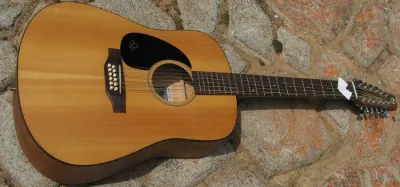

You’ve got a bare guitar body and a bottle of Tru Oil, and now you’re stuck on one question. How many coats does it actually take?
There’s no single right answer. A bare, in-the-wood look needs only a couple of passes, while a deep, glassy shine takes many thin layers built up with patience.
This guide gives the coat count for each look you might want, from natural to high gloss. We also cover how to wipe it on, sand between coats, and let it dry right.
A big part of the job is just sensing the right moment to stop. Let’s get to how many coats your body really needs.
How Many Coats of Tru Oil Does a Guitar Body Need?
The number of Tru Oil coats you apply to a guitar body depends on the type of finish you want to achieve:
- High gloss - 20 to 30 coats
- Natural finish - about 2 coats
A natural, in-the-wood look only needs a couple of thin coats to seal and protect the timber while keeping it close to bare wood. A deep, glassy high-gloss finish is built up gradually from many thin coats, which is why it can take 20 to 30 of them.
If you want something in between, stop adding coats once you reach the level of sheen and build you like. The finish gets glossier and deeper the more thin coats you apply, so there’s plenty of room to dial it in.
What Is the Best Way to Apply Tru Oil?
I’d recommend following the instructions included with the product. First, remove excess dust from the surface with a paper towel, then apply a light coat with a clean cloth.
Always apply the Tru Oil in a thin coat. Don’t saturate the surface, as flooding the wood with Tru Oil won’t improve the finish.
Once the Tru Oil has been applied, you can wipe the surface down with a clean cloth to remove any remaining oil from the wood grain. This helps you get even coverage across the guitar body.
How to Apply Tru Oil on a Guitar Body
Now that we’ve covered how many coats to apply and the best way to apply them, let’s look at what to expect from the finished guitar body.
One of the best things about using Tru Oil as a finish is that it cures quickly. It takes very little time to dry between coats, so the whole process moves along faster than many other finishes.
Work in thin, even layers, let each coat dry, give it a light sanding, and repeat until you reach the look you want. Building the finish slowly from many thin coats is what produces a smooth, professional result rather than a single heavy coat.
Do You Sand Between Coats of Tru Oil?
Yes. You should lightly sand the surface between coats.
You don’t strictly have to, but it helps the next coat go on smooth and level.
Be careful not to sand too aggressively. The coats are very thin, so they can be sanded right off if you use too much pressure.
How Long Should Tru Oil Dry Between Coats?
You should wait at least 2 to 4 hours between each coat. Letting each layer dry properly before adding the next is what keeps the finish from staying tacky or uneven.
What Temperature Is Best for Applying Tru Oil?
You can apply Tru Oil to wood at just about any temperature. The warmer the air, the faster the oil dries, so a warm, dry space will speed up the time between coats.
How Long Does Tru Oil Take to Dry?
Tru Oil applied to a guitar body will dry to the touch in a few hours. Keep in mind that drying between coats and fully curing aren’t the same thing - the surface keeps hardening for a while after it feels dry, so give the final finish extra time before heavy handling.
Frequently Asked Questions
Can you use Tru Oil on the whole guitar?
Tru Oil is most commonly used on the guitar body, but it can also be applied to the neck using the same thin-coat method. Apply it in light coats, sand lightly between them, and let each coat dry before adding the next.
Do you need a topcoat over Tru Oil?
For most builds, no. Tru Oil is itself a hard-drying oil finish, so the coats you apply act as both the finish and the protective layer.
You simply add more thin coats for more build and shine.
Is Tru Oil durable enough for a guitar?
Yes, when it’s built up properly. Several thin, well-dried coats create a protective layer over the wood.
A higher coat count, like the 20 to 30 used for a high gloss, also gives you more material on the surface to resist everyday wear.
Can you buff Tru Oil to a high gloss?
A high-gloss look comes from building up many thin coats and sanding lightly between them so the surface stays level. The more thin coats you apply, the deeper and glossier the finish becomes.
Final Thoughts
How many coats of Tru Oil your guitar body needs really comes down to the finish you want: roughly 2 thin coats for a natural look, or 20 to 30 for a deep high gloss. Whichever you choose, the key is thin coats, a light sanding between them with around 180 grit, and enough dry time so each layer sets before the next goes on.
Avoid pressing too hard while sanding so you don’t cut through the thin coats, and wipe away any dust before the next pass so it doesn’t get trapped in the finish. For best results, keep applying thin coats over the same area using the same technique until you reach the look you’re after.
Take your time and let the finish build gradually. That patience is what turns a bare guitar body into a smooth, even surface you’ll be happy to play.