Every trip to the repair shop costs money, and a lot of those visits are for jobs you could handle at your own kitchen table. Setting intonation or swapping a tuner sounds technical, but neither takes special skill.
Learning to maintain your own guitar is one of the most useful habits a player can build. Each small fix you master is one you never pay someone else to do again.
You won’t need a workbench full of gear, either. A few basic tools cover most jobs.
This guide walks through seven beginner-friendly repairs, the kind that usually take an hour or less. Before we get to the jobs themselves, let’s draw a clear line around what’s safe to tackle at home.
What Guitar Repairs Can You Safely Do Yourself?
Most routine guitar maintenance is well within reach for the average player, and you don’t need a workshop full of specialized gear to get started. The repairs below range from quick five-minute jobs to small projects that take about an hour, and each one will help your guitar play, tune, and sound its best.
Work slowly, follow a good tutorial when you’re unsure, and you’ll build confidence with every fix.
1. Changing Guitar Strings
Replacing the strings on your guitar is a pretty easy task and can be done in just a few minutes. If you want to save some cash, there are plenty of online videos and tutorials that’ll help you get the job done.
Changing your guitar strings every few months will ensure that they don’t break from too much tension and that you’re getting the most out of your instrument. Remember to replace all of the guitar’s strings at once so that it stays in tune properly.
2. Fixing the Guitar’s Intonation
Intonation refers to the tuning of one string in relation to the other strings. Normally, intonation is set for an entire guitar right from the factory, and you can test it yourself by playing each string at the 12th fret and comparing it to its pitch at the open position.
This will ensure that all of your guitar’s notes are in tune with each other. If a note doesn’t sound correct at any fret, it may be out of tune or need some adjustment.
3. Adjusting the Guitar Neck
While the truss rod inside of the guitar neck is supposed to maintain a consistent amount of tension on the neck, it’ll become loose over time. Adjusting your warped guitar neck should only be done by someone who really knows what they’re doing, but you can fix dings and bends in the neck or headstock yourself by using the truss rod wrench that came with your instrument.
If you ever decide a swap makes more sense than a repair, it’s worth knowing whether guitar necks are interchangeable before you buy a replacement.
4. Setting the Action
Action refers to the height of the strings from the neck of your guitar. Too low of an action will result in buzzing and intermittent sounds when played, while too high of an action on the fretboard will most likely result in it sounding out of tune.
Regularly setting your guitar’s action will ensure that it plays as close to perfect as it possibly can.
5. Replacing the Tuners
If your guitar’s tuners or tuning pegs are making it difficult to tune your instrument or keep it in tune, you can replace them. Luckily, it’s super easy - some of them don’t even require drilling new screw holes.
Just match the new tuners to your existing layout and headstock style before you order.
6. Checking the Guitar’s Nut
If your guitar’s nut is cracked, worn out, or not properly adjusted, you can make a simple replacement. A worn nut can cause tuning instability and odd buzzing, so swapping in a fresh one is an inexpensive fix that makes a noticeable difference.
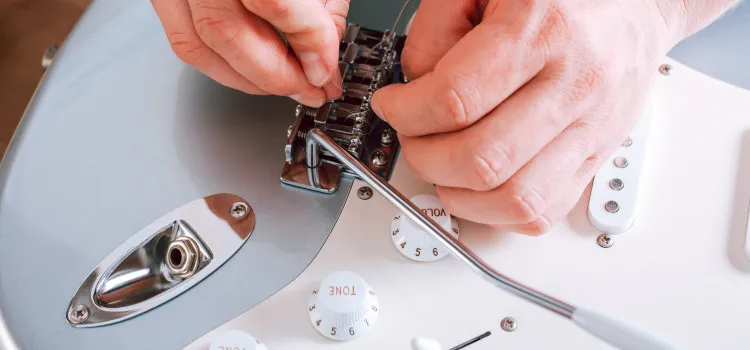
7. Setting Up a Tremolo System
Most people don’t know that they can replace the tremolo system on their guitar, but it’s actually a super easy DIY project. Once you’ve purchased the correct tools and parts, you can easily change out your tremolo system in about an hour.
Take your time balancing the springs afterward so the bridge sits level and your tuning stays stable.
Frequently Asked Questions
Do I need special tools to repair my own guitar?
For most basic repairs, no. A truss rod wrench (usually included with your guitar), a set of small screwdrivers, a string winder, and a tuner will cover the majority of the jobs on this list.
As you take on more involved projects like setting intonation or replacing a tremolo, a few extra tools such as feeler gauges and the correct screwdrivers for your hardware will make the work easier and more precise.
How often should I change my guitar strings?
For most players, changing strings every few months is a good rule of thumb, though it depends on how often you play and how much your hands sweat. Strings that look discolored, feel rough, or sound dull are due for a change.
Always replace the full set at once rather than a single string. This keeps the tension even across the neck and helps the guitar settle into tune more reliably.
Which guitar repairs should I leave to a professional?
Straightening a seriously warped neck, refretting, repairing structural cracks, and major electronics work are best left to an experienced technician. These jobs require specialized tools and experience, and a mistake can be costly.
Stick to the simpler fixes on this list while you build your skills. Knowing your limits protects your instrument and saves you from turning a small problem into an expensive one.
Can adjusting the truss rod damage my guitar?
It can if you force it or over-tighten it. The truss rod controls neck relief, and small adjustments go a long way, so turn it only a quarter-turn at a time and let the neck settle before checking again.
If the rod feels stuck or the neck doesn’t respond as expected, stop and take the guitar to a tech. A warped or badly bowed neck is a job for someone who really knows what they’re doing.
Final Thoughts
Learning how to properly take care of your guitar is essential if you want to keep playing it for years to come. Understanding how to change strings, adjust the action, replace parts, and set intonation will save you a lot of time and money on repairs you’d otherwise pay a shop to handle.
Start with the easy wins like string changes and tuner swaps, then work your way up to setting the action and intonation as your confidence grows. With a little patience and the right tools, you’ll keep your guitar playing beautifully and reserve professional visits for the jobs that truly need them.
If you’re still shopping for the right instrument to maintain, take a look at our guide on how to tell if a guitar has good quality before you buy.