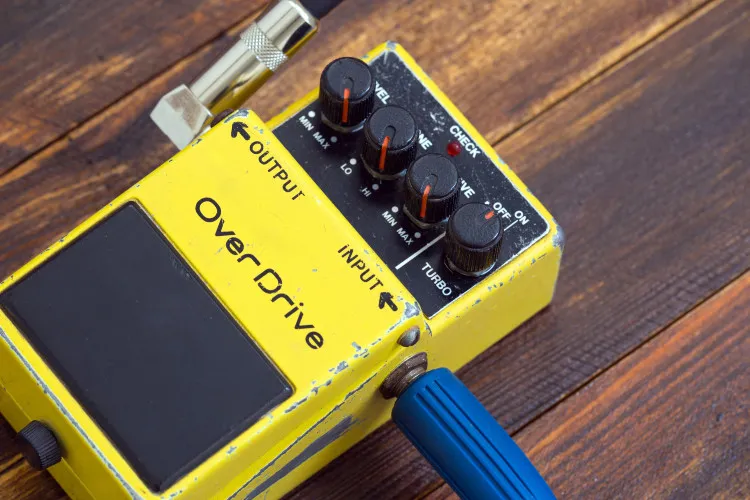
A Marshall already owns that midrange bark and chime players chase. An overdrive in front of it isn’t there to replace that sound but to push the front end harder, tipping a barely-dirty rhythm tone into thick, sustaining saturation.
Get it right and one footswitch turns a rhythm rig into a lead machine. The drives that pull this off keep the amp’s character intact, put out enough level to really slam the input, and give you EQ or clipping options to tame the highs a Marshall can throw at you.
A transparent drive lets the amp shine, while a Tube Screamer-style mid hump tightens the low end so notes cut. We focused on seven that complement that voice, from a boutique dual-channel flagship to the original green Tube Screamer and a budget classic.
Still shopping for the amp? Our guide to the best Marshall amp pairs nicely with these, but first let’s line up all seven side by side.
Quick Comparison Chart
| # | Product | Our Rating | ||
|---|---|---|---|---|
| 1 | 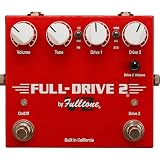 |
Fulltone Full-Drive 2 V2 | ★★★★★ | Check Price |
| 2 | 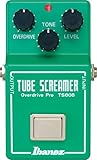 |
Ibanez TS808 Original Tube Screamer | ★★★★★ | Check Price |
| 3 |  |
Boss SD-1 Super Overdrive | ★★★★☆ | Check Price |
| 4 |  |
Boss BD-2W Blues Driver Waza Craft | ★★★★☆ | Check Price |
| 5 |  |
MXR Duke of Tone Overdrive | ★★★★☆ | Check Price |
| 6 | 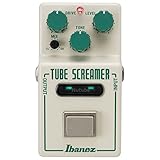 |
Ibanez NTS Nu Tubescreamer | ★★★★☆ | Check Price |
| 7 |  |
DigiTech Bad Monkey Tube-Overdrive | ★★★★☆ | Check Price |
Boosts for the British Bark
The Full-Drive 2 V2 brings six clipping modes and a separate boost, the most flexible push a Marshall front end can get. The SD-1 has been doing the same job since the JCM800 era for a tenth of the price.
The Ibanez NTS is the engineering curiosity, running a real KORG Nutube, while the Duke of Tone carries Analog Man voicing into the mainstream.
1. Fulltone Full-Drive 2 V2
Fulltone Full-Drive 2 V2
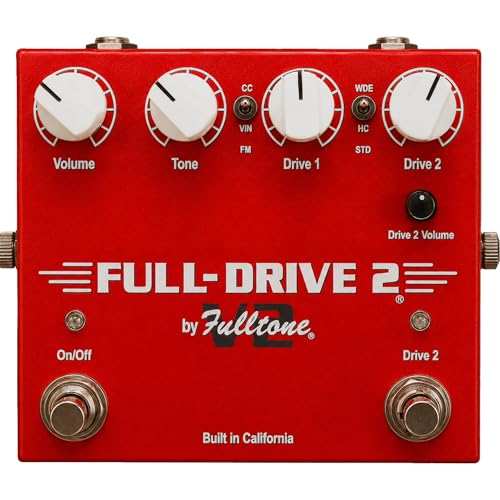
Dual-channel USA-made overdrive with boost, six clipping modes, and the prized JRC4558 chip for Marshall tones.
Pros
- Two footswitchable drive channels with independent controls
- Six clipping modes cover transparent boost to thick overdrive
- Built around the desirable JRC4558 chip
- Rugged USA-made steel enclosure for stage use
Cons
- More expensive than most overdrive pedals
- Many modes can feel overwhelming at first
The Full-Drive 2 V2 is the pedal we reach for first when the goal is a Marshall pushed into lead territory. Its two footswitchable channels let you set a lighter rhythm grit and a hotter lead boost, then jump between them without touching a knob, and the six clipping modes range from a nearly transparent boost to a fatter, mid-focused overdrive.
Built around the sought-after JRC4558 chip in a USA-made steel box with true bypass, it has the tone and the toughness to anchor a serious board.
2. Ibanez TS808 Original Tube Screamer

Ibanez TS808 Original Tube Screamer
The original Tube Screamer with its mid-hump voicing, the classic drive players have stacked in front of Marshalls for decades.
Pros
- Iconic mid-hump tightens a Marshall's low end
- Works as a drive on its own or a clean boost
- Smooth, compressed sustain ideal for leads
- Faithful reissue of the legendary green box
Cons
- Single voice with no clipping options
- Can thin out the low end at high drive
If there’s one pedal welded to the history of Marshall lead tone, it’s the original TS808. That signature mid-hump rolls off some low end and pushes the upper mids, which is precisely what tightens a Marshall and helps single notes sing through a band.
You can run it as a light overdrive on its own or back the drive off and use it as a clean boost to slam the amp’s front end. It’s a one-trick pony, but it’s a trick that has defined rock guitar for forty years.
3. Boss SD-1 Super Overdrive

Boss SD-1 Super Overdrive
Legendary asymmetric-clipping overdrive that has boosted Marshall stacks on countless classic rock and metal records.
Pros
- Asymmetric clipping adds harmonic richness
- Tightens and pushes a Marshall front end perfectly
- Famously affordable for the tone on offer
- Legendarily durable BOSS compact enclosure
Cons
- Buffered bypass rather than true bypass
- Simple three-knob layout limits tweaking
The SD-1 is the budget hero that pros keep on their boards anyway, and its asymmetric clipping is the reason. That circuit adds a touch of even-order harmonic warmth that a standard Tube Screamer lacks, giving a Marshall a slightly more open, amp-like grind.
It has slammed the front of countless stacks on classic rock and early metal records, and at its price it’s almost a no-brainer first overdrive. The buffered bypass and three simple knobs keep it plug-and-play.
4. Boss BD-2W Blues Driver Waza Craft

Boss BD-2W Blues Driver Waza Craft
Premium Waza Craft Blues Driver with analog circuitry and a Custom mode that adds gain and low-end girth.
Pros
- Dynamic, amp-like crunch responds to picking
- Custom mode adds gain and fuller low end
- Premium Waza Craft analog components
- Backed by a 5-year warranty
Cons
- Pricier than the standard BD-2
- Less mid push than a Tube Screamer
The Waza Craft Blues Driver is the most touch-sensitive drive in this group, reacting to pick attack and guitar volume more like a cranked amp than a typical pedal. Standard mode nails the dynamic, slightly raw crunch the BD-2 is loved for, while Custom mode opens up extra gain and a fuller low end for thicker leads.
With premium analog parts and a five-year warranty, it pairs beautifully with a Marshall when you want crunch that breathes rather than a tight mid push.
5. MXR Duke of Tone Overdrive
MXR Duke of Tone Overdrive
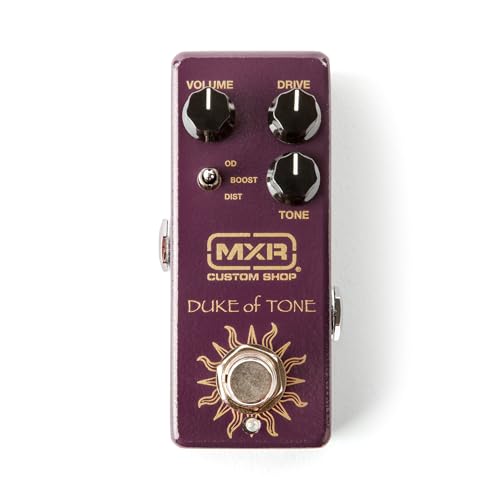
Compact Analog Man collaboration with three drive modes covering transparent boost, overdrive, and a fuzzy distortion voice.
Pros
- Three modes span boost, overdrive, and distortion
- Transparent voice keeps the Marshall's character
- Co-developed with Analog Man's Prince of Tone
- Small footprint saves pedalboard space
Cons
- No internal switch for the boost-only mode
- Single footswitch for all three voices
Co-developed with Analog Man and based on the cult Prince of Tone, the Duke of Tone packs three voices into a tiny enclosure: a transparent boost, a smooth overdrive, and a fuzzier distortion mode. The transparent setting is the key for Marshall players, adding gain and feel while leaving the amp’s core character untouched.
It’s the most flexible drive here for the money and the small footprint makes it easy to slot onto a crowded board.
6. Ibanez NTS Nu Tubescreamer

Ibanez NTS Nu Tubescreamer
All-analog Tube Screamer with a KORG Nutube stage and a Mix control for blending dry signal into the drive.
Pros
- Real Nutube triode adds tube-like warmth and feel
- Mix knob blends dry signal to keep low-end punch
- Classic Tube Screamer midrange push for Marshalls
- Runs on 9 to 18V for extra headroom
Cons
- Higher 60mA current draw at 18V
- Costs more than a standard Tube Screamer
The NTS takes the Tube Screamer formula and drops in a real KORG Nutube triode for genuine tube warmth and feel. It keeps the familiar Drive, Tone, and Level controls but adds a Mix knob, so you can blend dry signal back in to preserve the low-end punch that a standard Screamer tends to thin out.
With 100% analog circuitry and 9 to 18V operation for extra headroom, it’s the most tactile, organic-feeling Tube Screamer voice here for tightening up a Marshall’s gain.
7. DigiTech Bad Monkey Tube-Overdrive

DigiTech Bad Monkey Tube-Overdrive
Affordable analog overdrive with separate Low and High EQ plus dual outputs for amp and direct recording.
Pros
- Two-band EQ shapes the drive better than most cheap pedals
- Dual outputs feed an amp and a recording interface at once
- Warm analog overdrive on a tiny budget
- Simple Level and Gain controls are easy to dial in
Cons
- Plastic-feeling controls are less road-ready
- Less gain on tap than the pricier pedals
The Bad Monkey has earned its cult status by delivering far more than its price suggests, and it still pairs beautifully with a Marshall. Separate Low and High EQ controls give you real tone-shaping power to roll off harsh treble or thicken the body, which is rare at this budget.
The dual outputs are a genuinely useful touch, letting you run into your amp and a recording interface at the same time, so it doubles as a handy direct-recording drive. For a primer on the wider category, see our roundup of the best overdrive pedal overall.
Final Thoughts
The Fulltone Full-Drive 2 V2 is our top pick for Marshall amps, and it earns it. The combination of two drive channels, a stackable boost, and six clipping modes means you can shape exactly how hard you hit the front end, from a touch of hair to full lead saturation, all while the JRC4558 voicing keeps that classic Tube Screamer midrange the amp loves.
It costs more than the others, but the tonal range and USA build quality justify it for a player who wants one drive to do everything.
If you want the sound that built classic rock, the Ibanez TS808 is the one. Its mid-hump and smooth compression are the textbook way to tighten and push a Marshall for leads, and it’s just as useful as a clean boost.
For players on a tighter budget, the Boss SD-1 delivers a remarkably similar job with its own harmonically rich asymmetric clipping, while the BD-2W Blues Driver is the pick when you want dynamic, amp-like crunch that responds to your hands rather than a fixed mid push.
The MXR Duke of Tone is the most versatile value here, the Nu Tubescreamer adds the most authentic tube feel, and the DigiTech Bad Monkey remains hard to beat on a shoestring. Whichever you choose, all seven live up to their job: making a great amp sound even better.
For more ways to dial in your rig, browse the rest of our overdrive pedal guide.